

Published on: 2025-10-16 | Written by: Dr. Mohamed Abdel Sattar, Professor of Kidney
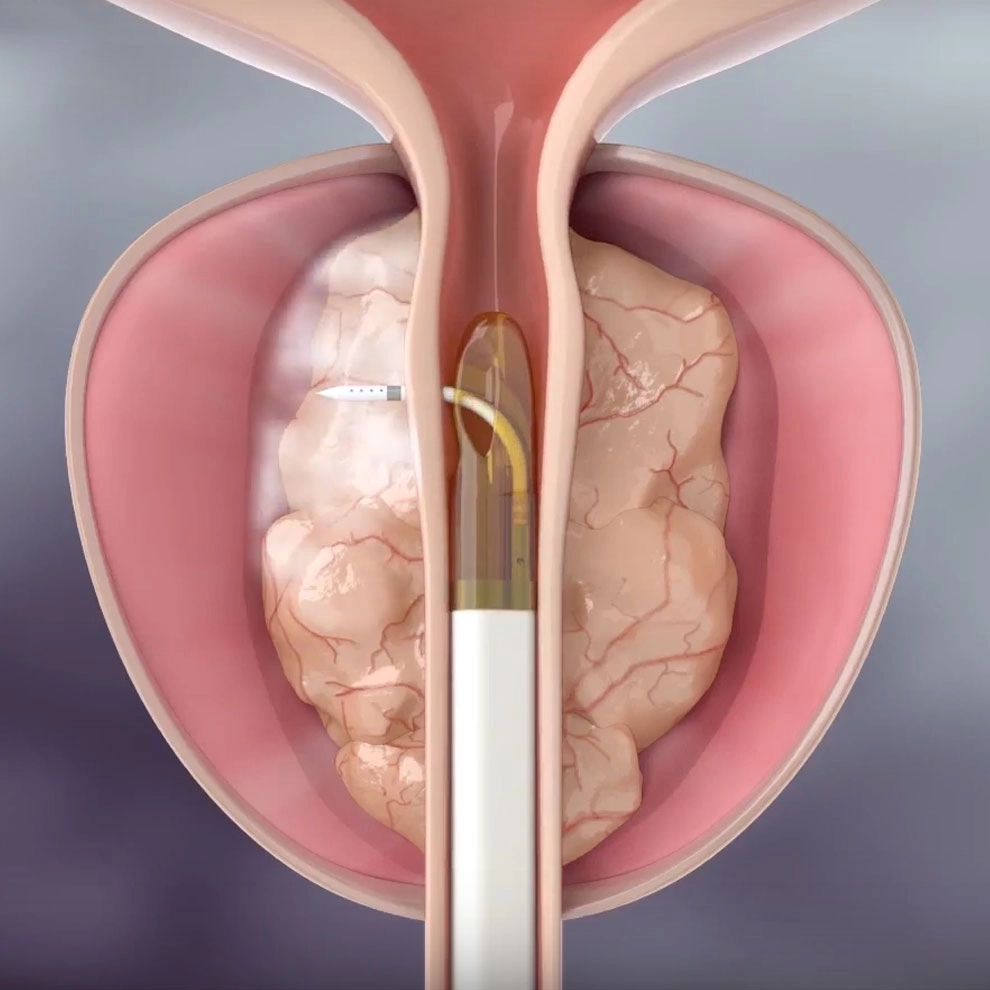
Benign Prostatic Hyperplasia (BPH) is considered one of the most common medical conditions affecting men after the age of fifty. The prostate gland undergoes a natural increase in volume due to age-related hormonal changes. Given the gland's location surrounding the urethra (the urinary passage), any increase in its size exerts direct pressure that leads to urinary flow obstruction and difficulty voiding. The treatment of BPH aims to alleviate bothersome symptoms, protect the bladder and kidneys from cumulative complications, and restore the patient's normal quality of life.
The prostate is a walnut-sized male gland located directly beneath the bladder. In benign hyperplasia, the gland's stromal and epithelial cells proliferate without involving any cancerous cells.
Dr. Mohamed Abdel Sattar clarifies that benign prostatic hyperplasia is not a cancerous disease and does not necessarily progress into prostate cancer. However, neglecting its treatment can lead to severe urological complications, such as acute urinary retention, bladder calculi, and deterioration of renal function due to urinary reflux.
Facilitating Urinary Flow: Removing mechanical compression from the obstructed urethral tract.
Alleviating Bothersome Lower Urinary Tract Symptoms (LUTS): Reducing urinary frequency and frequent nocturnal awakenings.
Preserving Bladder and Renal Health: Preventing post-void residual urine accumulation, which predisposes to stasis and urinary tract infections.
Preventing Acute Urinary Retention (AUR): Avoiding the emergency need for urinary catheterization.
Improving Quality of Life and Sleep: Enabling the patient to conduct daily activities and sleep without continuous interruption.
Symptoms are divided into obstructive (voiding) and irritative (storage) bladder symptoms, and their severity varies from patient to patient regardless of the absolute size of the enlargement itself.
Dr. Mohamed Abdel Sattar points out that prostate volume does not always correlate directly with symptom severity. A patient with mild enlargement may experience severe obstruction, whereas another with a significantly enlarged prostate may report only mild symptoms. Therefore, clinical evaluation and functional urodynamic testing remain the primary criteria for guiding the treatment plan.
Weak or Hesitant Stream: Diminished urinary stream force and intermittency during voiding.
Urinary Urgency: A sudden, compelling need to urinate that is difficult to defer.
Frequent Nocturia: Waking up multiple times during the night to void.
Sensation of Incomplete Bladder Emptying: Feeling that urine remains in the bladder after voiding.
Post-Void Dribbling: Involuntary release of delayed urine drops after finishing urination.
Treatment options range from active surveillance and pharmacological management to modern, minimally invasive surgical procedures.
Dr. Mohamed Abdel Sattar advises selecting the appropriate treatment modality based on patient age, overall systemic health, prostate volume, and the degree of urethral obstruction, emphasizing that modern surgical techniques offer high safety profiles and rapid recovery times.
Pharmacological Therapy:
Alpha-Blockers: Relax the smooth muscle tone of the bladder neck and prostate to rapidly ease urination.
5-Alpha-Reductase Inhibitors (5-ARIs): Progressively reduce prostate volume over long-term administration.
Minimally Invasive Technologies:
Water Vapor Therapy (Rezūm): A modern technology using targeted water vapor injection to ablate hyperplastic tissue without open surgery.
Prostatic Urethral Lift (UroLift): Retracting hyperplastic prostatic tissue away from the urethral lumen without resection or cutting.
Surgical and Endoscopic Interventions:
Transurethral Resection of the Prostate (TURP): The gold standard surgical procedure for resecting obstructive tissue endoscopically.
Laser Enucleation (HoLEP / ThuLEP): Laser enucleation of large prostate glands, ensuring complete tissue removal with minimal blood loss.
Home care and daily habit modifications significantly aid in controlling mild to moderate urinary symptoms.
Dr. Mohamed Abdel Sattar stresses that regulating evening fluid intake and reducing caffeine and diuretic beverages before bedtime are simple yet highly effective steps in curbing bothersome nocturia and improving overall sleep quality.
Limit Evening Fluid Intake: Avoid drinking large amounts of water or beverages 2 to 3 hours prior to sleeping.
Reduce Caffeine and Carbonated Drinks: Avoid tea, coffee, and beverages that irritate the bladder wall.
Practice Double Voiding: Waiting briefly after finishing urination and attempting a second voiding effort to empty the bladder completely.
Avoid Decongestants Without Medical Consultation: Certain over-the-counter decongestants and antihistamines can precipitate acute urinary retention.
Perform Pelvic Floor Exercises (Kegels): Strengthening pelvic floor muscles to enhance urinary urgency control.
Periodic PSA Screening: Measuring Prostate-Specific Antigen (PSA) levels annually to evaluate prostate tissue health.
Urological Ultrasound Examination: Tracking prostate volume changes and measuring post-void residual (PVR) urine volume.
Prompt Attention to Emergency Warning Signs: Consulting a physician immediately if complete urinary retention or hematuria (blood in urine) occurs.
Maintain Ongoing Follow-Ups with Your Specialist:
Dr. Mohamed Abdel Sattar emphasizes in his concluding advice that benign prostatic hyperplasia is a completely manageable condition. Early diagnosis and selecting the appropriate treatment plan ensure that patients maintain optimal urological health and a comfortable, pain-free life.