
Published on: 2025-10-11 | Written by: Dr. Muhammad Ali Harfoush, PhD in Orthopedics
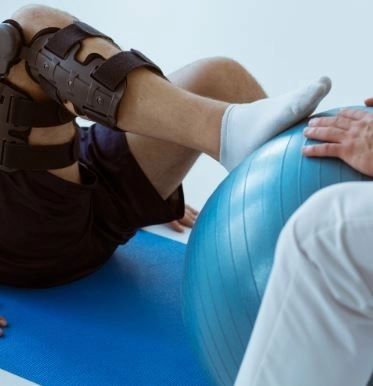
Post-surgical and sports injury rehabilitation is a vital step in restoring physical function and mobility after operations or injuries. This process does not only aim to return muscles and joints to normal function, but also focuses on regaining full performance and preventing future injuries.
Dr. Mohamed Ali Harfoush, Consultant of Advanced Arthroscopic Knee and Shoulder Surgery, emphasizes that rehabilitation begins from the very first stage after surgery or injury. It must be supervised by professionals in physical therapy and sports medicine to ensure a safe and effective return to normal daily life or sports activity.
According to Dr. Mohamed Ali Harfoush, post-surgical rehabilitation helps in:
Strengthening weakened muscles due to immobilization or long rest periods.
Improving joint movement and flexibility.
Reducing swelling and inflammation after surgery.
Accelerating tissue healing and enhancing blood circulation in the affected area.
He stresses that neglecting rehabilitation can lead to joint stiffness or muscle weakness, which may reduce the overall success of the surgery. Therefore, full commitment to the prescribed rehabilitation plan is essential for optimal recovery.
Sports injuries such as muscle tears, joint sprains, and ligament injuries require carefully structured rehabilitation programs.
Dr. Mohamed Ali Harfoush explains that physical therapy in these cases aims to gradually relieve pain, restore muscle balance, and retrain the injured area to perform specific movements related to the sport safely and effectively.
He also points out that successful rehabilitation typically includes several progressive stages:
Pain and swelling reduction stage.
Flexibility and muscle strengthening stage.
Functional training and gradual return to activity stage.
According to Dr. Mohamed Ali Harfoush, modern technologies such as shockwave therapy, laser therapy, and electrotherapy have significantly improved rehabilitation outcomes. These advanced methods accelerate healing, reduce discomfort, and ensure a faster and safer return to sports or daily activities.
In conclusion, Dr. Mohamed Ali Harfoush highlights that successful rehabilitation depends not only on medical treatment but also on the patient’s commitment to prescribed home exercises, maintaining a balanced diet to support muscle recovery, and avoiding premature return to strenuous activity without medical approval.