
Published on: 2025-10-04 | Written by: Dr. Mustafa Salah Al-Baha, Physical Therapy
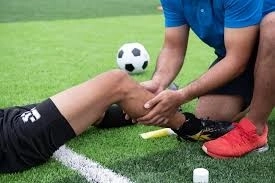
Sports injury treatment and rehabilitation represents one of the most vital and rapidly advancing medical fields. It requires a precise approach to ensure rapid response in damaged tissues and restore athletic performance to peak efficiency. Modern sports medicine goes beyond initial surgical or conservative management, centering on comprehensive rehabilitation protocols designed to rebuild muscle strength, proprioception, and joint stability to prevent relapses and recurrent injuries.
Sports injury treatment and rehabilitation encompasses an integrated medical system that begins with an accurate diagnosis of damaged tissue, progresses through medical or surgical management, and extends to targeted functional training to prepare athletes for high-intensity competition.
Dr. Mostafa Salah Al-Baha clarifies that modern sports injury management transcends mere pain and swelling control; it centers on re-conditioning ligaments and muscles to absorb sudden athletic loads while retraining the neuromuscular system to restore biomechanical equilibrium.
Alleviating Pain and Tissue Inflammation: Controlling acute symptoms and reducing fluid and blood effusion.
Restoring Range of Motion (ROM): Protecting the treated joint against stiffness and capsular tightness.
Rebuilding Muscle Strength and Endurance: Reversing muscle atrophy caused by periods of rest or cast immobilization.
Enhancing Proprioception: Re-activating neural receptors within ligaments and joints to prevent recurrent sprains.
Psychological Readiness for Return-to-Play: Eliminating hesitation and fear of re-injury during high-intensity movements.
Sports injuries vary according to the athletic discipline, level of physical contact, and repetitive strain patterns.
Dr. Mostafa Salah Al-Baha points out that prompt, structured management of conditions such as anterior cruciate ligament (ACL) tears, meniscal tears, and acute muscle strains makes the critical difference between full functional recovery and chronic pain or joint deterioration.
Ligament and Joint Injuries: Such as ACL tears, lateral ankle sprains, and shoulder ligament disruptions.
Muscle Tears and Strains: Hamstring tears, adductor strains, and quadriceps injuries.
Cartilage and Tendon Injuries: Meniscal tears, Achilles tendinitis, and patellar tendinitis (jumper's knee).
Recurrent Joint Conditions: Recurrent shoulder dislocations and acute joint sprains.
Stress Fractures: Microscopic bone fractures resulting from repetitive training loads without adequate recovery.
Sports medicine has advanced significantly through the application of technological modalities and evidence-based rehabilitative techniques.
Dr. Mostafa Salah Al-Baha advises integrating functional exercises with modern technologies such as Extracorporeal Shock Wave Therapy (ESWT) and Blood Flow Restriction (BFR) training, explaining that this technological diversity stimulates muscle fiber synthesis and tendon healing without overloading newly recovered joints.
Blood Flow Restriction (BFR) Therapy: Performing light-load exercises under temporary vascular occlusion to build muscle mass effectively without joint strain.
Extracorporeal Shock Wave Therapy (ESWT): Stimulating healing in chronic tendon injuries and breaking down calcified deposits.
Hydrotherapy: Leveraging water buoyancy to unweight joints, facilitating early movement and running drills.
Kinesiology Taping: Relieving tissue pressure and stimulating lymphatic drainage to support natural mechanics.
Electrical Muscle Stimulation (EMS): Re-activating dormant muscle fibers and preventing atrophy during immobilization periods.
A sports rehabilitation program consists of sequential stages governed by functional readiness criteria rather than elapsed time alone.
Dr. Mostafa Salah Al-Baha stresses that transitioning between rehabilitation phases must be based on objective measurements of muscle strength and balance, emphasizing that a premature or emotionally driven return to play before achieving full readiness remains the leading cause of severe re-injury.
Protection and Inflammation Control Phase: Applying rest, ice, compression, and elevation (PRICE) protocols to manage edema.
Restoring Flexibility and Range of Motion: Performing progressive stretching and joint mobilization exercises.
Muscle Strengthening and Balance Phase: Utilizing resistance bands, progressive weights, and core stability training.
Sport-Specific Functional Rehabilitation Phase: Simulating field-specific mechanics such as multi-directional running, deceleration, and jumping.
Return-to-Play Readiness Testing: Verifying that the injured limb reaches at least 90% functional capability compared to the uninjured side.
Systematic Progression in Training Loads: Avoiding sudden spikes in workout intensity or duration.
Commitment to Warm-Up and Cool-Down Routines: Preparing muscles and ligaments prior to intense exertion and cooling down afterward.
Focus on Nutrition and Hydration: Consuming adequate fluids and proteins to support muscle tissue synthesis.
Maintain Ongoing Follow-Ups with a Sports Rehabilitation Specialist:
Dr. Mostafa Salah Al-Baha emphasizes in his concluding advice that a sports injury is not the end of an athlete's career, but an opportunity to rebuild the body on solid scientific principles. Diligent adherence to medical instructions and personalized rehabilitation protocols remains the true guarantee for a strong, safe, and sustainable return to competitive play.