
Published on: 2025-09-29 | Written by: Dr. Youssef Ahmed Al-Masry, Consultant
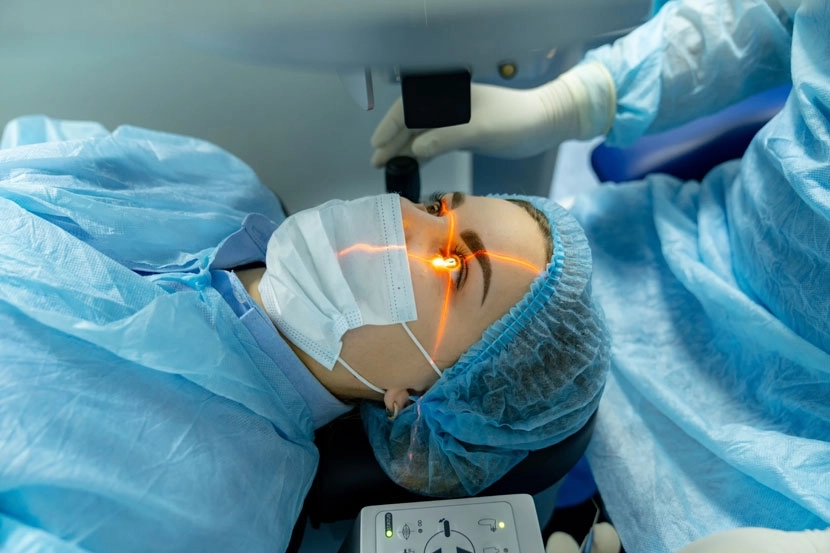
Cataract surgery and vision correction procedures are among the most important achievements of modern ophthalmology, helping millions of patients regain clear vision and improve their quality of life.
Dr. Youssef Ahmed El-Masry emphasizes that early diagnosis and the proper choice of surgical technique play a vital role in achieving the best results and ensuring eye safety.
Cataract is the clouding of the natural lens of the eye, leading to:
Blurred or hazy vision.
Difficulty seeing at night.
Increased sensitivity to light.
Reduced color perception.
Dr. Youssef Ahmed El-Masry explains that surgery is the only effective solution to remove cataracts and restore clear vision, by replacing the cloudy lens with a transparent artificial one.
Traditional surgery: removing the cloudy lens manually and implanting a new lens.
Phacoemulsification (Phaco): modern technique using ultrasound waves to break up the lens.
Femtosecond laser: the latest and most precise option.
Dr. Youssef Ahmed El-Masry stresses that choosing the right intraocular lens (monofocal or multifocal) should be based on the patient’s needs and lifestyle.
Vision correction includes several medical and surgical techniques designed to reduce or eliminate dependence on glasses or contact lenses, such as:
LASIK: reshaping the cornea with laser.
SMILE (Small Incision Lenticule Extraction): advanced method for correcting myopia and astigmatism.
ICL (Implantable Collamer Lens): suitable for patients who are not candidates for laser.
Dr. Youssef Ahmed El-Masry confirms that choosing the appropriate method depends on factors such as corneal thickness, degree of refractive error, and overall eye health.
Permanent improvement of vision.
Restoring the ability to perform daily activities easily.
Reducing dependence on eyeglasses.
Enhancing self-confidence and quality of life.
Dr. Youssef Ahmed El-Masry explains that positive results appear quickly after surgery, with the importance of regular medical follow-up to ensure vision stability.