

Published on: 2025-08-13 | Written by: Professor Dr. Amr Saeed, Prof of Ophthalmology
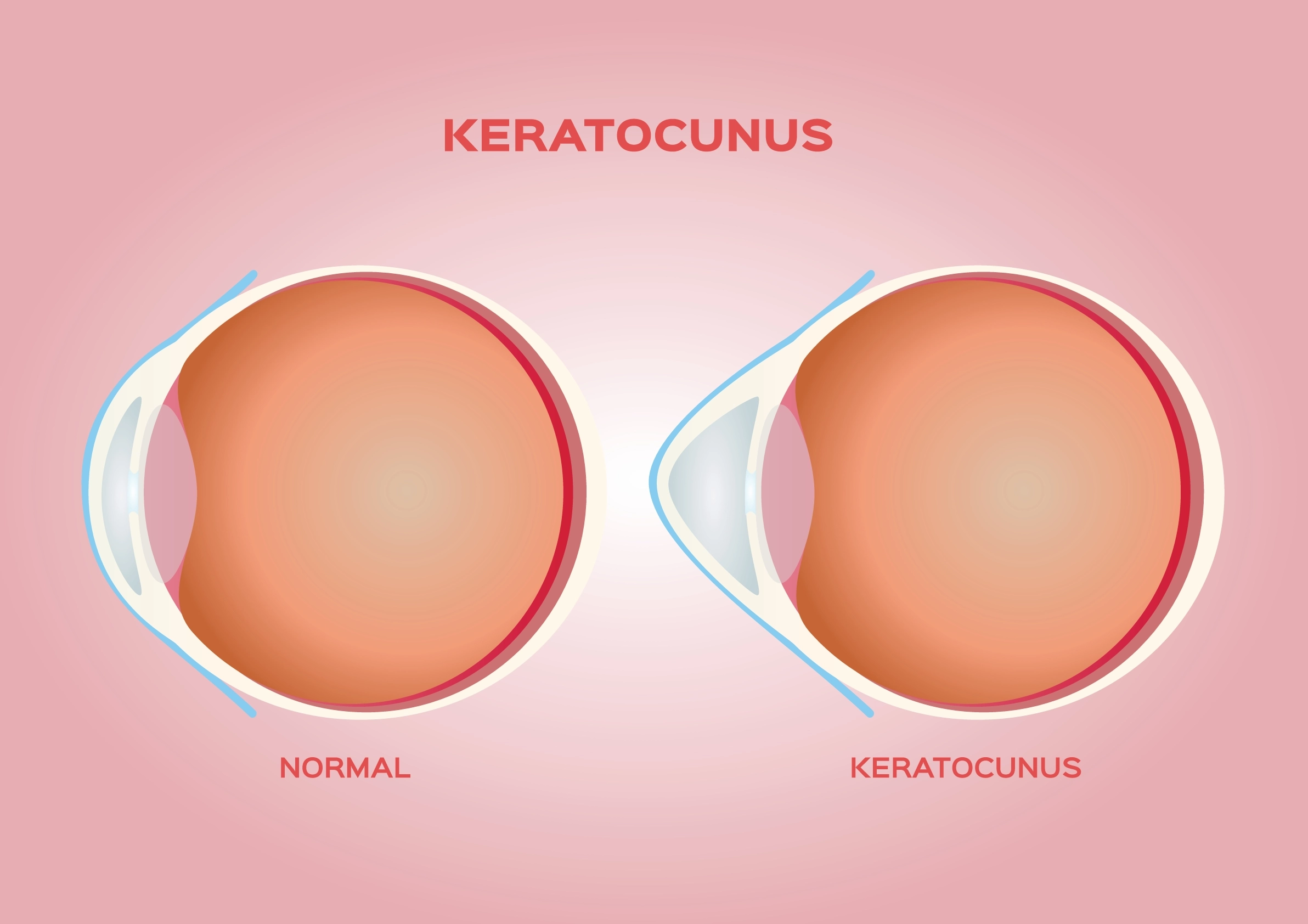
Keratoconus is a relatively common eye condition in which the cornea becomes thin and irregularly shaped, gradually changing from its normal round shape to a cone-like shape. This change leads to visual impairment and blurred vision, significantly affecting quality of life if not diagnosed and treated in time.
Dr. Amr Saeed, Consultant of Ophthalmology, emphasizes that early diagnosis and an appropriate treatment plan can significantly slow disease progression and improve vision.
Although the exact cause is unknown, several factors may contribute:
Genetic factors: family history of the condition.
Chronic eye rubbing.
Chronic eye allergies or corneal inflammation.
Certain systemic diseases or connective tissue disorders.
Symptoms vary depending on severity and may include:
Blurred vision.
Light sensitivity (photophobia).
Difficulty seeing at night.
Frequent changes in eyeglass prescription without noticeable improvement.
Seeing objects as distorted or double.
Diagnosis involves:
Eye examination using a slit lamp.
Corneal topography to create a detailed map of the cornea.
Pachymetry to measure corneal thickness accurately.
Dr. Amr Saeed confirms that treatment choice depends on the stage of the disease and corneal condition, including:
Glasses and rigid contact lenses
Effective in early stages to improve vision.
Hybrid or scleral contact lenses
Used when traditional lenses are not effective.
Corneal Cross-Linking (CXL) with ultraviolet light
Strengthens corneal collagen fibers and halts disease progression.
Intracorneal ring segments (ICRS)
Adjust corneal curvature and improve vision in moderate cases.
Corneal transplantation
For advanced cases unresponsive to other treatments.
Avoid rubbing your eyes completely.
Use only prescribed lenses or glasses.
Visit your ophthalmologist regularly for follow-up.
Treat any allergies or eye infections promptly.