
Published on: 2025-07-13 | Written by: Ahmed Abdel Salam General Surgery Consultant
Thyroid and salivary gland tumors are conditions that require precise diagnosis and expert surgical intervention due to the sensitive location of these glands and their impact on vital functions such as voice, swallowing, and hormone regulation. In this article, we explore the differences between these tumors, their causes, treatment options, and the role of surgery—all under the guidance of Dr. Ahmed Abdelkader, Consultant of General Surgery, Laparoscopy, and Oncology.
The thyroid gland is located in the front of the neck and produces hormones that regulate metabolism. It can develop benign or malignant tumors.
A lump in the neck
Difficulty swallowing or breathing
Voice changes or hoarseness
Painless thyroid enlargement
Dr. Ahmed Abdelkader explains that most thyroid tumors are benign, but early diagnosis is essential to rule out cancer and determine the proper treatment.
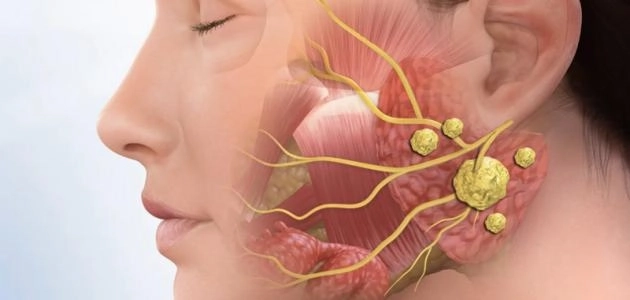
The salivary glands—including the parotid, submandibular, and sublingual glands—can also develop tumors. While most are benign, some may be malignant.
Swelling or a mass near the ear, under the jaw, or inside the mouth
Pain in the affected area
Facial muscle weakness or numbness
Unusual discharge from the mouth
According to Dr. Ahmed Abdelkader, surgery is the most effective treatment for many salivary gland tumors, especially when detected early.
Diagnosis typically includes:
Physical examination
Ultrasound imaging
CT scan or MRI
Fine needle aspiration biopsy
Dr. Ahmed Abdelkader emphasizes the importance of accurate testing to determine the nature of the tumor—benign or malignant—and to create a personalized surgical plan.
For benign tumors or early-stage cancers, partial or total gland removal can be performed using traditional or minimally invasive laparoscopic techniques, depending on the tumor’s size and location.
Dr. Ahmed Abdelkader has extensive experience in performing these delicate surgeries with minimal invasion, reducing risks and preserving surrounding structures like nerves and healthy glands.
After surgery, patients are closely monitored to assess hormone levels and ensure complete recovery, with regular blood tests and imaging.
Dr. Ahmed Abdelkader affirms that consistent follow-up plays a crucial role in preventing recurrence and promoting full recovery.