

Published on: 2025-07-13 | Written by: Ahmed Abdel Salam General Surgery Consultant
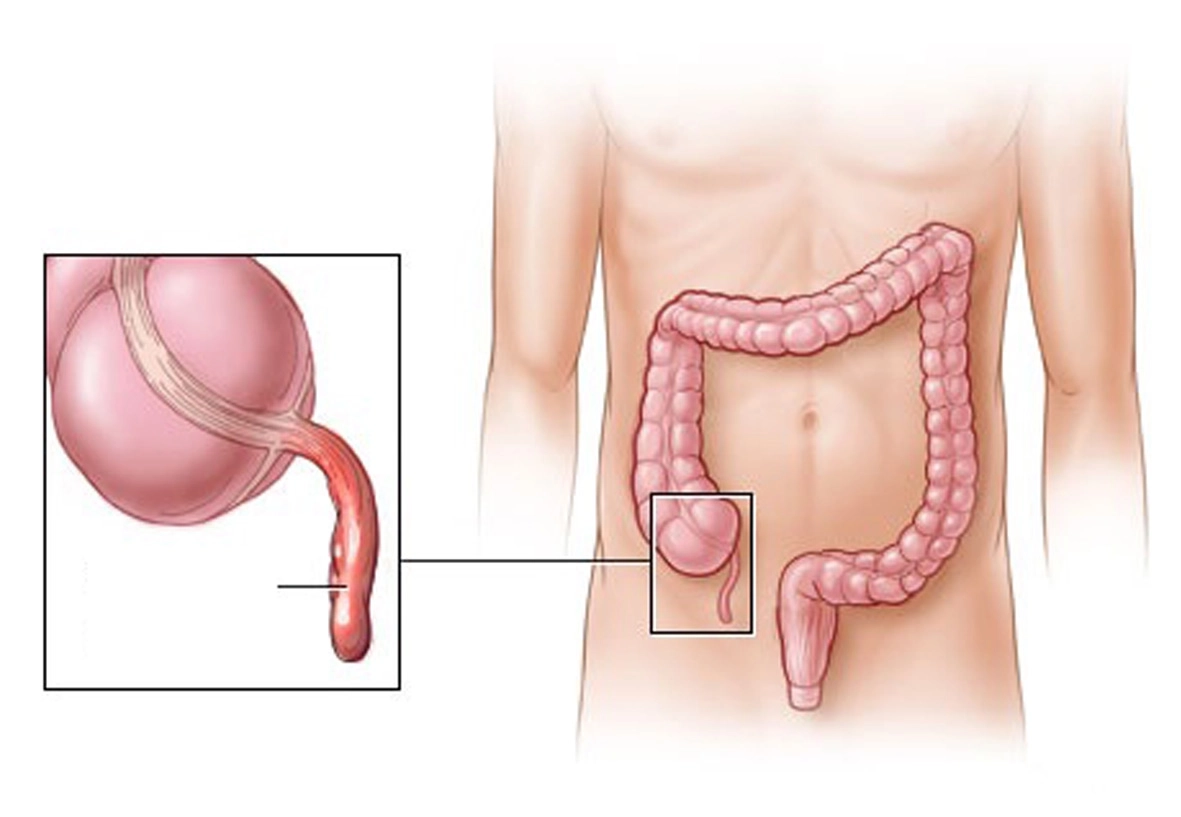
The appendix is a small tube-shaped organ located in the lower right side of the abdomen. It can become inflamed in a condition known as appendicitis, which is a medical emergency requiring prompt surgical intervention. In this article, we shed light on the methods of removing the appendix—whether through traditional surgery or laparoscopy—highlighting the advantages of each technique. We’re honored to present this information in collaboration with Dr. Ahmed Abdelkader, Consultant of General Surgery, Laparoscopy, and Oncology.
Appendicitis occurs when the appendix becomes blocked, leading to bacterial growth, swelling, and inflammation. The patient typically experiences sudden pain in the lower right abdomen that intensifies over time, often accompanied by nausea, vomiting, and fever.
Dr. Ahmed Abdelkader emphasizes that delaying treatment can lead to appendix rupture, which is life-threatening and requires urgent surgery.
In this procedure, the surgeon makes a small incision in the abdomen to remove the appendix. It’s commonly used in emergency situations, especially if the appendix has ruptured or if there’s an abscess.
Advantages of traditional surgery:
Suitable for advanced or complicated cases
Used when there are adhesions or pus in the abdomen
However, Dr. Ahmed Abdelkader notes that recovery time tends to be longer, with more postoperative pain and a more visible scar compared to laparoscopy.
This technique uses a small camera and surgical tools inserted through three tiny incisions in the abdomen. The surgeon operates while viewing a high-resolution monitor.
Advantages of laparoscopic surgery:
Less postoperative pain
Faster recovery
Minimal, barely visible scars
Fewer complications
According to Dr. Ahmed Abdelkader, laparoscopy is the preferred option for most uncomplicated appendicitis cases and is favored by patients for its speed and reduced risks.
Most patients leave the hospital the day after surgery—especially after laparoscopic appendectomy—and return to normal activities within 7 to 10 days. Dr. Ahmed Abdelkader provides careful follow-up care to ensure full recovery and prevent complications.