
Published on: 2026-10-27 | Written by: Alexandria Eye Hospital
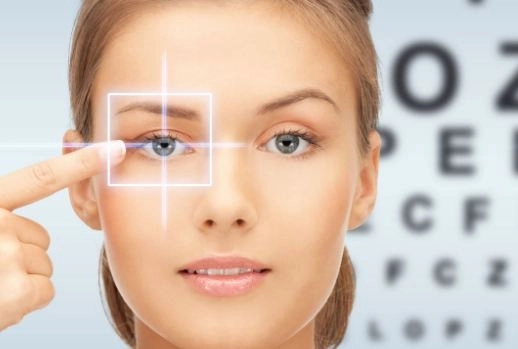
Laser vision correction is one of the modern ophthalmic procedures used to reduce dependence on glasses and contact lenses. These procedures aim to improve vision by correcting refractive errors, helping patients see more clearly in their daily lives.
Alexandria Eye Hospital provides ophthalmology services, including vision correction and laser procedures, at its location in Smouha, Alexandria. Choosing the appropriate procedure depends on the condition of the eyes, corneal thickness, the degree of refractive error, and the results of the preliminary examinations.
What Are the Types of Refractive Errors?
Refractive errors occur when light does not focus correctly on the retina, resulting in blurred vision. The main types include:
Myopia (Nearsightedness): Difficulty seeing distant objects clearly.
Hyperopia (Farsightedness): Difficulty seeing nearby objects clearly, although symptoms may vary depending on the degree of hyperopia.
Astigmatism: Blurred or distorted vision caused by an irregular curvature of the cornea or lens.
Presbyopia: An age-related condition that affects the ability to focus on nearby objects. Its treatment differs from that of ordinary refractive errors and may require special assessment.
Laser vision correction may be suitable for certain types of refractive errors, depending on the patient's eye condition and examination results.
Types of Laser Vision Correction Procedures
Several techniques are available for correcting vision. The most appropriate option is determined after a comprehensive eye examination.
1. LASIK
LASIK is a widely used laser vision correction procedure. It involves creating a thin flap in the cornea, followed by reshaping the underlying corneal tissue using a laser to correct the refractive error.
The procedure is generally quick, and many patients experience improved vision within a short period. However, suitability depends on factors such as corneal thickness, eye health, and the stability of the refractive error.
2. Femto-LASIK
Femto-LASIK is a variation of LASIK that uses a femtosecond laser to create the corneal flap instead of a mechanical blade. The remaining steps involve reshaping the cornea with an excimer laser.
This technique may be appropriate for selected patients after an assessment of their corneal structure and overall eye health.
3. PRK
Photorefractive keratectomy (PRK) is a laser vision correction procedure in which the surface layer of the cornea is removed before the laser reshapes the corneal tissue.
PRK may be suitable for some patients who are not ideal candidates for LASIK, depending on their examination results. Recovery of clear vision usually takes longer than with LASIK, and temporary discomfort may occur during the initial healing period.
4. SMILE
Small Incision Lenticule Extraction (SMILE) is a minimally invasive laser vision correction procedure in which a small piece of corneal tissue is created with a femtosecond laser and removed through a small incision.
It may be suitable for certain patients, particularly those with specific types of myopia and astigmatism. The decision to use this technique depends on the patient's eye measurements and clinical assessment.
Who Is a Suitable Candidate for Laser Vision Correction?
Not everyone is eligible for laser vision correction. A comprehensive examination is necessary to determine whether the procedure is appropriate.
Factors considered during the assessment include:
Age and stability of the refractive error.
Corneal thickness and shape.
General eye health.
The presence of dry eye or other ocular conditions.
Medical conditions or medications that may affect healing.
The patient's expectations and visual needs.
Patients with certain corneal diseases, unstable prescriptions, or other eye conditions may need an alternative treatment. A specialist should assess each case individually before recommending surgery.
What Examinations Are Needed Before Laser Vision Correction?
Preoperative examinations help determine the safest and most suitable procedure. These may include:
Measuring visual acuity and refractive error.
Assessing corneal thickness.
Performing corneal topography or tomography to evaluate its shape.
Examining the overall health of the eyes.
Assessing tear production and symptoms of dry eye.
Confirming that the refractive error is sufficiently stable.
These tests help the ophthalmologist evaluate the suitability of laser vision correction and reduce the risk of complications.
How Is Laser Vision Correction Performed?
The details vary according to the chosen technique, but the process generally includes several steps:
Preoperative assessment: The ophthalmologist reviews the patient's medical and eye history and performs the necessary examinations.
Preparation: Anesthetic eye drops are usually applied to reduce discomfort during the procedure.
Laser treatment: The selected technique is used to reshape the cornea or correct the refractive error.
Initial recovery: The patient receives postoperative instructions and may need prescribed eye drops.
Follow-up appointments: The ophthalmologist monitors healing and visual improvement.
Patients should follow all instructions provided by their treating doctor, including the recommended schedule for follow-up visits.
Benefits of Laser Vision Correction
For suitable candidates, laser vision correction may offer several benefits, including:
Reduced dependence on glasses or contact lenses.
Improved visual clarity.
A relatively short procedure.
A shorter recovery period with some techniques, particularly LASIK.
Better convenience during everyday activities for eligible patients.
The results differ from one person to another, and no procedure can guarantee perfect vision or eliminate the need for glasses in every situation.
Possible Side Effects and Complications
Although laser vision correction is generally considered safe for appropriately selected patients, it can have side effects and complications.
Possible effects include:
Temporary dry eye.
Blurred or fluctuating vision during recovery.
Sensitivity to light.
Halos or glare, particularly at night.
Under-correction or over-correction of the refractive error.
Delayed healing or other corneal complications.
Rarely, infection or a reduction in visual quality.
The likelihood of these problems varies according to the procedure and the patient's eye condition. A thorough examination and adherence to postoperative instructions are important parts of reducing risk.
Tips for Recovery After Laser Vision Correction
Following the ophthalmologist's instructions can support recovery and help protect the eyes. General recommendations may include:
Use prescribed eye drops according to the doctor's instructions.
Avoid rubbing or pressing on the eyes.
Keep water, dust, and other irritants away from the eyes as advised.
Avoid swimming and eye makeup for the period recommended by the treating doctor.
Attend all scheduled follow-up appointments.
Contact the ophthalmologist promptly if severe pain, sudden deterioration in vision, or unusual symptoms occur.
Recovery time varies depending on the technique used and the individual's healing process.
Do the Results of Laser Vision Correction Last?
Laser vision correction can provide long-lasting improvement for many suitable patients. However, the procedure does not prevent age-related changes in vision, such as presbyopia, and some patients may experience changes in their prescription over time.
The expected outcome depends on the original refractive error, the stability of the prescription, eye health, and the technique used. An ophthalmologist can explain the likely benefits and limitations based on the individual examination.
Vision Correction and Laser Services at Alexandria Eye Hospital
Alexandria Eye Hospital provides ophthalmology services, including vision correction and laser procedures. Selecting the appropriate treatment requires an individual assessment to determine whether laser surgery is suitable and which technique best meets the patient's needs.
The hospital's location is:
Conclusion
Laser vision correction includes several procedures, such as LASIK, Femto-LASIK, PRK, and SMILE. The most suitable technique depends on the patient's eye condition, corneal measurements, and visual needs. A comprehensive examination is essential to assess eligibility, discuss expected results, and understand potential risks.
Alexandria Eye Hospital in Smouha, at 64 Ismail Serry Street, Alexandria, provides ophthalmology services, including vision correction and laser procedures, with treatment decisions based on the patient's individual eye assessment.