

Published on: 2026-07-16 | Written by: Dr. Israa Waleed, Specialist in General Surgery Surgery
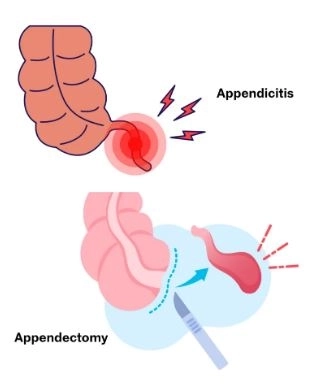
Laparoscopic appendectomy is one of the most commonly performed procedures in general and minimally invasive surgery, providing an advanced treatment for acute appendicitis through small surgical incisions instead of traditional open surgery. This minimally invasive technique has significantly reduced postoperative pain, lowered the risk of complications, accelerated recovery, and enabled patients to return to their normal daily activities much sooner, making it the preferred surgical option for many patients whenever appropriate.
What Is a Laparoscopic Appendectomy?
Dr. Esraa Walid explains that laparoscopic appendectomy is a minimally invasive surgical procedure performed using a high-definition laparoscope equipped with a camera and specialized surgical instruments inserted through several small incisions in the abdominal wall. This approach allows the inflamed appendix to be removed with great precision while minimizing trauma to the surrounding tissues and providing excellent surgical outcomes compared with conventional open surgery in many cases.
When Is an Appendectomy Necessary?
Dr. Esraa Walid emphasizes that surgical intervention becomes essential when patients develop symptoms of acute appendicitis, including severe abdominal pain that typically begins around the navel and later shifts to the lower right side of the abdomen, nausea, vomiting, fever, and loss of appetite. Delaying treatment may lead to appendiceal rupture, increasing the risk of serious complications such as peritonitis or abdominal abscess formation.
Advantages of Laparoscopic Appendectomy
Dr. Esraa Walid confirms that laparoscopic appendectomy offers numerous benefits, including smaller incisions, less postoperative pain, a lower risk of infection, faster recovery, a shorter hospital stay, and minimal scarring. In addition, the laparoscopic approach allows the surgeon to examine the entire abdominal cavity during the operation when necessary, improving diagnostic accuracy in certain cases.
How Is the Procedure Performed?
Dr. Esraa Walid points out that laparoscopic appendectomy is performed under general anesthesia. Small incisions are made in the abdomen, through which the laparoscope and specialized surgical instruments are introduced. The inflamed appendix is carefully removed, the surrounding tissues are inspected to ensure there are no additional concerns, and the small incisions are closed with cosmetic sutures. The procedure is generally completed within a relatively short time, depending on the patient's condition.
Recovery After Laparoscopic Appendectomy
Dr. Esraa Walid explains that most patients are able to walk within a few hours after surgery and gradually resume their normal daily activities within several days, depending on their recovery progress and the surgeon's recommendations. Patients are advised to take prescribed medications, care for the surgical wounds properly, avoid strenuous physical activity, and attend scheduled follow-up visits to ensure a smooth and complete recovery.
Complications of Delayed Treatment
If acute appendicitis is left untreated, it may result in appendiceal rupture, widespread abdominal infection, abscess formation, and peritonitis. These serious complications often require more complex surgical treatment and longer hospitalization. Therefore, early diagnosis and prompt surgical intervention are essential to prevent life-threatening consequences.
Postoperative Care Tips
To promote a smooth recovery after laparoscopic appendectomy, patients should:
Follow all postoperative instructions provided by the surgeon.
Keep the surgical wounds clean and monitor the healing process.
Drink plenty of fluids and maintain a balanced, nutritious diet.
Avoid lifting heavy objects until fully recovered.
Seek immediate medical attention if fever, severe pain, redness, swelling, or discharge develops around the surgical wounds.
Laparoscopic appendectomy is one of the safest and most effective surgical treatments for acute appendicitis, combining surgical precision, faster recovery, reduced pain, fewer complications, and excellent cosmetic results. Early diagnosis and timely surgical management play a crucial role in preventing serious complications and helping patients regain their health and return to their normal lives as quickly as possible.