

Published on: 2026-05-03 | Written by: DrReda ElKady Consultant in Pediatric Neonatal
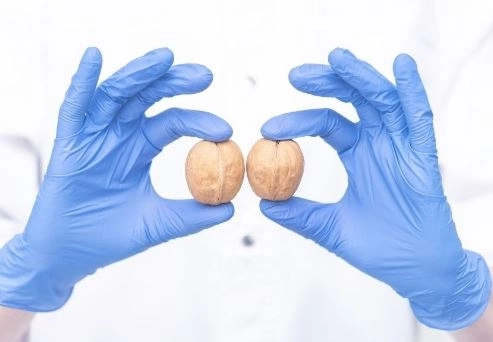
Learn about undescended testicle (cryptorchidism) in children, including causes, symptoms, diagnosis, and treatment with Dr. Reda El-Kady, Pediatric Surgery Specialist.
An undescended testicle (cryptorchidism) is a medical condition detected at birth when one or both testicles fail to complete their natural journey from inside the body into the scrotum. During pregnancy, the testicles form inside the fetus's abdomen and begin a programmed downward migration, but sometimes this journey stops halfway.
Although this diagnosis may initially worry parents, the good news is that this condition is fully treatable, and the earlier the intervention, the better the outcomes. With proper diagnosis and the right physician, your child can live a healthy life without any significant complications. In this article, we will explain what an undescended testicle is, along with its causes, symptoms, diagnosis, and treatment.
An undescended testicle in children is a medical condition that occurs when one or both testicles fail to descend into the scrotum before birth, remaining suspended somewhere along their natural path inside the body. This condition is also known as testicular elevation in children.
The testicles are originally two reproductive glands formed inside the fetal body during pregnancy. They then travel through the inguinal canal in the groin area to settle in the scrotum before birth. When this journey is disrupted, this condition appears.
Undescended testicles are among the most common male congenital genital anomalies, affecting between 1% and 3% of full-term male infants. This percentage increases significantly in premature infants, with nearly 30% of low birth weight infants (less than 2.3 kilograms) born with it according to Healthy Children, and it is almost inevitable for those weighing less than 1.5 kilograms.
Every male newborn is examined immediately after birth to check for testicular descent, and parents can also notice this during diaper changes or bathing. If the testicle does not descend on its own within 3 to 4 months, a physician should be consulted, who may recommend surgical intervention to correct the position.
Undescended testicles vary from case to case, depending on their location and palpability, including the following types:
Inguinal Testicle: The type where the testicle stops in the inguinal canal in the groin area without completing its descent, and the doctor can feel and palpate it during examination.
Non-Palpable Testicle: This type cannot be felt during a physical examination as it is completely hidden from manual touch—neither in the scrotum nor in the inguinal canal—requiring further investigations to locate it.
Retractile Testicle: This is the most perplexing type, where the testicle can be felt in the inguinal canal and gently pulled down to the scrotum, but as soon as it is released, it returns to its original position in the groin.
The causes of an undescended testicle are divided into two main types: congenital (present since birth) and acquired (developing as the child grows):
Occurs when a child is born without the testicles having descended into the scrotum. In most cases, doctors cannot identify a clear cause other than certain hormonal and genetic disorders. Premature infants are the most vulnerable, as their bodies do not have sufficient time to complete this process before birth.
Unlike the first type, the child is born with testicles in their normal position, but as the child grows, the problem begins to appear. When the child's body grows faster than the spermatic cord, the cord becomes too short, pulling the testicle upward toward the groin. This can happen anytime between the ages of 1 and 10 years.
Several factors may increase the likelihood of a newborn having an undescended testicle, including:
Premature birth or low birth weight.
Family history of undescended testicles.
Certain health conditions in the child, such as cerebral palsy or abdominal wall defects.
Maternal diabetes prior to or during pregnancy.
Maternal smoking or exposure to secondhand smoke during pregnancy.
Exposure to certain pesticides during pregnancy.
Contrary to what many might expect, an undescended testicle usually does not cause any pain or discomfort to the child. Instead, symptoms appear through:
Absence of the testicle from the scrotum, making it look small and underdeveloped.
Scrotal asymmetry if only one testicle is undescended, appearing full on one side and empty on the other.
Occasional disappearance and reappearance of the testicles, where they vanish when the child feels cold or excited (known as retractile testicles).
If the testicles do not descend to their normal position, several health and psychological complications may result, including:
Infertility: One of the most common complications, especially when both testicles are undescended, affecting sperm production and quality.
Testicular Cancer: The risk increases significantly with age, particularly upon reaching the thirties or fortieths.
Inguinal Hernia: A weakness in the lower abdominal wall or inguinal canal, which may lead to part of the intestine protruding through it.
Testicular Torsion: A painful twisting of the testicle that can block blood flow, requiring urgent medical intervention.
Psychological Stress: Complications are not limited to the physical side; an empty scrotum can negatively impact a boy's self-esteem and mental health.
Diagnosis depends primarily on physical examination during routine pediatric checkups to verify the location of the testicles. If they are not found in the scrotum, further evaluation may be needed to determine whether they are absent or suspended somewhere inside.
To evaluate non-palpable testicles, surgery may be required to locate and treat the problem. There are two main surgical approaches:
Laparoscopy: The surgeon inserts a thin tube equipped with a camera through a small abdominal incision to locate the testicle. In some cases, correction can be performed during the same procedure.
Open Surgery: Uses a larger incision to examine the abdominal or groin area, used when the testicle cannot be located by laparoscopy alone.
Imaging tests such as ultrasound or MRI are generally not necessary for diagnosing this condition.
If your child's testicle does not descend spontaneously into the scrotum by 6 months of age, medical intervention will likely be needed, as it is rare for a testicle to descend on its own after this age.
Surgery is the gold standard treatment for an undescended testicle. Hormonal injections previously used are no longer recommended; they have been replaced by a procedure known as orchiopexy, which is the standard treatment to return the testicle to its natural position in the scrotum. It may be performed in two stages depending on the testicle's location.
Orchiopexy aims to achieve three primary goals:
Restore the testicle to its normal position inside the scrotum.
Reduce the risk of future hormonal and fertility issues.
Lower the risk of testicular cancer, which is slightly elevated in cases of undescended testicles.
Orchiopexy is a short surgical procedure performed under general anesthesia to move the testicle from the abdomen into its natural position in the scrotum, typically taking about 45 minutes.
Surgical steps include:
The child is placed under general anesthesia before the surgery begins.
The surgeon moves the testicle down into the scrotum and secures it in its natural place.
The surgeon closes the pathway through which the testicle passed to prevent it from retracting back into the abdomen.
If a testicle is damaged or underdeveloped, the surgeon removes it and secures the healthy testicle to preserve normal growth.
In most cases, the child leaves the hospital on the same day, though some cases may require two stages separated by six months.
Although surgical risks are rare, they include:
Possibility of minor infection or bleeding at the wound site.
Feeling some pain and swelling in the groin area after surgery.
Slight possibility of testicular damage during surgery.
The testicle may not grow well after the procedure, which is monitored during follow-up visits.
If you notice that your child's testicle has not descended into its natural position or have any concerns regarding his groin area, do not hesitate to consult a doctor as soon as possible.
Contact the physician immediately if you notice any of the following signs of infection:
Increased pain, redness, or swelling at the surgical site.
Non-clear discharge from the wound (such as green/yellow pus or red blood).
Fever above 38°C (100.4°F).
Vomiting or inability to tolerate food and liquids orally.
Abdominal pain that does not ease with standard pain relievers like Paracetamol or Ibuprofen.
Paleness, lethargy, or general malaise.
Take your child to the emergency department immediately without delay if he experiences:
Severe pain or sudden swelling in the testicular region.
Disappearance of the testicle from the scrotum after it was visible.
Pain unresponsive to prescribed medications.
Difficulty urinating or inability to urinate for more than 6 to 8 hours.
When the doctor informed me right after delivery that my baby had an undescended testicle, I felt deeply anxious with countless questions racing through my mind. I began searching for the best specialist I could trust until I found Dr. Reda El-Kady, who played a major role in transforming this whole journey.
From the very first visit, I felt reassured; he took his time explaining the condition in detail, answered all my questions with patience and composure, and outlined the treatment steps and what to expect at every stage. I never felt I was just sitting before a doctor, but rather someone who genuinely cared about my child's health.
On the day of the surgery, carrying every mother's fear, the entire medical team rose to the occasion. The operation was completely successful, and we left the hospital on the same day with my child in good health. Dr. Reda El-Kady's post-operative follow-up was another testament to his professionalism, ensuring my child's complete recovery at every visit.
Today, looking back, I can confidently say that choosing the right physician is half the cure. If you are looking for a trusted specialist for your child, Dr. Reda El-Kady is a choice you will never regret.
Is your child suffering from the same condition? Do not delay in making the right decision. Book now with Dr. Reda El-Kady, top Pediatric Surgeon for treating undescended testicles in children.
What is the ideal age for undescended testicle surgery? Doctors recommend performing the procedure between 6 and 18 months of age, as early intervention during this window is ideal for preserving long-term testicular health and function.
Is undescended testicle surgery dangerous for children? No, it is a common and safe surgical procedure performed under general anesthesia, taking only about 45 minutes. Complications are very rare, and in most cases, the child goes home on the same day without needing hospitalization.
Dokki
Fifth Settlement
Nasr City
Alexandria
Kafr El-Sheikh
Beheira
For contact via Phone or WhatsApp:
01144821789
01004438929