
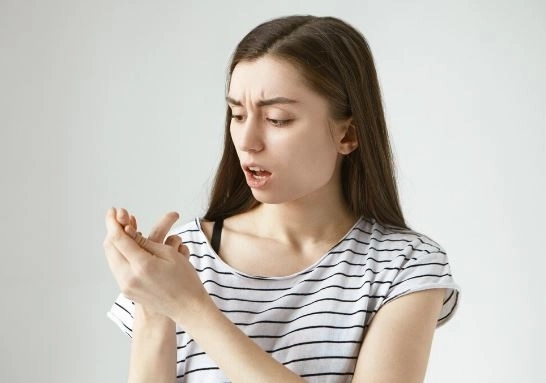
In moments of stress or boredom, you may find yourself unconsciously touching your hair, biting your nails, or repeatedly picking at your skin. These habits may seem harmless or temporary, but in some cases they can develop into compulsive behaviors that are difficult to control and may interfere with daily life.This phenomenon is known as Body-Focused Repetitive Behaviors (BFRBs), a group of repetitive actions directed toward one's own body. These behaviors are often associated with stress, anxiety, or even absent-mindedness.Although many people engage in these behaviors to a mild degree, they can become a significant problem when they lead to physical harm, feelings of embarrassment, or a sense of losing control. In this Dalili Medical article, we will explore what BFRBs are, why they occur, and how they can be managed and reduced through effective strategies.
Body-Focused Repetitive Behaviors (BFRBs) are a group of psychological disorders characterized by repetitive actions directed toward one's own body, such as nail biting, lip biting, cheek chewing, skin picking, scab removal, and hair pulling.
Research suggests that a significant number of individuals engage in one or more of these behaviors to varying degrees. Nail biting is among the most common forms, while skin picking is less common but can cause more significant physical harm.
These behaviors are often associated with elevated levels of stress or anxiety. In some cases, they may serve as an unconscious way of regulating emotions, obtaining temporary relief, or seeking sensory stimulation.
People frequently engage in these behaviors during periods of psychological stress or tension, and they may become habitual when repeated regularly, particularly if they occur several times per week. When the behaviors become severe enough to interfere with daily life or cause physical injury, consultation with a mental health professional is recommended.
Many individuals with BFRBs report experiencing temporary relief or satisfaction while performing the behavior, despite recognizing its harmful effects and wanting to stop. These conditions are often linked to difficulties with impulse control, making it challenging to discontinue the behavior without appropriate treatment.
BFRBs are not inherently dangerous, but they can become problematic if they:
Cause wounds or physical injury
Interfere with daily, social, or occupational functioning
Lead to psychological distress or feelings of embarrassment
If the behavior is mild and easily controlled, it is generally considered a behavioral habit.
If it is repetitive, difficult to control, and causes harm or distress, it may be classified as a mental health disorder.
In some cases, symptoms may decrease over time. However, most individuals benefit from:
Increased awareness of the behavior
Training in self-control and behavior management techniques
Psychological treatment in more severe cases
No. BFRBs are not contagious. They are individual behaviors related to habits, emotional regulation, and brain function.
Absolutely not. BFRBs are associated with:
The brain's mechanisms for regulating stress and emotions
Impulsivity and behavioral habits
They are not a sign of weak willpower or poor character.
BFRBs are not a single condition but rather a group of compulsive behaviors that vary depending on the body part involved and the nature of the behavior.
This behavior involves pulling hair from the scalp, eyebrows, eyelashes, or other areas of the body.
It may occur intentionally or automatically, such as searching for a specific hair or pulling during periods of stress or concentration.
Medical term: Trichotillomania
This includes repeatedly scratching, picking, squeezing, or removing skin and scabs.
Individuals may focus on pimples, dry skin, or minor imperfections, sometimes leading to wounds or scarring.
Medical term: Excoriation Disorder (Skin-Picking Disorder)
This involves repeatedly biting the fingernails or the surrounding skin.
It is one of the most common BFRBs and often increases during periods of stress or boredom. In some cases, it can cause nail deformities or infections.
This behavior involves repeatedly biting the lips or the inside of the cheeks, often unconsciously during thinking, concentration, or stress.
This includes repeatedly touching, rubbing, inspecting, or manipulating the skin or hair without necessarily removing it.
Such behaviors may sometimes precede more severe actions like hair pulling or skin picking.
Other less common BFRBs include:
Picking at the skin around the nails
Mild eyebrow or eyelash pulling
Compulsive nose picking in some cases
Body-Focused Repetitive Behaviors (BFRBs) are repetitive, automatic, or compulsive actions directed toward one's own body, such as hair pulling, nail biting, or skin picking. These behaviors are typically influenced by a combination of psychological, behavioral, and neurological factors rather than a single cause.
Psychological stress and anxiety are among the most common triggers. Many individuals engage in these behaviors as an unconscious method of relieving emotional tension or negative feelings.
Over time, the brain may learn that these behaviors provide temporary relief or satisfaction, leading them to become automatic habits, especially during boredom, concentration, or daydreaming.
Some individuals experience difficulty resisting urges, causing them to engage in the behavior despite their desire to stop.
BFRBs are thought to involve the brain's reward pathways, including dopamine-related mechanisms, which can create a temporary sense of relief despite negative long-term consequences.
These behaviors may occur alongside other psychological conditions, such as anxiety disorders or obsessive-compulsive disorder (OCD).
Examples include:
Trichotillomania (Hair-Pulling Disorder)
Excoriation Disorder (Skin-Picking Disorder)
A behavior may begin as a simple, unnoticed habit—such as touching the hair or skin—and gradually develop into a repetitive pattern that becomes difficult to control.
Symptoms vary from person to person but commonly include:
Repeated hair pulling, nail biting, or skin picking
Multiple unsuccessful attempts to stop
Strong and sudden urges to perform the behavior
Automatic engagement in the behavior, especially during stress or concentration
A sense of calm, satisfaction, or reduced tension while performing the behavior
Often followed by guilt, frustration, or regret
Hair loss or bald patches on the scalp
Skin wounds, irritation, or scarring
Cracked, damaged, or deformed nails
The behavior often increases during:
Stress or anxiety
Boredom
Periods of intense concentration
Daydreaming or mind-wandering
Feelings of guilt or embarrassment after engaging in the behavior
Attempts to hide the physical effects from others
The diagnosis of Body-Focused Repetitive Behaviors (BFRBs) is not based solely on the presence of a repetitive habit. Rather, it requires a careful evaluation by a mental health professional using specific criteria that distinguish normal habits from a psychological disorder.
The two most widely recognized medical diagnoses in this category are:
Trichotillomania (Hair-Pulling Disorder)
Excoriation Disorder (Skin-Picking Disorder)
A diagnosis is typically considered when the following are present:
Recurrent hair pulling, skin picking, or nail biting
Repeated attempts to stop with little or no lasting success
Significant emotional distress, embarrassment, or guilt
Interference with school, work, or social relationships
Hair loss, skin damage, wounds, or nail deterioration
Spending excessive amounts of time engaging in the behavior
The behavior is not better explained by a skin condition, neurological disorder, or another medical condition
Not every body-focused repetitive behavior is considered a mental disorder.
It is generally classified as a disorder when it:
Becomes repeatedly uncontrollable
Causes noticeable physical harm
Leads to significant psychological or social distress
Diagnosis is usually made through:
A clinical interview with a psychiatrist or psychologist
Assessment of the frequency and triggers of the behavior
Evaluation of associated emotions such as stress, boredom, or anxiety
The use of behavioral questionnaires or assessment scales when needed
The risks vary depending on the specific behavior, but they can affect physical, psychological, and social well-being and may worsen over time if left untreated.
Hair loss or bald patches on the scalp
Wounds, scratches, or chronic skin irritation
Scarring or permanent skin changes
This includes disorders such as:
Trichotillomania
Excoriation Disorder
Bacteria entering through open wounds
Recurrent skin infections
Worsening of the condition when treatment is delayed
Cracked, damaged, or worn nails
Pain or dental and gum problems from lip or cheek biting
Chronic irritation in affected areas
Increased feelings of guilt or embarrassment
Reduced self-esteem due to appearance changes or physical damage
Ongoing anxiety about hiding the behavior or controlling it
A repeating cycle of:
Stress → Behavior → Temporary Relief → Guilt → More Stress
Avoidance of social situations because of embarrassment
Difficulty concentrating at school or work
Reduced productivity due to time spent engaging in or thinking about the behavior
Attempts to conceal physical signs from others
Without appropriate intervention, the behavior may:
Become more frequent
Increase in severity
Progress from a simple habit to a clinically significant disorder requiring specialized treatment
Medication can be a helpful component of treatment for Body-Focused Repetitive Behaviors (BFRBs) in certain cases. However, it is generally not considered the first-line treatment. Behavioral approaches, particularly Habit Reversal Training (HRT), are typically preferred. Medications may be considered when symptoms are severe or when BFRBs occur alongside conditions such as anxiety, obsessive-compulsive disorder (OCD), or depression.
Currently, there is no single medication specifically approved for all BFRBs. Instead, medications are used to target:
Anxiety and stress
Obsessive-compulsive symptoms
Impulsivity and compulsive behaviors
Serotonin and dopamine regulation in the brain
Examples include:
Fluoxetine
Sertraline
Paroxetine
These medications help reduce anxiety and emotional distress while also decreasing obsessive thoughts that may trigger repetitive behaviors.
Results for BFRBs themselves are generally modest or variable.
They may be particularly helpful when anxiety or OCD symptoms are also present.
N-Acetylcysteine is among the most extensively studied medications for BFRBs.
Influences glutamate regulation in the brain
May reduce impulsive and repetitive behaviors
Research suggests potential benefits for:
Trichotillomania
Excoriation Disorder
Some studies have shown improvement in a proportion of patients.
However, it is not effective for everyone and should not be considered a guaranteed treatment.
Examples include:
Olanzapine
Aripiprazole
These medications affect dopamine pathways involved in reward and motivation, which may help reduce compulsive behaviors.
They are generally reserved for:
Severe cases
Cases that do not respond to other treatments
and should only be used under close medical supervision.
Examples include:
Lamotrigine (in selected cases)
Valproate (rarely used)
These medications may occasionally be considered when emotional instability or additional psychiatric conditions contribute to the repetitive behaviors.
These medications may help reduce impulsivity or mood instability in some patients. However, scientific evidence for their effectiveness in treating BFRBs is less strong compared to other treatment options.
Examples include:
Buspirone
Certain mild tranquilizers (used with caution and for short periods only)
Goal:
To reduce anxiety and stress, which are among the main triggers of repetitive behaviors.
The choice of treatment depends on several factors, including:
The primary nature of symptoms (anxiety, obsessive thoughts, impulsivity)
Severity of the behavior and its impact on daily life
Presence of co-occurring mental health conditions
Age and overall physical health
Body-Focused Repetitive Behaviors (BFRBs) are behavioral disorders primarily driven by habits, impulsivity, and stress. Therefore, their treatment differs from that of traditional physical diseases.
It is important to clarify that these behaviors are not treated with surgery in conventional psychiatric practice. There are no approved surgical procedures designed to stop behaviors such as hair pulling, nail biting, or skin picking.
❌ There is no direct surgery for BFRBs
There are:
No brain regions surgically removed to eliminate the behavior
No operations designed to remove compulsive urges
This is because these behaviors are not linked to a single, removable area of the brain.
In very rare and severe cases, neurosurgical or neuromodulation techniques may be used, but they are not direct treatments for BFRBs. They are mainly used for other disorders such as severe obsessive-compulsive disorder (OCD).
This involves implanting electrodes in specific brain regions to modify neural activity related to compulsivity and impulsivity.
Mainly used for severe, treatment-resistant OCD
Some patients may experience indirect improvement in compulsive behaviors
Not an approved direct treatment for BFRBs
Considered only as a last resort after all other treatments fail
Such as:
Cingulotomy
Capsulotomy
Current status:
Extremely rare today
Used only in severe, treatment-resistant cases
Performed under strict medical supervision
Because these disorders:
Are linked to learned behaviors and habits
Are influenced by stress, anxiety, and environment
Depend on impulsivity and emotional regulation
Therefore, they cannot be treated by removing a part of the brain. Instead, they require behavioral and psychological interventions.
Scientific evidence shows that the most effective treatments include:
Habit Reversal Training (HRT)
Cognitive Behavioral Therapy (CBT)
SSRIs (antidepressants)
N-Acetylcysteine (in some cases)
This approach focuses on retraining the brain to break the habit and replace it with alternative behaviors. It is considered one of the most effective methods.
Goal: Increase awareness of the behavior before it happens automatically.
Record when the behavior occurs
Identify location and emotional triggers (stress, boredom, focus)
Do this without trying to change the behavior at first
✔ This helps break unconscious behavior patterns.
Goal: Interrupt the automatic cycle.
When the urge begins:
Pause for a few seconds
Take a deep breath
Repeat a mental phrase such as: “I am aware now”
✔ This creates awareness between urge and action.
This is the core technique.
Replace the behavior with an incompatible action:
Hair pulling → clench fists or press hands on thighs
Nail biting → hold a stress ball or place hands under thighs
Skin picking → keep hands flat on a surface
✔ Continue for 1–3 minutes until the urge decreases.
Goal: Prevent idle hands.
Examples:
Stress ball
Beads or rosary
Drawing or coloring
Holding a pen or small object
Goal: Break environmental association.
Change location immediately when urge appears
Or walk for a few minutes
Goal: Reduce urge intensity.
Delay the behavior by 5 minutes
Gradually increase the delay over time
✔ Urges often decrease naturally over time.
Goal: Reduce tension.
Inhale for 4 seconds
Hold for 2 seconds
Exhale for 6 seconds
Repeat 5 times
Morning: breathing + awareness
During the day: use competing responses
Evening: record observations
Throughout the day: keep hands busy
Mild cases: 1–2 weeks
Moderate cases: 3–6 weeks
Severe cases: require combined therapy with a mental health professional
Prevention focuses on reducing triggers and building alternative habits that reduce the likelihood of the behavior occurring. The goal is gradual control, not forced suppression.
Avoid sitting in places where the behavior commonly occurs (e.g., bed during stress)
Reduce prolonged mirror checking
Improve lighting to reduce focus on skin imperfections
Cover vulnerable areas when needed (e.g., hair ties, light gloves)
Stress balls
Pens or beads
Drawing or coloring
Using a phone stand to reduce face touching
Deep breathing exercises (4-2-6)
Daily walking (10–20 minutes)
Reducing caffeine intake
Maintaining regular sleep
Pre-planned responses:
If I touch my hair → I squeeze a stress ball
If I start skin picking → I place my hands under my thighs or change location
✔ Helps interrupt automatic behavior.
Listening to podcasts or calming audio
Engaging in light activities like drawing or reading
Regular nail trimming
Treating skin issues (acne, dryness)
Using moisturizers
Early signs include:
Repeated touching of the same area
Frequent inspection of skin or hair
Light pulling or scratching
✔ Intervene immediately with a competing response.
Organizing daily tasks
Reducing academic or work pressure
Scheduling daily relaxation time