
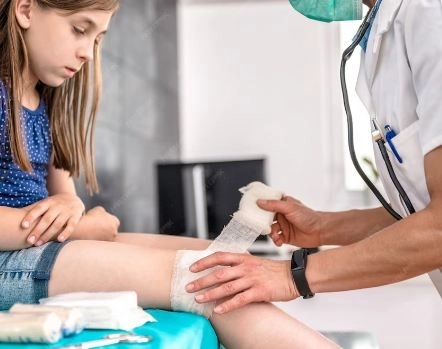
Knee problems in children and adolescents, such as chronic patellar dislocation or patellofemoral joint inflammation, can significantly affect movement and sports activity. One of the effective surgical solutions for these conditions is tibial tubercle osteotomy, also known as Volkerson Osteotomy.This surgery aims to realign the patella and improve knee stability, thereby reducing pain and preventing recurrent dislocations while maintaining the ability to participate in sports and daily activities normally.In this Dalily Medical article, we will cover everything you need to know about the reasons for needing the surgery, its types, how it is performed, the recovery process, and post-operative care tips, explained in a simple and easy-to-understand way for both parents and patients.
What is Tibial Tubercle Osteotomy (Volkerson Osteotomy)?
Volkerson Osteotomy is a surgical procedure performed on the tibial tuberosity, the bony prominence just below the knee that connects to the patellar tendon.
Main goals of the surgery:
Correct the shape of the tibial tubercle to reduce tension on the patellar tendon.
Stabilize the patella and improve its alignment with the femur.
Reduce chronic pain caused by inflammation or repeated friction.
Enable the child to safely return to sports and daily activities.
Frequently Asked Questions:
1️⃣ When can my child start walking after surgery?
Usually, the child begins light steps using crutches or a brace within the first week, following the doctor’s instructions.
Weight-bearing on the knee should be gradual and only allowed when the doctor permits.
2️⃣ Will my child feel pain after surgery?
Yes, mild pain is normal during the first days and gradually decreases.
Pain relief medications and ice packs can help reduce discomfort.
3️⃣ How long does full recovery take?
Mild cases: 3–6 weeks
Moderate cases: 6–12 weeks
Severe or chronic cases: 3–6 months, sometimes longer if the child resumes sports too early.
4️⃣ Will a bony prominence remain after surgery?
Sometimes a small bump remains below the knee, but it usually doesn’t cause pain or affect movement.
5️⃣ When can my child return to sports?
Typically after 3–6 months, depending on the doctor’s assessment and the success of physical therapy.
Return is gradual: walking → slow jogging → light jumping → full sports activity.
6️⃣ Is there a risk of infection?
The risk is low, but the wound must be monitored, cleaned, and dressed according to the doctor’s instructions.
7️⃣ Will my child need additional surgery?
Usually not, unless pain persists or patella stability problems occur after recovery.
8️⃣ Can the problem recur?
Rare after complete healing and growth completion, especially if exercises and precautions are followed.
9️⃣ Can exercises be done at home without a physical therapist?
Some simple exercises are possible at home, but supervised physical therapy ensures the best results and reduces complications.
???? What about nutrition after surgery?
A diet rich in protein, calcium, and vitamin D supports bone and muscle healing.
Staying hydrated and consuming antioxidants helps reduce inflammation and speed recovery.
1️⃣1️⃣ Will my child regain full knee flexion after surgery?
Yes, with consistent exercises and physical therapy, full knee motion usually returns within a few weeks.
1️⃣2️⃣ Can my child travel or perform daily activities?
Light walking and simple daily activities are allowed gradually.
Long-distance travel should be discussed with the doctor to avoid swelling or pressure on the knee.
1️⃣3️⃣ Is a knee brace always necessary?
Usually used for a short period after surgery to stabilize the knee and reduce stress on the tibial tubercle.
After a few weeks, it can be gradually removed according to the doctor’s evaluation.
1️⃣4️⃣ When should I contact the doctor immediately?
If there is severe swelling, redness, discharge, sudden pain, or fever.
Or sudden difficulty in bending the knee or walking.
1️⃣5️⃣ Is Volkerson Osteotomy dangerous?
Generally, the surgery is very safe when performed by an experienced orthopedic surgeon.
Risks like infection, swelling, or temporary pain are rare with proper care.
1️⃣6️⃣ Will the knee brace be needed for a long time?
Usually for a few weeks only to stabilize the knee during bone healing.
After that, it is gradually removed as instructed.
1️⃣7️⃣ Will screws or pins need to be removed?
Some surgeries use small screws or pins to fix the bone.
They usually remain in place unless they cause pain or complications.
1️⃣8️⃣ Does the surgery affect the child’s bone growth?
If done after growth completion or under careful supervision, it usually does not affect growth.
Surgery before growth completion requires careful follow-up to avoid deformity.
1️⃣9️⃣ Can my child play sports immediately after surgery?
No, the child must wait for the recovery period.
Gradually start light exercises, then return to full sports activity based on the doctor’s assessment.
2️⃣0️⃣ Will the knee remain stiff after recovery?
Mild stiffness is normal during the first weeks.
With consistent therapy, full knee motion usually returns.
2️⃣1️⃣ Is chronic pain expected after surgery?
Mild pain may last a few weeks or months, especially with intensive sports.
Most cases improve gradually with rest and physical therapy.
2️⃣2️⃣ Does the surgery prevent future patellar dislocation?
The procedure stabilizes the patella and improves knee stability.
Most patients benefit significantly, and exercises further reduce recurrence risk.
2️⃣3️⃣ Can heat packs replace ice?
Ice is preferred during the first 1–2 weeks to reduce swelling and inflammation.
After the wound heals, heat can relieve stiffness or muscle pain.
2️⃣4️⃣ Can my child travel or walk long distances?
Walking long distances or traveling is limited in the first weeks.
Gradual resumption of daily activities is allowed after consulting the doctor.
2️⃣5️⃣ Are there exercises to avoid?
Avoid high jumps and intense running before doctor approval.
Avoid direct pressure on the tibial tubercle or knee during exercises.
2️⃣6️⃣ Will my child need another surgery if re-injured?
Very rare after complete recovery.
Following exercises and wearing proper shoes reduces future risk.
Types of Tibial Tubercle Osteotomy (Volkerson Osteotomy)
Volkerson Osteotomy aims to stabilize the patella and improve knee function. Its types vary depending on the bone cut, size of any bony prominence, and the knee’s condition:
1️⃣ Anterior Tuberosity Osteotomy
Description: Remove or modify the front bony prominence of the tibial tubercle.
Goal: Reduce pressure on the patellar tendon and improve knee movement.
Suitable for: Pain below the knee due to prominence, mild recurrent patellar dislocation.
Advantages: Relatively simple, faster recovery, less post-op pain.
2️⃣ Anteromedial or Medialization Osteotomy
Description: Cut part of the tubercle and move it forward or sideways to improve patellar alignment.
Goal: Return the patella to its natural position and reduce future dislocation risk.
Suitable for: Recurrent dislocation, lateral patellar maltracking.
Advantages: Reduces pressure on the patellar cartilage and improves post-recovery athletic performance.
3️⃣ Osteotomy with Fixation
Description: After cutting or modifying the bone, it is fixed with small screws or pins.
Goal: Keep the tubercle stable during healing.
Suitable for: Severe or repeated patellar dislocation, large or unstable tubercle.
Advantages: Ensures bone stability during recovery, reducing risk of displacement.
4️⃣ Arthroscopic or Minimally Invasive Osteotomy
Description: Surgery performed with a small arthroscope and tiny incisions instead of a full knee opening.
Goal: Reduce swelling, pain, and accelerate recovery.
Suitable for: Minor tibial tubercle modification, chronic pain below the patella without major deformity.
Advantages: Very small incisions, less pain, faster recovery.
5️⃣ Double or Advanced Osteotomy
Description: A more extensive modification of the tibial tubercle, involving cuts at multiple levels (anterior + medial).
Goal: Achieve full realignment of the patella, especially in chronic cases or after previous injuries.
Suitable for: Recurrent patellar dislocation after prior injury, deformity of the tibial tubercle or knee.
Advantages: Precise knee alignment results, reducing the risk of future dislocations.
Reasons for Volkerson Osteotomy:
Volkerson Osteotomy is performed to correct tibial tubercle and patellar problems, especially when conservative treatments fail. Common indications include:
1️⃣ Recurrent Patellar Dislocation
Causes severe pain and swelling below the knee.
Untreated, it can lead to cartilage damage over time.
2️⃣ Patellofemoral Arthritis
Results from continuous pressure of the patella on the femur.
Causes significant pain, especially when climbing stairs or sitting for long periods.
3️⃣ Bony Prominence of the Tibial Tubercle
Often due to chronic Osgood-Schlatter disease or previous injuries.
Increases tension on the patellar tendon and knee friction.
4️⃣ Failure of Conservative Treatment
Pain persists despite rest, exercises, medications, or knee brace, interfering with daily activities.
5️⃣ Improving Knee Function
Realigning the patella reduces friction, increases stability, and allows safe return to sports and daily activities.
Chronic pain below the knee, worsened by running, jumping, or climbing stairs.
Swelling or visible bony prominence at the tibial tubercle.
Recurrent patellar dislocation or a sense of knee instability.
Tightness or strain in the patellar tendon.
Difficulty performing movements such as squatting, kneeling, or landing on the knee.
Persistent pain despite conservative management.
1️⃣ Medical History:
Child or adolescent’s age and level of physical activity.
Duration and severity of pain, response to conservative treatment.
Previous knee injuries or inflammation.
2️⃣ Clinical Examination:
Pain when pressing on the tibial tubercle or patella.
Swelling or bony prominence.
Difficulty bending or extending the knee.
Patellar stability test.
3️⃣ Imaging Tests:
X-ray: Shows size and location of bony prominence.
MRI: Evaluates tendons, cartilage, and surrounding tissues.
CT Scan: Sometimes used for precise patellar alignment assessment.
4️⃣ Differential Diagnosis:
Rule out other knee disorders, such as joint infection or stress fractures.
1️⃣ Ossicle Excision
Remove bony prominence or extra fragment beneath the knee.
Performed via open surgery or arthroscopy.
2️⃣ Tibial Tuberosity Reshaping
Modify the tubercle shape to reduce patellar tendon pressure.
Suitable for large or twisted prominences.
3️⃣ Patellar Tendon Release/Repair
Remove damaged tissue or release part of the tendon to reduce tension.
Sometimes combined with ossicle excision or reshaping.
4️⃣ Arthroscopic Surgery
Minimally invasive with small incisions, less pain, faster recovery.
Can remove bony fragments or clean inflamed tendon tissue.
5️⃣ Removal of Chronic Calcifications or Inflamed Tissue
For very chronic cases, remove any inflamed or calcified tissue around the tendon.
Anesthesia: General or regional depending on patient age and condition.
Incision: Small to medium incision to access the tibial tubercle.
Procedure: Excision or reshaping of the bone, tendon release or removal of inflamed tissue as needed.
Closure: Precise suturing for faster healing.
Duration: Usually 60–90 minutes depending on case complexity.
Postoperative pain or swelling: normal in the first days, gradually decreases with rest and cold compresses.
Infection at the surgical site: low risk if wound care instructions are followed.
Temporary knee stiffness or weakness: usually improves with physical therapy.
Bone healing problems: rare, requires close monitoring.
Tendon injury: rare, especially if rehabilitation exercises are not followed.
Mild persistent pain: typically resolves with physiotherapy.
Small cosmetic scar below the knee: generally does not affect mobility.
Most complications are temporary and manageable with careful follow-up and adherence to rehabilitation exercises.
1️⃣ Early Stage (Week 0–2)
Complete rest or light movement as directed by the doctor.
Frequent ice packs to reduce pain and swelling.
Elevate the leg when lying down to reduce swelling.
Use a knee brace if prescribed.
2️⃣ Middle Stage (Week 2–6)
Gentle range-of-motion exercises (flexion/extension) to prevent stiffness.
Start light stretching for muscles around the knee, such as quadriceps and hamstrings.
Monitor and care for the surgical wound to prevent infection.
3️⃣ Advanced Stage (Week 6–12)
Gradual strengthening exercises including:
Straight leg raises
Wall sits
Bridging exercises
Gradually increase daily activity while monitoring pain.
4️⃣ Return to Sports (After 3–6 Months)
Gradual return to sports under supervision of a doctor or physiotherapist.
Start with slow walking, then light jogging on flat surfaces.
Jumping or sprinting exercises added only after confirming knee stability and absence of pain.
Following these stages prevents complications and ensures optimal long-term results.
1️⃣ Rest and Pain Management
Rest in the first days to reduce pain and swelling.
Use prescribed pain relievers (e.g., paracetamol or NSAIDs if approved).
Ice packs: 15–20 minutes, 3–4 times daily to reduce swelling and pain.
Elevate the leg using a pillow under the knee or foot.
2️⃣ Wound Care
Keep the surgical incision clean and dry.
Change dressings as instructed.
Monitor for infection signs: redness, heat, discharge, or foul odor.
Contact the doctor immediately if any signs appear.
3️⃣ Early Movement and Exercises
Gently move the knee as directed by the doctor or physiotherapist.
Movement improves blood flow and prevents stiffness.
Avoid pressure, jumping, or sudden bending in the first weeks.
4️⃣ Physiotherapy
Essential for optimal results.
First two weeks: light range-of-motion and gentle stretching of tendon and muscles.
After 6 weeks: strengthen quadriceps and hamstrings, balance exercises for knee stability.
After 3 months: gradually resume sports activities safely.
5️⃣ Use of Brace or Support
A knee brace or support strap may be recommended to stabilize the knee during daily activities.
Reduces patellar tendon tension and supports recovery.
6️⃣ Daily Activities and Sports
Avoid jumping and intensive running until gradual return is approved.
Typically, sports return after 3–6 months based on doctor assessment.
Gradual progression:
Slow walking
Light jogging on flat surfaces
Gentle jumping or acceleration exercises
Avoid sudden movements or heavy loads on the knee until fully healed.
7️⃣ Nutrition and Supplements
Proper nutrition supports bone and muscle healing:
Protein: tissue repair and muscle protection
Calcium & Vitamin D: bone strength
Antioxidants: reduce inflammation, speed up healing
Drink adequate water daily to support circulation and recovery.
8️⃣ Medical Follow-up
Keep all follow-up appointments.
X-rays may be needed to confirm proper bone healing.
Contact the doctor immediately if there is:
Sudden severe pain
Significant swelling or redness
Difficulty moving the knee or patellar dislocation
9️⃣ Managing Swelling and Remaining Bone Prominence
Some bony prominence may remain below the knee, usually painless.
Swelling may persist for a few weeks and gradually decreases with rest and exercises.