

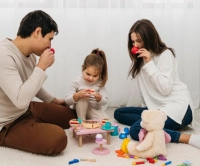
Games vary in terms of their goals and components. Regardless of whether they are for entertainment or education, they have an educational and developmental dimension that helps the child learn the principles of participation and interaction, in addition to enhancing imagination, developing vocabulary and self-confidence, and discovering abilities and talents. In Dalili Medical, we have compiled a group of games suitable for each age group, including games that are suitable for group play with all family members, so that you can choose what suits your little ones.
Choosing the right games for children is of utmost importance for developing their skills and abilities. Games by age:
Games that enhance children's skills include educational games, puzzles, and action games that contribute to the development of critical thinking, social skills, and motor abilities. It is essential to choose games carefully to ensure that they are compatible with children's needs and aspirations.
The importance of play for children and activity for the physical development of the child?
- Play and activity strengthen the muscles and nervous system in children and help them develop in a healthy and sound way.
- Physical activity contributes to enhancing children's respiratory capacity and cardiovascular health, which positively reflects on their ability to perform daily activities more efficiently.
- Play is a stimulant for children's imagination and creativity, as it gives them the opportunity to try new things and acquire new skills, which positively affects their mental development.
- Activity and play are an effective way for children to communicate and interact with each other, which helps build social relationships and develop communication and negotiation skills in the future.
- Play and activity contribute to enhancing children's mental health, as it helps reduce levels of stress, anxiety, fatigue and depression, in addition to increasing feelings of happiness and relaxation.
Games greatly affect many aspects of a child's development, and this is based on choosing the appropriate games for children. When a child plays, he goes through experiences that help him learn and understand the world around him. For example, educational games enhance reading and math skills in a fun way. Games that require movement, such as ball games or sports games, contribute to developing coordination and physical control. It is important to remember that each game is capable of achieving multiple benefits, and here comes the importance of:
Choosing games carefully to suit each age group.
Taking into account the child's preferences and interests so that he can fully benefit from his play experiences.
Thus, choosing the appropriate games for children is a vital part of the child's growth and development journey.
**Criteria for choosing good educational games**
When choosing an educational game for your child, there are several basic points to consider. These points are summarized as follows:
- **How to choose the appropriate game for the child in terms of its quality and how much he benefits from it?**
There are criteria that must be taken into account when choosing the appropriate game for the child, to ensure that it is useful and contributes to developing his skills. The more these criteria are available in the game you use with your child, the more effective and beneficial it will be. These criteria are as follows:
The game must have a clear educational goal, such as enhancing fine motor skills or providing the child with certain knowledge. For example, the game may include the names of fruits, as the child learns about them by playing with fruit models. There are many other educational goals that can make the game fun and attract the child's attention.
The game should be simple, the easier and more direct it is, the more effective it is in achieving the desired goal. The rules of the game should also be clear and easy to understand, so that they are consistent with the child's abilities and level of comprehension.
Moreover, the nature of the game should be in line with the child's condition and abilities, or at least the child's level should be compatible with the minimum requirements necessary to play the game. It is also important that the game is close to the child's environment, which helps him generalize the goals and behaviors he acquired from the game in his daily life.
You may think that all toys are suitable for most children's ages, but you should realize that play goes through multiple stages that require a precise understanding to choose the appropriate toy for your child's age according to the stage he is going through:
- At the age of 4 months, children begin to try to reach and hold things, such as baby rattles.
- When they reach 6 or 7 months, they can transfer things from one hand to another.
- When they reach 9 months, their ability to hold things using their fingertips develops, making it easier for them to pick up small objects such as cubes.
At this stage of their lives, children prefer to play alone, but they begin to enjoy playing with others and imitating them by the end of the first year. During this period, parents are the favorite playmates, as the child learns language, social relationships and some skills through them
**Functional play:** is a type of play that the child practices in the sensorimotor stage, and usually appears in response to the need for movement and activity. This type of play continues until the age of two, where the child performs actions such as pushing a small car, hugging a doll, or moving a spoon inside a bowl. In general, the child interacts with objects by using them.
**Pretend play:** is a type of play where the child imagines himself as another character or a different object. For example, the child may sing a song about a teapot and act as if he is that teapot, or make the doll move as if it were a human. The child may also imagine himself as a doctor, teacher, or policeman, inspired by what he has seen on television.
**Play according to rules and laws:** In this type of play, the child follows specific rules to play certain games such as Connect Four, cards, snakes and ladders, andFor dominoes.
**Constructive play:** This type of play is characterized by innovation, as it requires the use of tools such as pegs and hand games that require skill and experience in designing and making things.
**Understanding the child's interests:** The first step in choosing toys is to know what your child prefers and what attracts his attention. Every child has different interests; some tend to build and construct, while others prefer artistic games or those that require thinking. Therefore, it is necessary to monitor your child's behavior to understand what interests him, whether the games are related to cars, puzzles, or drawing, and choose games that suit these interests.
**Age appropriate:** Toys usually come with recommendations related to age groups, which is a good indicator of how appropriate the game is for your child. Toys designed for specific age groups take into account the child's developmental stages and abilities at that age. Therefore, make sure to choose toys that are appropriate for your child's current age to avoid toys that may be too complex or simple.
**Ensuring safety:** Safety is a top priority when choosing toys. Make sure the toy is made of safe, non-toxic materials and is free of small parts that could pose a risk to younger children. Also, check for sharp corners or easily breakable parts that could cause injury. Reading the warnings and instructions on the packaging helps ensure that the toy is safe to use.
**Choosing educational toys:**
Educational toys are an effective tool in enhancing children’s mental and cognitive skills. There are a variety of toys that aim to teach children letters and numbers, as well as others that help develop problem-solving and critical thinking skills. For example, puzzles and games that require arranging letters and numbers are excellent choices.
**Balance between fun and education:** While the educational aspect of toys is important, we must not overlook the importance of entertainment. Children learn best when they are having fun, so it is preferable to choose toys that combine fun and education. Toys that encourage imagination and creativity, such as building toys or art activities, promote creative thinking in children.
**Consider cultural and family values:** When choosing toys, it is important to consider the cultural and family values that you want to promote in your child. Look for games that reflect and promote these values. For example, if you are trying to promote the value of cooperation and teamwork, choose games that require children to participate and cooperate with each other.
**Choose games that encourage physical activity:**Physical activity is an essential component of a child’s growth and overall health. Therefore, it is important to choose games that encourage your child to move and be active, such as ball games, bicycles, or games that require running and jumping. These activities contribute to the development of motor skills and maintain the child’s health.
**Variety in choosing games:**Variety in choosing games helps develop a wide range of skills in your child. Do not limit yourself to one type of game, but try to provide a variety of options. Choose games that enhance technical, motor, mental, and social skills. This variety contributes to the child’s balanced development.
**Consider social interaction:**Games that require group play help develop a child’s social communication skills. Choose games that can be played with friends or family members to promote a spirit of cooperation and social interaction.
**Avoid excessive use of electronic games:** Although electronic games can be fun and educational, excessive use of them can have negative effects. It is important to set a specific time for playing and to ensure that these games do not replace other activities such as outdoor play or reading. It is preferable to choose educational electronic games that stimulate thinking, and avoid those that focus only on visual stimulation.
**The nature of children's play in the age group from 1 to 4 years:**
. **Balls:** Whether they are small balls that bounce quickly when dropped, or balls that can be kicked or thrown, playing with them enhances the child's motor skills and coordination between his hands and eyes.
. **A variety of toys in various shapes and sizes:** such as colored cubes, cups of different sizes, and toys that contain holes in various shapes that the child can insert different pieces into. These toys help develop problem-solving skills and coordination between the eyes and hands.
. **Mechanical toys:** that contain buttons or levers, where the child can press the buttons or move the levers to listen to music or see visual effects, which enhances his curiosity and stimulates his movement.
**. Toys that resemble tools used in specific jobs, such as a doctor's kit, an engineer's kit, kitchen tools, or a golf set, as these toys contribute to enhancing the child's ability to understand more about life by imitating the behaviors of adults around him. In addition, dolls, especially those that resemble animals, help the child learn the names of these animals, and allow him to express his feelings and thoughts.
**The best toys for children at this age**
There are many toys that are suitable for your child at this stage, including:
. **Arts and crafts** Activities such as drawing, coloring, and using scissors to cut and paste different shapes contribute to enhancing fine motor skills, which enhances creativity and self-confidence in the child.
. **Blocks and building sets** Children use their imagination to build structures, carts, and animals using blocks or simple building sets. These activities help develop problem-solving skills and hand-eye coordination.
. **Solving Puzzles** Solving puzzles helps children develop coordination skills and teaches them relationships.Spatial, which enhances their ability to organize things in their correct places.
**The child's age and developmental stage**When choosing the right toys for children, the child's age and developmental stage are essential factors that must be taken into consideration. Each stage of a child's development requires certain types of toys that suit their abilities and interests.
- **Newborns:** It is preferable to choose colorful toys made of soft materials, as these toys stimulate the senses.
- **Children in the crawling stage:** You can choose toys that require movement, such as inflatable balls or toys that move when pushed.
- **Children in kindergarten:** Educational toys, such as puzzles and games that enhance social skills, are of great value at this stage.
**The child's individual interests and abilities** The child's interests and personal inclinations play an important role in choosing the right toys for him. Each child has unique interests that reflect his personality, so it is necessary to consider these aspects when choosing toys.
**Note the child's preferences**: If the child enjoys drawing, you can buy a set of colors or coloring books.
**Assessment of abilities**: Some children may have higher skills in motor activities, while others prefer mental activities
**What types of games are suitable for young children?**
**Educational games**Educational games are one of the most prominent options for children, as they play a vital role in enhancing cognitive skills. In addition to learning, these games provide fun interactive experiences, and the most prominent types are:
- **Puzzles:** Help children develop critical thinking and problem-solving skills.
- **Memory games:** Enhance children's ability to focus and remember.
- **Interactive books:** Contribute to developing reading skills and enhancing imagination.
**Games that develop motor skills**Motor activities are essential for children's physical and mental development, as games that enhance motor skills play an effective role in developing coordination and flexibility. Among these games are:
- **Balls:** Help children improve their ability to throw and catch objects.
**Outdoor toys:**Toys such as swings and slides help develop balance.
**Manual toys:**Toys such as play dough or blocks help develop fine motor skills.
These activities promote active play and give children the opportunity to explore their world in a fun way. Therefore, parents should choose toys that are appropriate for their child’s developmental stage and individual interests, to ensure a rich and varied learning experience.
**Be a role model:** Children often learn by observing the behavior of their parents and the adults around them. If you model positive social behavior and actively engage with others, your child is more likely to follow suit.
**Create opportunities for social interaction:** Organize play dates with other children, and encourage your child to invite friends over. Join groups or clubs designed for children to provide opportunities for them to interact with their peers.
**Choose toys that promote social interaction:** Toys that require cooperation and teamwork, such as board games and blocks, can help children learn how to work together and develop their social skills.
**Teaching Social Skills:** Talk to your child about the importance of sharing, taking turns, and being kind to others. You can role-play social situations with your child to help them improve their skills.
**Encouraging Outdoor Play:** Outdoor play provides opportunities for children to interact with others and develop their social skills. Encourage your child to play outside with other children, or take them to a playground or park.
**Be Patient:** Some children may be naturally shy, so it’s important to be patient and support them in developing their social skills.
**Age-appropriate toys**
. **Bed Mobiles** Bed mobile toys that hang above your child’s bed are important for enhancing their attention span and stimulating their visual skills.
. **Mirror Play** At first, your child will be amazed by the expressionless face in the mirror. Over time, they will begin to understand that this smiling face is a reflection of their own, which will help them learn more about their body and its parts.
. **Ring Tower (Stacking Rings)** This game consists of a standing cone and a number of plastic rings of different sizes, where the child can throw the rings onto the cone to secure them. At first, the child will enjoy learning about the rings, and over time his physical and mental skills will develop to be able to insert the rings into the cone. This game can also be used to introduce children older than one year to colors and numbers by mentioning the color of the ring the child is holding and counting the rings in front of him.
. **Pull or push toys** These toys help develop the child's motor skills.
**Toy safety symbols** When shopping, it is important to know the signs and symbols that manufacturers must place on products according to the laws. This becomes even more important when you cannot inspect the toy directly. Here are some reasons why it is important to pay attention to the presence of certificates and marks, such as "Safe Toys" or the EN71 certificate.
**The most important symbols include:**- **CE Mark**: Every toy sold in the European Union must bear this mark, which is a declaration from the manufacturer. This mark indicates that the product complies with European standards. Be careful when seeing this mark, as it can sometimes be counterfeit.
- **EN71 Certification**:To comply with European laws. This certificate is given to products that have been evaluated by institutions independent of the manufacturer. In other words, the EN71 certificate means that the toy complies with the approved standards.
- **Fair Trade Mark**: Awarded by organizations affiliated with the Fair Trade Organization International (FLO). This mark confirms that the toy has been produced with respect for workers' rights.
**GOTS Certificate** - Developed by the International Working Group on Global Organic Textile Standards. The GOTS certificate is a sign that the product is made entirely from natural raw materials and textiles, without the use of any pesticides or toxic chemicals during the production process. When you buy a GOTS certified product, you can rest assured that it is made from natural materials that are safe for your health.
**PEFC Certificate** - Awarded by the Forest Certification Program. Among other things, it indicates that the toy is made from sustainable wood. If you care about the environment, it is important when shopping to check whether the toy or its packaging bears the PEFC certificate.
**0-3** - means that the manufacturer has declared the toy unsuitable for children under 3 years old.
**GS Mark** - short for "Geprüfte Sicherheit" (Safety Proven in Germany), confirms that the toy has been tested in certified laboratories. This certificate ensures that the product complies with the legal requirements and the manufacturer's standards.
**TÜV Rheinland GS Certificate** - ensures that the product has been tested by the TÜV Rheinland laboratory and complies with the requirements of the GS Mark.
**Safe Toys** - is a safety certificate issued by an independent testing and certification institute in Italy. When you choose a toy with the "Safe Toys" mark, you can be sure of its appropriate age classification, as well as the fact that it is free from chemical and microbiological hazards. As a parent, it is advisable to check the safety certificate information before purchasing any toy.
**Mother and Child Institute Mark** - indicates that the toy has been thoroughly examined by a team of experts, including specialists in developmental medicine, psychology and teachers, in terms of its developmental safety for children. The institute's assessment confirms that the product actually complies with the standards announced by the manufacturer. When choosing a toy with the "Positive Opinion" logo from the Mother and Child Institute, you can be sure of the quality of raw materials, the safety of the production process, the absence of toxins in the dyes and materials used, and the possibility of cleaning them. The hygiene, washing and sterilization standards required for children's products were also examined during the tests. The experts also carefully evaluated the quality of workmanship and conducted research on a group of users.
. **Age-appropriateness of the toy**: The toy must be appropriate for the child's age, taking into account his or her gender, with the possibility of negotiating this aspect, provided that it is not excessive. For example, if a child wants a doll, there is no objection to that, as developing emotional abilities through caring for others is important, which helps him or her learn how to take care of his or her siblings. The father also has a role in the child's life, whether as a child or as a future father. If a girl wants to have a gun, this is also acceptable, as promoting the concept of self-defense is important. This can be seen in many Arab countries, where girls express their desire to defend their families in times of crisis.
. **The game's compatibility with the child's interests**: The game should reflect the child's interests, without imposing the parents' interests on him.
. **Safety standards**: The game should be appropriate for the child's age in terms of its benefit and objectives, in addition to the availability of safety conditions. The game should be of a size that is not easy to swallow, and should be free of sharp edges that may cause harm.
. **Allowing the child to choose**: The child can be allowed to choose the game, but it is better to provide him with specific options, such as choosing one or two games from a selection.
. **Reading instructions**: It is recommended to read the instructions on the game box, as they often specify the appropriate age for its use. It is preferable to choose a game that is larger than the child's hand to ensure his safety.
“Daily playtime” is an effective way to reduce conflict, especially during times of increased conflict. Studies show that 10-15 minutes of play each day can have a significant positive impact! If you’re struggling with conflict and want to use play as a way to reduce conflict and strengthen relationships, the following tips and guidelines will help you.
It’s great to include playtime in your schedule even when there’s no conflict. Not only are playtimes a way to prevent conflict, they’re also a great way to strengthen family bonds. When they’re integrated into your daily life, good times naturally arise. So while it may seem like the planning and time-span tips aren’t that important, the general guidelines are still helpful for everyone!
The goal of playtime is for parents to focus on following their child. Often, the opposite happens, with children following their parents or other adults. So, it’s important to respond to their child’s initiatives and ideas during playtime.
Points to consider during playtime:
1. Show joy and enthusiasm! Express how great it is to spend time together.
2. If you feel that play is getting difficult or not fun, you can use the “sports commentator” approach to describe what the child is doing. For example, you could say, “Well, your car is now moving over there…” and avoid asking too many questions, but focus on describing their actions.
3. Don’t give advice unless the child asks for it, as this may be interpreted as a scolding.
4. Don’t bother teaching the child specific things, such as “Do you know what color it is?” or “We have ten blocks, I’ll take one, so that leaves nine” (unless the child enjoys it!).
5. AvoidTo compete with the child.
6. Respect play and imagination. Set limits only if the play could harm someone or something. During play, the child can explore a range of positive and negative feelings and experiences, and that is okay!
7. Be an attentive and appreciative audience for what the child is doing. Encourage their ideas and creativity.
8. Don’t think about the outcome or what things might turn out to be later. Live in the moment and have fun!