
Published on: 2025-11-10 | Written by: Dr Mohamed Al Rakaibi Orthopedic Surgeon
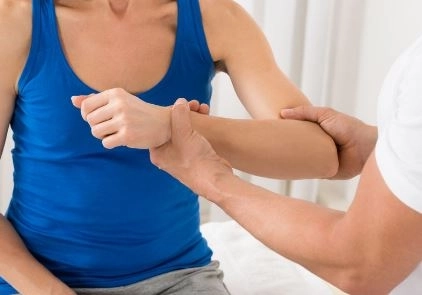
Sports injuries and fractures are among the most common health problems faced by athletes and active individuals.
These injuries can range from simple fractures that can be treated with protection and rest to complex fractures that require precise surgical intervention.
It is very important to handle these cases scientifically to ensure complete recovery and avoid complications.
Dr. Mohamed El-Rakaiby always emphasizes that early and accurate diagnosis is the most important step for successfully treating fractures and sports injuries, and any delay in treatment may lead to long-term problems.
1. Simple Fractures
Occur when the bone breaks without piercing the skin.
Often treatable with casts and basic medical support.
Dr. Mohamed El-Rakaiby stresses that these fractures require careful follow-up to prevent complications such as joint inflammation or bone deformity.
2. Complex Fractures
Include open fractures or fractures with displaced bone parts.
Often require surgical intervention to stabilize the bone and ensure complete healing.
3. Stress Fractures
Result from continuous pressure on the bones without direct trauma.
Common in athletes who run or jump frequently.
Require complete rest and gradual rehabilitation to prevent recurrent injury.
Ligament tears, such as anterior cruciate ligament (ACL) injuries in the knee.
Muscle strains or tears during sports activity.
Sprains and muscular overuse injuries.
Dr. Mohamed El-Rakaiby emphasizes that early treatment and appropriate rest combined with guided rehabilitation exercises are key to preventing muscle weakness or repeated injuries.
1. Accurate Diagnosis
X-rays or MRI scans are necessary to determine the type and severity of the injury.
Dr. Mohamed El-Rakaiby stresses the importance of early diagnosis to determine the optimal treatment plan.
2. Stabilization and Support
Use of casts, braces, or surgery when needed to stabilize injured bones or ligaments.
3. Physical Therapy and Rehabilitation
Includes strengthening exercises, flexibility training, and restoring normal joint and muscle movement.
4. Preventing Complications
Such as joint stiffness or osteoporosis, through careful medical follow-up and a balanced diet.
Treating fractures and sports injuries without medical supervision can lead to serious complications such as bone deformities or muscle weakness.
Therefore, Dr. Mohamed El-Rakaiby always emphasizes the importance of consulting an orthopedic specialist whenever a sports injury occurs to ensure full recovery and a safe return to physical activity.
Fractures and sports injuries require accurate diagnosis, specialized treatment, and close follow-up.
Dr. Mohamed El-Rakaiby clarifies that adhering to the treatment plan and rehabilitation program, along with continuous medical care, is the best way to achieve complete recovery and safely return to sports activities.