
Published on: 2025-11-06 | Written by: Dr Sherine Ramadan Dermatologist Cosmetic
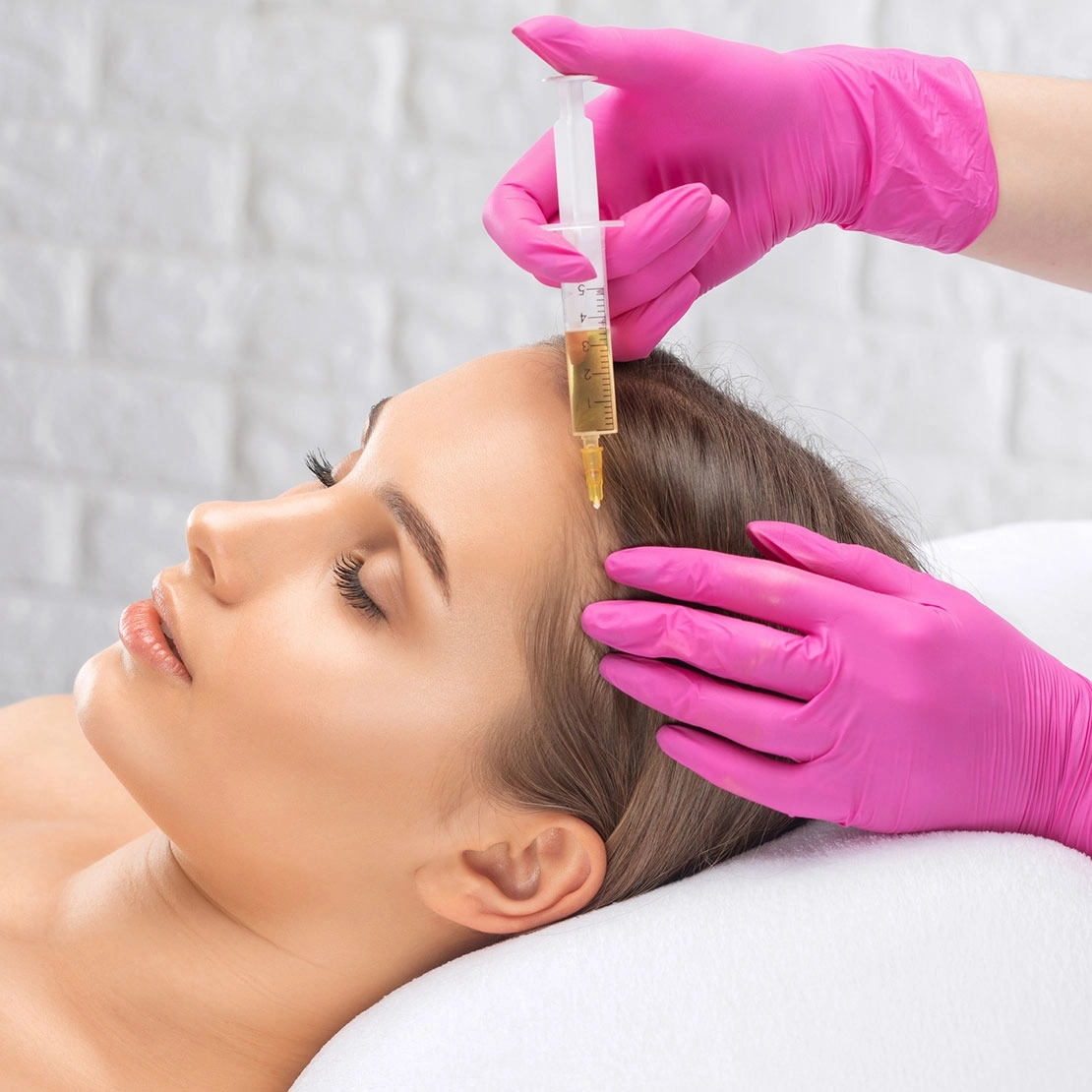
PRP injections for skin and hair are among the most advanced non-surgical cosmetic techniques designed to restore skin vitality and stimulate natural hair growth safely and effectively. The procedure involves drawing a small sample of the patient’s blood, separating the platelet-rich plasma, and re-injecting it into the skin or scalp to rejuvenate cells and boost collagen production.
Plasma is the liquid part of the blood that contains essential growth factors for tissue regeneration. When extracted from the patient’s own blood and injected into specific areas of the face or scalp, it activates stem cells and stimulates collagen and elastin production, giving the skin a radiant appearance and restoring hair strength and density.
Dr. Sherine Ramadan explains that this technique is one of the safest cosmetic procedures since it relies on the patient’s own natural components, minimizing the risk of allergies or side effects.
PRP injections provide effective solutions for a variety of skin problems, including:
Reducing fine lines and wrinkles.
Improving skin texture and evening out skin tone.
Treating dark circles under the eyes.
Healing acne scars and blemishes.
Giving the face a naturally radiant and firm appearance.
According to Dr. Sherine Ramadan, PRP results appear gradually after the first few sessions, as the skin renews itself naturally without surgery or long recovery periods.
PRP therapy is also used to treat hair loss and weak follicles by:
Stimulating blood circulation in the scalp.
Strengthening hair follicles and promoting growth.
Increasing hair density, smoothness, and shine.
Reducing hair loss caused by stress or hormonal imbalance.
Dr. Sherine Ramadan notes that PRP therapy suits both men and women, especially in the early stages of hair loss, and can be combined with other treatments for enhanced results.
Patients usually require 3 to 6 sessions, spaced two to four weeks apart, depending on the condition. Visible improvement typically begins after the second or third session.
Dr. Sherine Ramadan emphasizes that following the treatment plan prescribed by the doctor and maintaining proper post-procedure care ensures long-lasting, youthful results.
Some mild side effects, such as redness or slight swelling, may appear after the session, but they usually subside within hours.
Dr. Sherine Ramadan advises avoiding direct sunlight and makeup during the first 24 hours after treatment, keeping the skin well-hydrated, and avoiding smoking to maintain optimal results.