
Published on: 2025-11-04 | Written by: Dr Ahmed Rizk Aliwa Orthopedic Surgeon
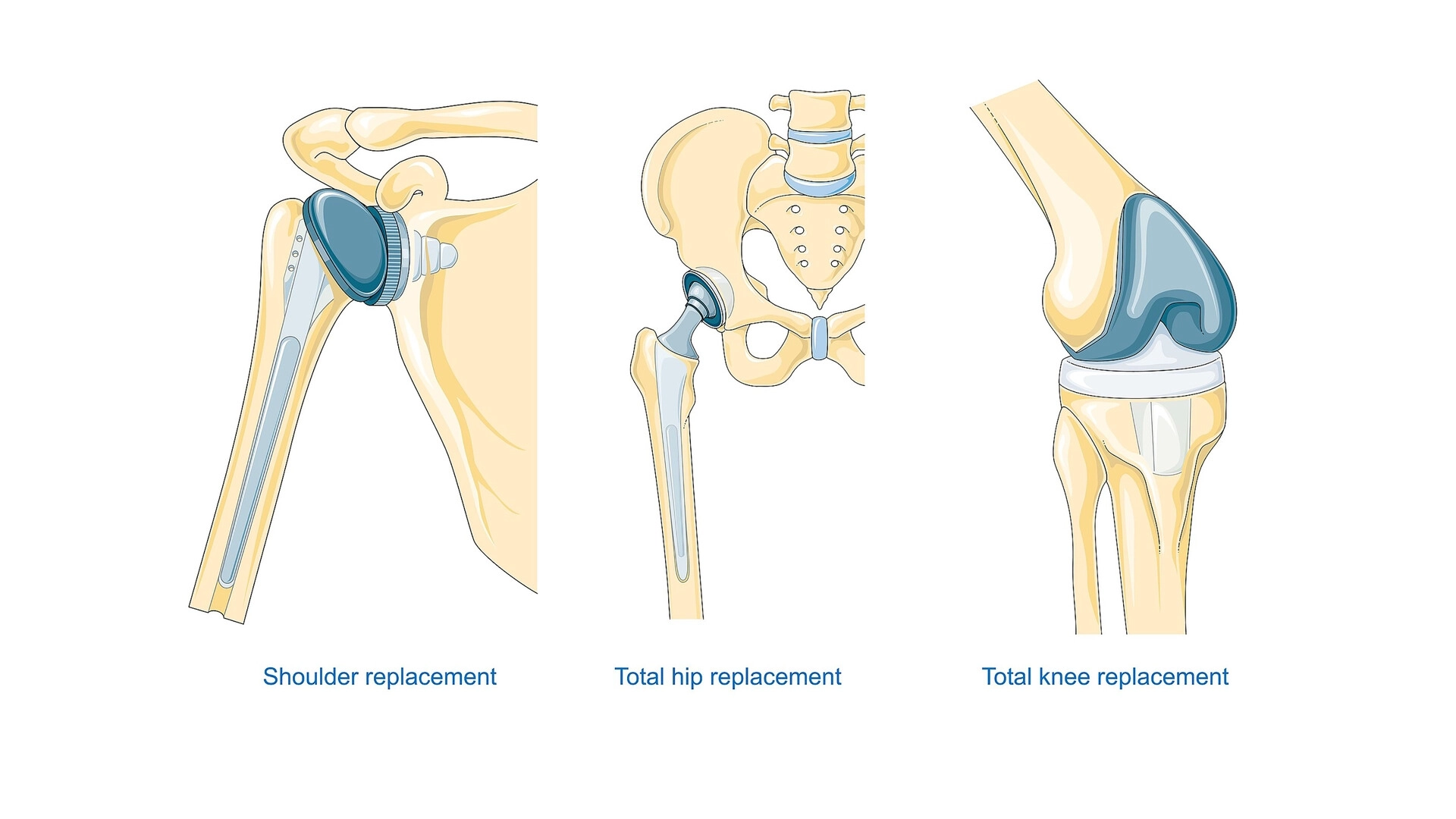
Knee and hip joint replacement surgery is one of the most advanced developments in orthopedic medicine, helping patients regain mobility and eliminate chronic pain caused by joint degeneration or severe injuries.
Dr. Ahmed Rizk Alioa emphasizes that this type of surgery is an effective and long-term solution for cases that do not respond to medication or physical therapy, significantly improving the patient’s quality of life.
Dr. Ahmed Rizk Alioa explains that joint replacement is a surgical procedure in which the damaged joint is removed and replaced with an artificial joint made of safe, durable materials such as titanium or ceramic.
The purpose of this procedure is to:
Relieve chronic pain caused by arthritis or cartilage wear.
Restore smooth and natural joint movement.
Improve the patient’s ability to walk and perform daily activities.
Correct deformities in the affected joint.
Dr. Ahmed Rizk Alioa stresses that there are several medical reasons that may require replacing the knee or hip joint, including:
Chronic arthritis (such as osteoarthritis) leading to cartilage damage.
Severe injuries or complex fractures that cannot be treated by other means.
Age-related joint wear, which causes pain and limited mobility.
Failure of previous surgeries to achieve the desired results.
Dr. Ahmed Rizk Alioa emphasizes that choosing the right time for surgery is a critical factor in ensuring a successful outcome and faster recovery.
The procedure is performed under general or spinal anesthesia, and Dr. Ahmed Rizk Alioa explains that the surgeon removes the damaged part of the joint and replaces it with artificial components that mimic the natural shape and movement of the joint.
Recent years have witnessed remarkable advances in joint replacement techniques, including:
Minimally invasive arthroscopic surgery to reduce scarring and speed up healing.
Artificial intelligence and 3D imaging technologies for precise surgical planning.
Smart prosthetic joints that adapt to the patient’s movement for greater flexibility.
According to Dr. Ahmed Rizk Alioa, these innovations help shorten hospital stays and extend the lifespan of artificial joints.
After surgery, patients undergo a tailored physiotherapy program, and Dr. Ahmed Rizk Alioa emphasizes that adherence to rehabilitation exercises is the key to successful surgery and full recovery of movement.
The rehabilitation process includes:
Exercises to strengthen muscles and improve joint flexibility.
Training patients to walk gradually with supportive devices.
Continuous follow-up to ensure tissue healing and joint stability.
Dietary and lifestyle advice to avoid excess weight and protect the new joint.
Dr. Ahmed Rizk Alioa explains that surgical results are typically excellent, with patients experiencing significant improvement in mobility and complete pain relief.
Modern artificial joints can last for 15 to 20 years or more with proper care and regular medical follow-ups.
He also advises patients to maintain regular check-ups to ensure the joint remains in optimal condition.