
Published on: 2025-10-15 | Written by: Dr. Rami Youssef Kamel, Orthopedic and Spine
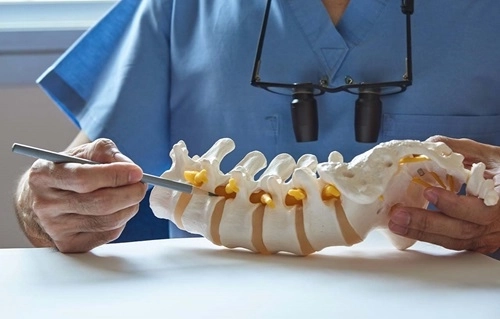
Spinal surgery is considered one of the most delicate and complex branches of orthopedic medicine due to the sensitivity of this vital structure, which forms the main axis for movement and neurological function. These surgeries include the treatment of herniated discs, spinal canal stenosis, vertebral deformities, and fractures resulting from trauma or osteoporosis.
Dr. Rami Youssef Kamel, a specialist in orthopedic and spinal surgery, emphasizes that accurate diagnosis and meticulous surgical planning are the foundation for successful outcomes and the safe restoration of patients’ normal lives.
Spinal disorders often result from repetitive strain, poor posture, or direct injuries. As people age, the intervertebral discs begin to degenerate, leading to lower back pain, numbness, and limited mobility.
Dr. Rami Youssef Kamel points out that ignoring early symptoms can worsen the condition and may eventually cause nerve compression or loss of sensation in the limbs.
Spinal surgeries vary depending on the diagnosis and severity of the condition, and include:
Herniated disc surgery to remove the damaged portion of the disc and relieve pressure on the nerves.
Spinal fusion surgery using plates and screws to stabilize the spine.
Deformity correction surgeries, such as scoliosis and kyphosis correction, to realign the spine and restore balance.
Spinal canal decompression surgeries to free compressed nerves and improve movement while reducing pain.
Dr. Rami Youssef Kamel confirms that the use of minimally invasive and navigation-assisted techniques has made these surgeries safer, more precise, and less painful, with shorter recovery times and superior results.
Recent medical studies, as highlighted by Dr. Rami Youssef Kamel, show that computer-guided and endoscopic spinal surgeries have revolutionized the field. These advanced methods allow the surgeon to visualize even the smallest spinal details without the need for large surgical incisions.
Such innovations reduce bleeding, infection risks, and recovery time, enabling patients to return to normal daily life much faster.
Dr. Rami Youssef Kamel stresses that the success of spinal surgery does not rely solely on the operation itself, but also on postoperative physiotherapy and rehabilitation.
Therapeutic exercises help strengthen back muscles, improve flexibility, and prevent the recurrence of pain or future injuries. Each patient receives a personalized rehabilitation program designed according to their age, health condition, and lifestyle.
Spinal health can be preserved through a balanced lifestyle, which includes correct sitting posture, regular exercise, maintaining a healthy weight, and avoiding improper lifting of heavy objects.
Dr. Rami Youssef Kamel also advises regular check-ups for those who suffer from chronic back pain or have a family history of bone and joint diseases to ensure early detection and treatment.