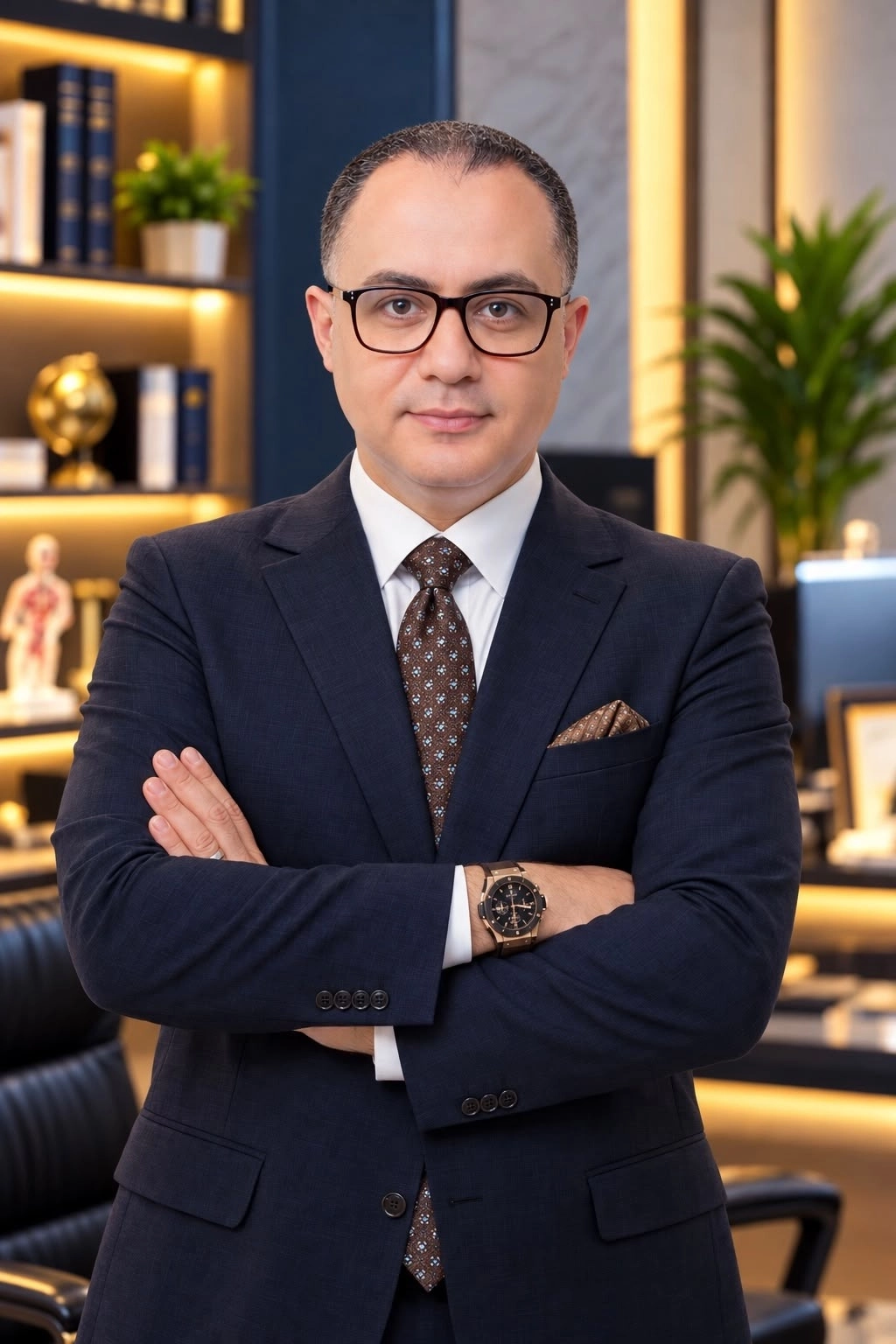

Published on: 2025-10-13 | Written by: Prof. Dr. Mohamed Arafat Professor of General

Advanced Laparoscopic Surgeries: Precision and Safety with Professor Dr. Mohamed Arafat
Advanced laparoscopic surgeries are among the most significant breakthroughs in modern surgery, relying on highly precise techniques and advanced instruments that allow operations to be performed through small incisions instead of traditional open surgery.
Professor Dr. Mohamed Arafat – Professor of General and Laparoscopic Surgery at Al-Azhar University and Consultant of Advanced Laparoscopic and Bariatric Surgery – emphasizes that this type of surgery represents a major leap forward in reducing pain, accelerating recovery, and improving surgical outcomes significantly.
Dr. Mohamed Arafat explains that advanced laparoscopic surgeries include a wide range of procedures performed using a high-resolution camera and specialized instruments inserted through tiny incisions, which minimizes blood loss and improves cosmetic results.
He points out that these surgeries cover gastrointestinal, gallbladder, colon, stomach, and hernia operations, as well as advanced bariatric procedures.
Professor Dr. Mohamed Arafat confirms that the main advantage of laparoscopic surgery lies in its high precision, which allows the surgeon to view internal organs with exceptional clarity, enabling simultaneous diagnosis and treatment.
He stresses that laparoscopic surgery shortens hospital stay, speeds up recovery, and reduces the risk of infection or surgical complications.
Dr. Mohamed Arafat clarifies that advanced laparoscopic techniques are used to treat a variety of conditions, including:
Laparoscopic gallbladder removal.
Laparoscopic hernia repair (inguinal or umbilical).
Stomach and colon surgeries.
Bariatric procedures such as sleeve gastrectomy and gastric bypass.
He warns that choosing the right laparoscopic technique depends on accurate diagnosis and the patient’s specific condition.
Professor Dr. Mohamed Arafat emphasizes that advanced laparoscopic surgeries are safer than traditional open surgeries thanks to their technical precision and the evolution of surgical tools.
He stresses that these operations should always be performed by a highly experienced and academically qualified surgeon to ensure optimal outcomes and avoid complications.
Dr. Mohamed Arafat explains that medical follow-up after laparoscopic surgery is essential to monitor healing, regulate diet, and safely resume physical activity.
He highlights that patient adherence to medical instructions guarantees faster recovery and more stable long-term results.