
Published on: 2025-10-11 | Written by: Dr. Nasr Abdel Zaher Amara, Orthodontic
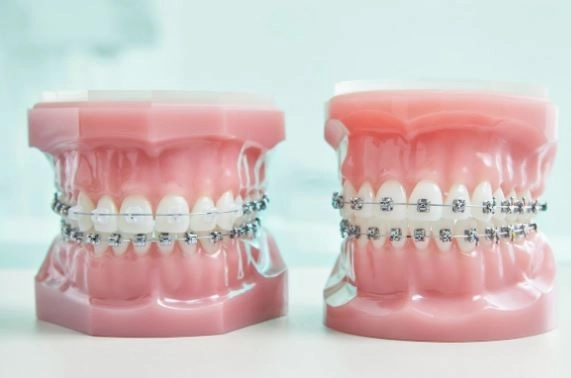
Metal and ceramic fixed braces are among the most common and effective orthodontic treatments for correcting dental and jaw irregularities.
Dr. Nasser Abdel Zaher Amara emphasizes that this type of braces provides precise and long-lasting results, as it works by gradually moving the teeth into their proper positions through continuous and controlled pressure — resulting in a balanced smile and optimal oral function.
These braces consist of small brackets bonded to the teeth, connected by thin metal or ceramic wires that apply gentle force to realign the teeth over time.
Dr. Nasser Abdel Zaher Amara explains that the main difference between the two types lies in the material and appearance:
Metal braces are made of stainless steel, offering strength and durability.
Ceramic braces are made of tooth-colored or transparent material, making them more aesthetic and suitable for adults who prefer a discreet look.
According to Dr. Nasser Abdel Zaher Amara, fixed orthodontic braces are ideal for cases that require clear correction of tooth alignment or bite issues, such as:
Crowded or overlapping teeth.
Wide gaps between teeth.
Upper or lower jaw protrusion.
Difficulty in chewing, biting, or speaking.
He clarifies that this type of braces is the most accurate and effective choice for complex orthodontic conditions that cannot be treated with removable or clear aligners.
Dr. Nasser Abdel Zaher Amara points out several key benefits of both metal and ceramic braces:
Provide precise and reliable results throughout treatment.
Do not depend heavily on patient compliance like removable braces.
Suitable for all ages — especially teenagers and adults.
Ceramic braces offer a more aesthetic and natural appearance for those who prefer subtle treatment options.
He also emphasizes that choosing the right type of braces depends on the patient’s needs, case severity, and treatment goals.
Dr. Nasser Abdel Zaher Amara warns that daily oral hygiene is crucial for successful orthodontic treatment. Proper care includes:
Brushing after every meal using a special orthodontic toothbrush.
Avoiding hard or sticky foods that may damage the brackets or wires.
Regular check-ups every 3–4 weeks to adjust the wires and monitor progress.
He confirms that following the doctor’s instructions helps shorten the treatment period and maintain healthy gums and teeth throughout the process.