
Published on: 2025-10-09 | Written by: Dr. Yasser Rayhan- Consultant Ophthalmologist
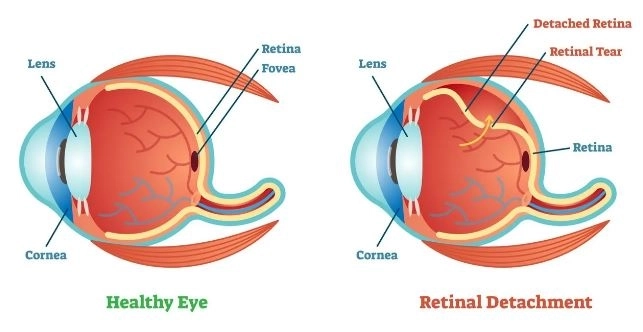
Dr. Yasser Rehan emphasizes that the retina and optic nerve are the two essential pillars of vision. The retina is the light-sensitive tissue at the back of the eye responsible for converting images into nerve signals, while the optic nerve transmits these signals to the brain for processing and interpretation.
Any damage to these two structures can lead to severe vision loss or even permanent blindness if not diagnosed and treated early.
According to Dr. Yasser Rehan, the most common retinal diseases include:
Diabetic Retinopathy: A serious complication of diabetes resulting from damage to the tiny blood vessels in the retina, causing bleeding or leakage that affects vision.
Retinal Detachment: A medical emergency that occurs when the retina separates from the inner wall of the eye and requires urgent surgical intervention to save sight.
Retinal Tears or Holes: Caused by injury or severe nearsightedness, leading to gradual loss of peripheral vision.
Age-Related Macular Degeneration: One of the most common causes of vision loss among the elderly, affecting the central part of the retina responsible for detailed vision.
Dr. Yasser Rehan stresses the importance of regular eye check-ups for patients with diabetes or high myopia to prevent serious retinal complications.
Dr. Yasser Rehan explains that the optic nerve is the vital channel transmitting visual information to the brain, and any damage to it results in vision loss that cannot be corrected with glasses or contact lenses.
The most notable optic nerve disorders include:
Optic Neuritis: Commonly affecting young adults, causing blurred or sudden vision loss accompanied by pain during eye movement.
Optic Atrophy: Caused by reduced blood flow or prolonged pressure on the nerve, requiring precise medical management to prevent permanent blindness.
Glaucoma (Ocular Hypertension): A leading cause of optic nerve damage due to chronically elevated intraocular pressure.
Dr. Yasser Rehan points out that early diagnosis depends on a thorough eye examination, using advanced technologies such as:
Fluorescein angiography to assess retinal blood flow.
Optical Coherence Tomography (OCT) to provide detailed imaging of the retina and optic nerve.
Intraocular pressure measurement and visual field testing to evaluate the extent of vision damage.
Dr. Yasser Rehan highlights that treatment options for retinal and optic nerve diseases vary based on the condition and stage, including:
Intraocular injections to treat bleeding or swelling from diabetic retinopathy.
Laser therapy to seal leaking blood vessels or stabilize the retina before detachment occurs.
Microsurgical procedures to repair retinal detachment or remove opaque vitreous material.
Medications that improve blood flow to the optic nerve and preserve its function.
Dr. Yasser Rehan advises patients to:
Control blood sugar and blood pressure levels.
Have routine eye exams at least once a year.
Avoid smoking and excessive fats.
Follow a diet rich in antioxidants such as vitamins A, E, and Omega-3.