
Published on: 2025-10-08 | Written by: Rania Wahba Foundation for Speech Therapy and Rehabilitation
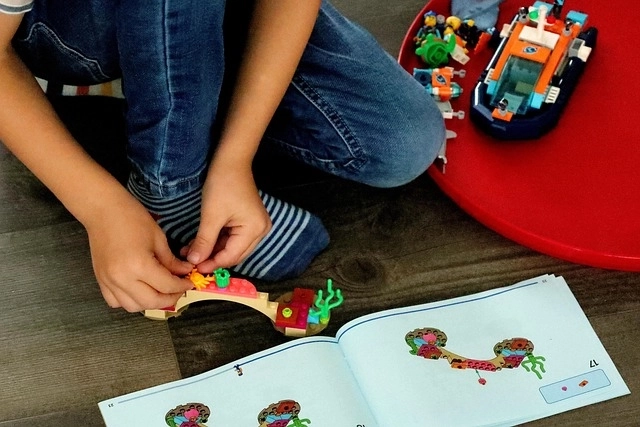
Skill development is an important part of a child’s development, as it helps children improve their abilities and acquire skills needed for daily life, education, and social interaction. Skill development covers several areas, including communication, attention and concentration, motor skills, cognitive abilities, and social skills. Rania Wahba Institution provides specialized programs designed to develop children’s skills according to their individual needs and abilities.
The process of skill development begins by assessing the child’s current abilities and identifying the skills they have already developed and the areas that require additional training and support. Programs may vary from one child to another depending on age, abilities, and specific developmental needs. Therefore, accurate assessment is an important step before selecting an appropriate program.
Children’s skills involve several areas, including communication and interaction with others, attention and concentration, cognitive and perceptual abilities, fine and gross motor skills, as well as social and independent living skills. Continuous training can help develop these areas gradually according to each child’s individual level.
Rania Wahba Institution focuses on individualized skill-development programs, allowing specialists to address each child’s specific needs and target the skills that require further development. Programs may include activities that support attention, memory, communication, social interaction, and independence, in addition to skills that help children handle everyday situations more effectively.
Skill development is particularly important for children who experience delays in certain developmental areas or difficulties with communication, learning, or social interaction. Specialized training can support their abilities and encourage them to acquire new skills while taking individual differences into consideration and avoiding comparisons between children.
Families also play an important role in the skill-development process. Appropriate activities and exercises can be practiced at home under the guidance of specialists. Cooperation between the family and specialists helps maintain training outside sessions and allows the child’s progress to be monitored more effectively.
Rania Wahba Institution provides skill-development services alongside speech therapy, behavior modification, learning difficulties support, and specialized assessments, allowing children’s needs to be addressed through a more comprehensive approach based on assessment results and individual requirements.
Rania Wahba Institution also provides online consultations inside and outside Egypt, helping families understand their child’s needs and receive appropriate guidance regarding skill-development programs, ways to support the child, and remote follow-up.
Ultimately, skill development is not simply about training a child in one particular skill. It is a comprehensive process aimed at helping children develop their abilities and use them in communication, learning, social interaction, and independence. With appropriate assessment, continuous training, and follow-up, children can receive the support they need to make progress according to their individual abilities and needs, which is a key focus of Rania Wahba Institution.