
Published on: 2025-09-27 | Written by: Dr. Ahmed Al-Maghribi, Dermatology Consultant
Skincare is essential for maintaining healthy, radiant skin and managing common dermatological concerns such as acne, pimples, dark spots, and scars. Treatment methods vary depending on skin type, the severity of the condition, and the causes of breakouts. Available options include topical products, medications, and cosmetic procedures that help improve skin texture and appearance. An accurate medical diagnosis is an important step in selecting the appropriate treatment and reducing the risk of scarring or worsening pigmentation.
First: The Importance of Daily Skincare
Daily skincare helps remove dirt and excess oil, maintain the skin's natural barrier, reduce clogged pores, and improve the appearance of the skin over time.
Essential Skincare Steps
Cleansing the skin: Use a gentle cleanser suitable for your skin type, particularly if you have oily or acne-prone skin.
Moisturizing: Choose a non-comedogenic moisturizer to maintain skin balance and reduce dryness.
Using sunscreen: Protect the skin from ultraviolet rays, which can worsen pigmentation and make acne marks more noticeable.
Avoiding irritating products: Stay away from harsh products that cause redness, dryness, or excessive peeling.
Removing makeup: Cleanse the face thoroughly before bed to reduce the buildup of makeup residue and oil.
Skincare products should be selected according to skin type. Oily skin generally benefits from lightweight products, while dry skin may require richer moisturizers. Sensitive skin often responds better to gentle, fragrance-free products that are less likely to cause irritation.
Second: Causes of Acne
Acne is a common skin condition that develops when hair follicles become clogged with oil and dead skin cells. Inflammation and the growth of acne-associated bacteria may also contribute to the development of pimples.
Factors that contribute to acne include:
Excessive oil production.
Hormonal changes, particularly during puberty.
The buildup of dead skin cells and clogged pores.
Genetic predisposition.
Using cosmetic products that clog pores.
Certain medications or health conditions that may contribute to breakouts.
Acne may appear as blackheads, whiteheads, inflamed red pimples, or pus-filled lesions. Severe cases may develop into deep nodules, increasing the risk of permanent scarring.
Third: Acne Treatment Methods
Acne treatment depends on the type and severity of the lesions, how widely they are distributed, the skin type, and the response to previous treatments.
1. Topical Treatments
Topical products are commonly used for mild to moderate acne and may include:
Benzoyl peroxide: Helps reduce acne-associated bacteria and inflammation.
Topical retinoids: Such as adapalene, which helps prevent clogged pores and the formation of new pimples.
Azelaic acid: May help treat acne and improve some forms of post-inflammatory pigmentation.
Salicylic acid: Helps exfoliate the skin's surface and reduce clogged pores in some individuals.
Treatment should be selected according to the patient's condition, taking into account the possibility of dryness or irritation. Medical advice is also recommended before using certain products, particularly during pregnancy or when planning to become pregnant.
2. Oral Medications
A doctor may prescribe oral medications for moderate to severe acne or when topical treatments do not provide sufficient improvement. Options may include certain antibiotics for limited periods or other medications selected according to the patient's condition.
Isotretinoin may be prescribed for some cases of severe acne or acne that is likely to cause scarring. However, it requires close medical supervision because of its potential side effects and risks, particularly during pregnancy, as it can cause serious birth defects.
3. Medical and Cosmetic Procedures
Certain procedures may help improve selected cases of acne or acne-related marks, including chemical peels and specific laser treatments. However, not every procedure is suitable for every skin type. Active acne, pigmentation, and scarring should be assessed before treatment begins.
Fourth: Treating Acne Marks and Pigmentation
Marks may remain after acne lesions disappear, often appearing as red, brown, or dark spots. These marks differ from true scars: pigmentation affects skin color, while scars change the texture or shape of the skin.
Ways to Improve Post-Acne Pigmentation
Use broad-spectrum sunscreen daily.
Apply suitable products containing ingredients such as azelaic acid, according to the skin's needs.
Use topical retinoids when medically appropriate.
Avoid squeezing or scratching pimples to reduce inflammation and pigmentation.
Consider selected medical procedures when pigmentation does not respond to home skincare.
Pigmentation may take several weeks or months to improve, depending on the depth of the discoloration, skin type, and whether new acne lesions continue to develop. Using strong treatments without medical supervision may irritate the skin and worsen pigmentation instead of improving it.
Fifth: Treating Acne Scars and Improving Skin Texture
Acne scars develop when collagen in the skin is damaged during the healing process, resulting in depressions or raised areas on the skin's surface. These scars may persist for long periods and often require specialized procedures to improve their appearance.
Types of Acne Scars
Atrophic scars: Appear as pits or depressions in the skin.
Deep, narrow scars: Appear as small openings that extend into deeper layers of the skin.
Rolling scars: Cause uneven skin texture and create shadows under certain lighting conditions.
Raised scars: Develop when excess scar tissue forms during the skin's healing process.
Main Treatments for Acne Scars
1. Fractional Laser
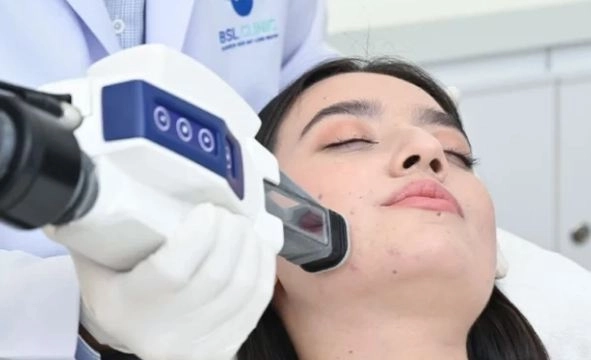
Fractional laser stimulates skin renewal and collagen production. It may improve the appearance of certain atrophic scars and skin texture. Results depend on the device used, scar depth, and skin tone, and several sessions may be required.
2. Microneedling
This technique creates tiny channels in the skin to stimulate healing and collagen production. It may help improve certain types of acne scars. The procedure should be performed appropriately under professional supervision to reduce the risk of infection and pigmentation changes.
3. Chemical Peels
Specific types of chemical peels can improve some acne marks, pigmentation, and superficial scars. The type and concentration of the peel are selected according to the skin's characteristics and the concern being treated.
4. Subcision
Subcision may be used for certain rolling scars associated with fibrous bands that pull the skin inward. The procedure is performed according to the doctor's assessment.
5. Treatments for Raised Scars
Treatment may include injections of medication into the scar or other procedures designed to reduce its height. The appropriate approach depends on the type and severity of the scar.
Acne scar treatment is often more effective when the technique is selected according to the specific scar type. Some patients may benefit from a combination of procedures. Complete scar removal cannot be guaranteed, but the appearance of scars and skin texture can improve to varying degrees.
Sixth: Common Mistakes That Worsen Acne and Scarring
Certain daily habits may aggravate acne or increase the risk of permanent marks. These include:
Squeezing pimples or repeatedly picking at them.
Using harsh exfoliants or scrubbing the face aggressively.
Trying several new treatments at the same time.
Using oily products that clog pores.
Neglecting moisturization when using treatments that cause dryness.
Stopping treatment too early before the expected results appear.
Exposure to sunlight without adequate protection.
Following a simple skincare routine suited to the skin can help improve results. Treatments should be given sufficient time to work, and a doctor should be consulted if improvement does not occur.
Seventh: When Should You Consult a Dermatologist?
A dermatology consultation is recommended when acne is severe or painful, deep nodules develop, scarring begins to appear, or breakouts persist despite appropriate treatment. Persistent pigmentation and scars that affect skin texture should also be assessed to determine available treatment options.
The medical assessment aims to identify the type and severity of acne, investigate other possible causes when necessary, and develop a treatment plan that first controls active acne and then addresses the remaining marks and scars.
Conclusion
Skincare, acne treatment, and scar management require an appropriate daily routine and treatments tailored to the specific skin condition. Topical treatments, medications, and medical procedures such as fractional laser, microneedling, and chemical peels can help improve acne and its effects when used appropriately.
Early acne treatment, avoiding picking at pimples, and using sunscreen remain among the most important steps in reducing pigmentation, minimizing scar formation, and improving skin health and appearance over the long term.