

Published on: 2025-09-27 | Written by: Experts Physio House Clinic
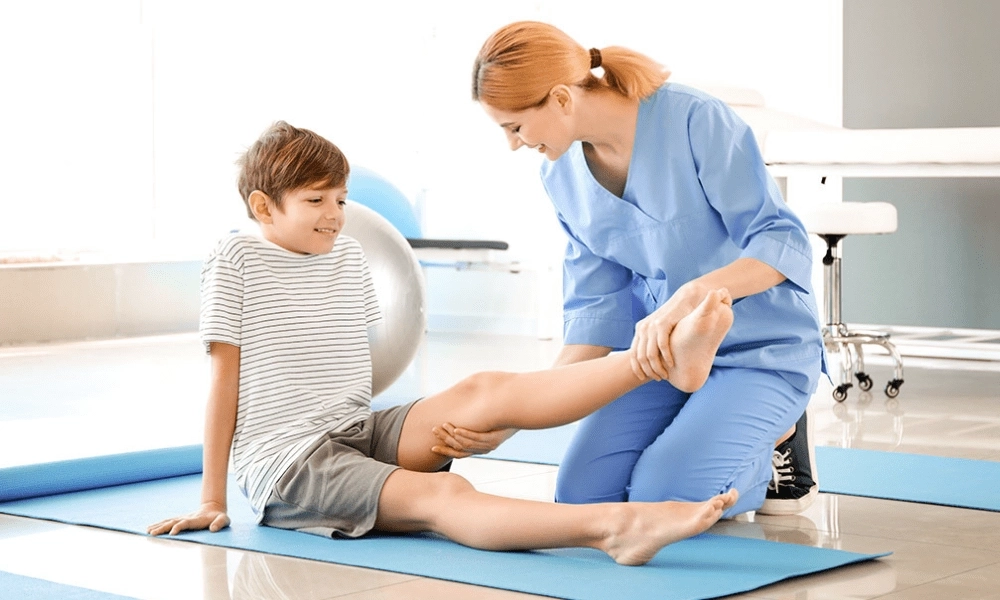
Pediatric physiotherapy sessions are important for supporting motor development and improving a child’s ability to move, balance, and coordinate muscle movements, especially in children who experience delayed motor skills, neurological conditions, or injuries that affect mobility. Pediatric physiotherapy relies on rehabilitation programs tailored to the child’s age and medical condition, using exercises and movement-based activities to help develop motor skills and improve the ability to perform daily activities.
Experts Physio House Clinic provides physiotherapy and rehabilitation services for children, in addition to treatment for bone and joint pain, rehabilitation after surgeries and fractures, sports injury treatment, and clinical nutrition. The aim of treatment is to help children develop their motor abilities and improve their independence according to their individual needs and the specialist’s assessment.
What Is Pediatric Physiotherapy?
Pediatric physiotherapy is a specialized branch of physiotherapy focused on assessing and treating problems that affect a child’s motor development, movement, balance, and muscle control. A physiotherapist uses exercises and activities designed to suit the child’s age and developmental stage while taking into account physical abilities and healthcare needs.
A child may need physiotherapy sessions if they experience delays in sitting, crawling, standing, or walking, or if they have difficulty with balance or movement coordination. Physiotherapy may also be part of a rehabilitation plan for certain neurological conditions or following fractures and surgical procedures.
Conditions That May Require Pediatric Physiotherapy Sessions
Children have different needs depending on the nature of their condition and how it affects their movement. Conditions that may benefit from assessment and physiotherapy include:
Delayed motor development: Helping children develop skills such as sitting, crawling, standing, and walking according to their abilities.
Cerebral palsy: Supporting movement, balance, and muscle control while improving participation in daily activities.
Rehabilitation after fractures: Gradually restoring movement and strength after a fracture has healed, according to the treating physician’s instructions.
Post-operative rehabilitation: Helping children safely regain movement and functional abilities, depending on the type of surgery.
Muscle weakness: Improving muscle strength and control through exercises appropriate for the child’s condition.
Balance and motor coordination disorders: Developing the child’s ability to control movements and improving stability while standing and walking.
Certain neurological conditions: Developing an appropriate rehabilitation program to support motor abilities and maintain functional skills.
Certain postural problems: Assessing spinal curvature or movement abnormalities and determining whether rehabilitation or referral to a specialist is needed.
The underlying cause of the problem must be identified first, as delayed motor skills or muscle weakness may be associated with different conditions that require careful medical evaluation.
Benefits of Pediatric Physiotherapy Sessions
Pediatric physiotherapy sessions can help improve certain motor and functional abilities, depending on the child’s condition and consistency of treatment. Potential goals of a rehabilitation program include:
Improving muscle control and movement.
Developing balance and motor coordination.
Supporting the development of age-appropriate motor skills.
Improving the ability to stand and walk when appropriate for the child’s condition.
Helping restore movement after fractures or surgery.
Reducing the impact of certain movement limitations on daily activities.
Training children to perform some activities more independently.
Guiding families on safe exercises and activities that can be performed at home when recommended by the specialist.
Results vary from one child to another. The number of sessions and expected recovery time cannot be determined without assessing the child and establishing clear treatment goals.
How Are Pediatric Physiotherapy Sessions Conducted?
Pediatric physiotherapy usually begins with a comprehensive assessment, followed by a treatment program tailored to the child’s age, motor abilities, and healthcare needs. Sessions may include the following steps:
1. Assessing the Child’s Condition
The physiotherapist assesses motor skills, muscle strength, range of motion, balance, and standing and walking patterns when necessary. The child’s medical history and any available previous reports or examination results are also reviewed.
2. Setting Treatment Goals
The program’s goals are determined according to the child’s needs. These may include improving head and trunk control, practicing sitting and standing, improving walking and balance, or restoring movement after an injury.
3. Exercises and Movement-Based Activities
Sessions include exercises and activities appropriate for the child’s age. These may be presented as movement-based games and gradual exercises to encourage participation and interaction with the therapist.
4. Balance and Motor Coordination Training
Some children may need exercises to improve stability, body control, and movement coordination, depending on the assessment and their individual needs.
5. Monitoring Progress and Adjusting the Program
The child’s response to treatment is monitored, and progress toward the established goals is evaluated. Exercises and training intensity are adjusted when necessary.
6. Guiding Parents
Family involvement is an important part of rehabilitation. Parents may receive guidance on helping their child at home, improving positioning during daily activities, and safely performing exercises recommended by the specialist.
The Importance of Physiotherapy for Children After Fractures and Surgery
Children may need physiotherapy after certain fractures or surgical procedures to gradually restore movement, strength, and balance. The timing of rehabilitation and the type of exercises depend on the injury, tissue healing, and the treating physician’s instructions.
The program may include improving joint range of motion, activating muscles, practicing walking when necessary, and restoring the ability to perform daily activities. Children should not be forced to move or begin unsuitable exercises before obtaining the required medical approval.
Physiotherapy for Children with Cerebral Palsy and Neurological Conditions
Physiotherapy may be part of the care plan for children with cerebral palsy and certain neurological conditions that affect movement and muscle control. Sessions aim to support the child’s functional abilities, improve movement and balance, and encourage participation in daily activities as much as possible.
The program is designed according to each child’s abilities and needs. It may include training in body positioning, moving between positions, standing, and walking, along with guidance for families on managing the child’s needs at home.
Rehabilitation should ideally be part of a comprehensive care plan coordinated with a pediatrician and other specialists when necessary, with regular monitoring of the child’s growth and motor development.
When Does a Child Need a Physiotherapy Assessment?
Parents are advised to seek a specialist assessment if they notice significant delays in acquiring motor skills, persistent difficulty with balance or walking, or weakness following an injury or surgical procedure. Losing previously acquired motor skills, sudden weakness, severe pain, or newly developed difficulty walking requires urgent medical evaluation.
A delay in one developmental milestone does not necessarily indicate a serious problem. However, early assessment helps identify the cause and determine whether the child needs physiotherapy or another specialized intervention.
Pediatric Physiotherapy at Experts Physio House Clinic
Experts Physio House Clinic provides physiotherapy and rehabilitation services, including pediatric physiotherapy for children who need support with motor skills or rehabilitation following fractures, certain injuries, and strokes, according to medical assessment and an appropriate treatment plan.
The center’s services include physiotherapy, post-operative rehabilitation, treatment of muscle and joint problems, sports injury management, and clinical nutrition. The appropriate program is determined according to each child’s condition and needs. Cooperation between the family and the treating team is essential to achieving the best possible progress.
Services at Experts Physio House Clinic
Pediatric physiotherapy sessions.
Rehabilitation programs following fractures and cast removal, according to medical guidance.
Post-operative rehabilitation.
Physiotherapy programs for certain neurological and motor conditions.
Treatment of movement and balance problems, based on assessment.
Physiotherapy for back and neck pain and muscle and joint problems.
Sports rehabilitation and injury treatment.
Clinical nutrition services for children and adults.
Tips for Parents Before Pediatric Physiotherapy Sessions
Bring previous medical reports and examination results, if available.
Inform the specialist about any previous illnesses, injuries, or medications the child is taking.
Choose comfortable clothing that allows the child to move freely during the session.
Follow the recommended session schedule and follow-up plan.
Perform only the home exercises prescribed by the physiotherapist.
Encourage the child gently and avoid pressuring them or forcing movements that cause pain.
Consult a physician if severe pain, swelling, or a sudden decline in movement ability occurs.
Conclusion
Pediatric physiotherapy sessions help support motor development and improve strength, balance, and muscle coordination. They may also play an important role in rehabilitation after fractures and surgery and in managing certain neurological conditions.
The success of a rehabilitation program depends on accurate assessment, setting goals appropriate for the child’s age and condition, regular follow-up, and cooperation between the family and healthcare specialists.
Experts Physio House Clinic provides pediatric physiotherapy and rehabilitation as part of its broader physiotherapy and clinical nutrition services. Selecting the right program according to each child’s needs and medical assessment remains essential.