
Published on: 2025-09-07 | Written by: Dr Ahmed Al Mahdi Professor of Vascular Surgery
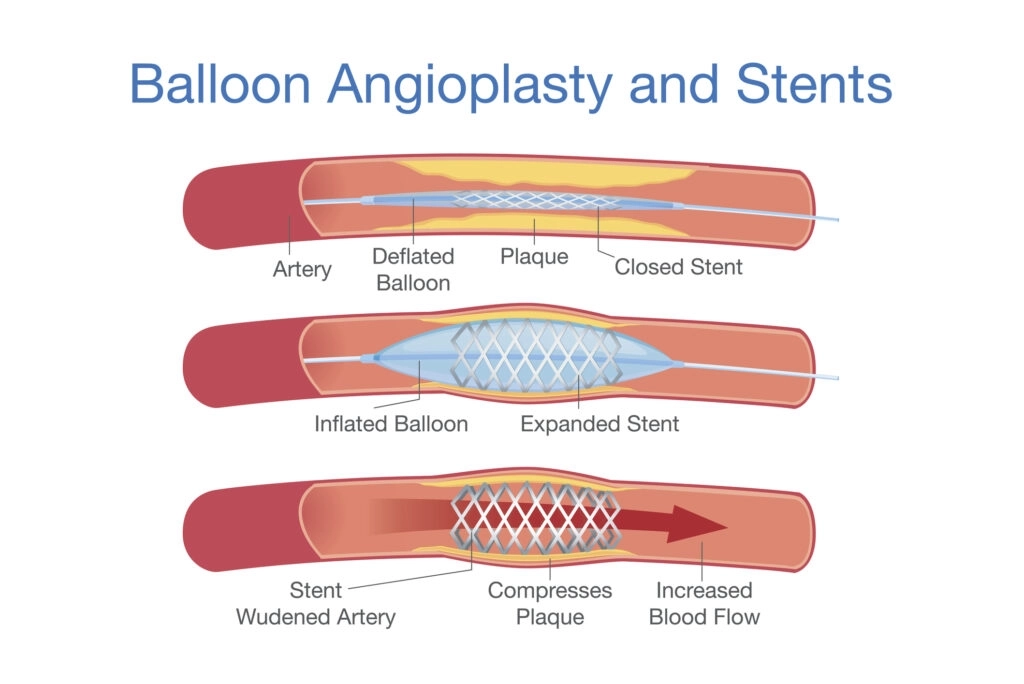
Balloon angioplasty and stent placement is one of the most important modern medical procedures used to treat narrowing or blockage of arteries, especially coronary arteries. This procedure restores normal blood flow to the heart, protecting patients from heart attacks and serious complications.
The doctor inserts a thin catheter carrying a small balloon into the affected artery. Once it reaches the blocked area, the balloon is inflated for a short period, which expands the artery and opens the blood flow.
Dr. Ahmed El Mahdy confirms that this step is essential in preparing the artery before placing the stent, ensuring the efficiency and long-term success of the procedure.
After the artery is widened with the balloon, a tiny metal stent is placed to support the artery wall and prevent it from narrowing again. There are different types of stents, such as bare-metal stents and drug-eluting stents, and the choice depends on each patient’s condition.
Here, Dr. Ahmed El Mahdy emphasizes that selecting the right stent plays a crucial role in the success of the procedure and in preventing recurrent blockages.
Safe and effective procedure.
Avoids open-heart surgery.
Short recovery period.
Improves blood flow and reduces angina symptoms.
Dr. Ahmed El Mahdy stresses that these benefits make angioplasty with stents an ideal option for many patients.
It is usually recommended in the following cases:
Recurrent angina.
Blockage or narrowing of coronary arteries.
Reduced blood flow to the heart.
Failure of medical treatment to improve symptoms.
Dr. Ahmed El Mahdy warns that accurate tests such as diagnostic catheterization are necessary before deciding on the procedure to ensure the most suitable solution for each patient.
Take all prescribed medications.
Follow a healthy, low-fat diet.
Exercise regularly.
Quit smoking.
Dr. Ahmed El Mahdy underlines that following a healthy lifestyle after stent placement is just as important as the procedure itself in protecting the heart and arteries.