
Published on: 2025-06-12 | Written by: Professor Dr. Sameh Ragab, Consultant Neurosurgeon
Scoliosis, or lateral curvature of the spine, is a condition that can affect children, adolescents, and adults alike. If left untreated, it may lead to serious complications, including chronic pain, posture deformities, and even breathing difficulties. Dr. Sameh Ragab, a specialist in orthopedic and spinal surgery, emphasizes that early diagnosis is key to preventing the condition from worsening and achieving effective, often non-surgical, treatment outcomes.
Scoliosis is an abnormal lateral curvature of the spine (either to the right or left), typically diagnosed during periods of rapid growth in adolescence. It can also develop in adults due to degenerative changes or previous spinal injuries.
Uneven shoulders or hips
One side of the back more prominent when bending forward
Back pain, especially in advanced cases
Tilted head or body posture
Difficulty breathing in severe curvatures
Dr. Sameh Ragab highlights the importance of early screening, especially in children and teens. Diagnosis includes:
Physical examination to check shoulder and hip symmetry
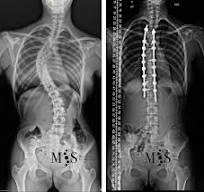
X-rays to measure the degree of curvature
Sometimes MRI scans if neurological symptoms are present
Accurate assessment to decide if treatment or monitoring is needed
For mild curvatures (<20 degrees), especially in growing children.
Exercises to strengthen and stretch back muscles.
The Schroth method has shown good results in some cases.
Effective in adolescents to prevent curvature progression during growth.
Must be used under professional supervision.
Required when the curve exceeds 45–50 degrees or causes nerve compression or functional problems.
Involves realignment of the spine using rods and screws.
Routine spinal screening for children aged 10–15
Encouraging proper sitting and standing posture
Core muscle strengthening exercises
Avoiding heavy bags carried on one shoulder
Never ignoring recurring back pain in teens
“Early detection of scoliosis often eliminates the need for surgery and gives patients a chance at a pain-free, normal life,” says Dr. Sameh Ragab.