
Published on: 2025-08-13 | Written by: Al-Ameriya Eye and Laser Center
Cataract, also known as lens opacity, is a common condition that occurs when the eye’s natural lens loses its transparency, leading to blurred vision and difficulty performing daily activities.
Professor Dr. Amr Saeed, Professor of Ophthalmology, confirms that surgical intervention is the only way to remove cataracts and restore clear sight.
Cataracts are a clouding of the natural eye lens that prevents light from passing properly to the retina. They may develop gradually with aging or due to other factors such as:
Aging.
Eye injuries.
Chronic diseases like diabetes.
Long-term use of certain medications such as corticosteroids.
Dr. Amr Saeed explains that the symptoms may include:
Blurred or hazy vision.
Difficulty seeing in low light or at night.
Seeing halos around lights.
Frequent changes in eyeglass prescription.
Faded or dull colors.
There is no effective medication to remove cataracts. The only solution is surgery.
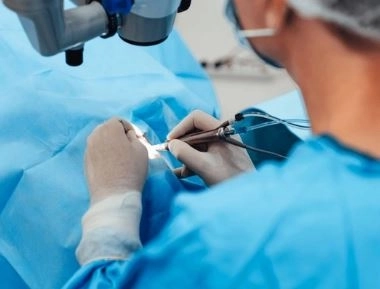
According to Dr. Amr Saeed, the procedure uses advanced techniques like femtocataract or phacoemulsification, and involves:
Local anesthesia with anesthetic eye drops.
Making a small incision in the cornea.
Breaking up the cloudy lens with ultrasound waves.
Removing the lens and implanting a clear artificial lens.
Short operation time (15–20 minutes).
No stitches required in most cases.
Rapid recovery and return to daily activities within days.
Possibility of correcting refractive errors during surgery by implanting specialized lenses.
Dr. Amr Saeed recommends:
Using prescribed eye drops exactly as directed.
Avoiding rubbing the eye or exposing it to unclean water.
Wearing sunglasses when outdoors.
Attending all follow-up appointments.