
Published on: 2025-08-13 | Written by: Professor Dr. Amr Saeed, Prof of Ophthalmology
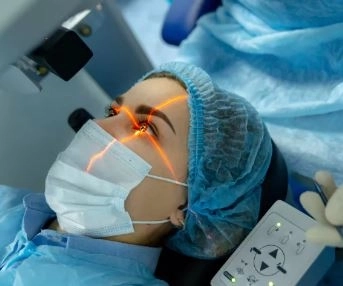
Laser and femtolaser vision correction are among the most advanced techniques for treating refractive errors such as myopia, hyperopia, and astigmatism. These procedures aim to reshape the cornea to improve focus, allowing patients to rely on natural vision without glasses or contact lenses.
Dr. Amr Saeed, Professor of Ophthalmology, emphasizes that choosing the appropriate technique depends on a thorough evaluation of the eye and corneal condition. Accurate diagnosis and postoperative follow-up are essential for successful outcomes.
Myopia: difficulty seeing distant objects clearly.
Hyperopia: difficulty seeing close objects.
Astigmatism: distorted vision due to irregular corneal curvature.
Desire to eliminate dependence on glasses or contact lenses.
Conventional Laser (LASIK / PRK):
Reshapes the corneal surface to correct refractive errors.
Femtolaser (Femtosecond Laser):
An advanced technique using highly precise laser beams to create a thin corneal flap before reshaping it with the laser.
Provides higher safety and better control compared to traditional methods.
Dr. Amr Saeed confirms that femtolaser reduces complications and allows for faster visual recovery after surgery.
Rapid and precise improvement of vision.
Elimination of dependence on glasses or contact lenses.
Safe and relatively quick procedure.
Short recovery period in most cases.
Adults whose refractive error has stabilized.
Individuals with healthy and strong corneas suitable for the procedure.
Patients who do not have chronic eye diseases such as keratoconus or glaucoma.
Conduct a comprehensive eye examination to determine the most suitable technique.
Follow the doctor’s instructions after the procedure to avoid complications.
Use prescribed lubricating and anti-inflammatory eye drops.
Avoid rubbing the eyes or exposing them to dust or water in the first few days.
Attend all follow-up appointments to ensure vision stability.