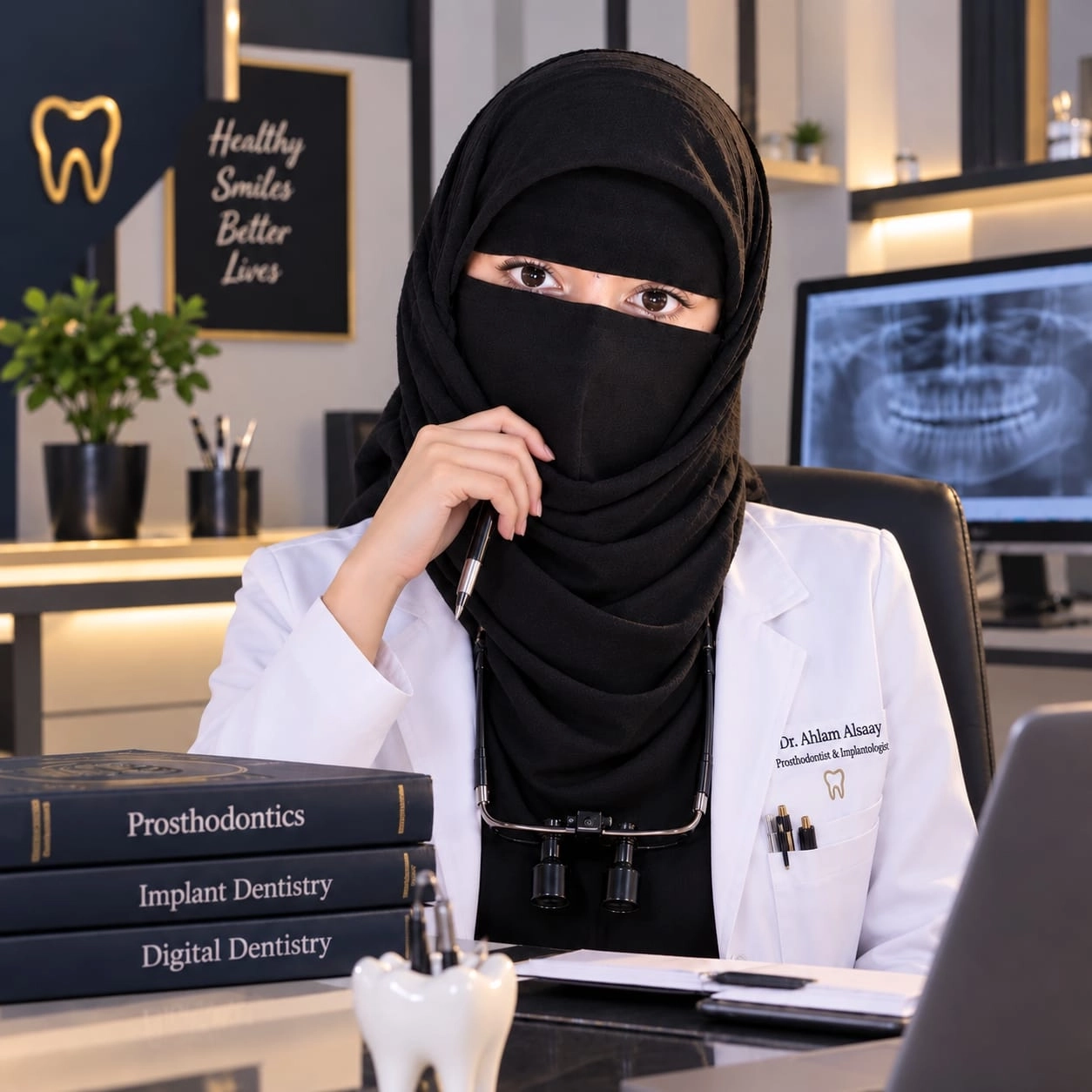

Published on: 2025-06-28 | Written by: Dr. Ahlam ِAtef Al-Sai, consultant for cosmetic

Fixed and removable dental prosthetics are among the most essential therapeutic and aesthetic solutions approved in oral and dental surgery. They are used to replace missing or damaged teeth resulting from severe decay, gum disease, or trauma. The importance of these prostheses lies in restoring vital oral functions such as digestion, chewing, and clear speech, alongside restoring the natural aesthetic appearance of the smile and protecting the jawbone from resorption and erosion. Treatment options range from fixed restorations such as crowns and bridges to removable appliances like full and partial dentures, requiring precise diagnostic evaluation to select the most appropriate option for each case.
Advanced fitting and prosthetic programs aim to restore the occlusal balance between both jaws, protect neighboring teeth from shifting or tilting, and provide a healthy, sturdy support structure for surrounding gum and bone tissues.
Dr. Ahlam Atef El-Saie clarifies that choosing the appropriate type of prosthesis depends not only on aesthetic appearance but fundamentally on jawbone quality, the number of missing teeth, and the overall health of the gums. She notes that early prosthetic treatment prevents chronic jaw joint (TMJ) and masticatory disorders.
Restoring Chewing and Speech Efficiency: Improving the distribution of bite forces to ensure effective food grinding and clear articulation.
Protecting Jaw and Dental Structure: Preventing neighboring teeth from drifting or growing at an angle toward the missing spaces.
Preserving Facial Contours: Supporting facial muscles and jawbone mass to prevent sagging or premature wrinkles.
Enhancing Psychological Health and Confidence: Restoring a natural, attractive smile and boosting comfort and social confidence.
The field of dental prosthodontics has witnessed remarkable technological leaps, including the use of 3D digital design and ultra-pure, high-durability biocompatible materials.
Dr. Ahlam Atef El-Saie points out that integrating digital scanner technologies (CAD/CAM) with Zirconia and E-max materials has enabled specialists to design and manufacture dental prostheses of exceptional precision and translucency that closely mimic natural teeth and last for years without discoloration or loss of quality.
Digital Scanners and Design (CAD/CAM): Electronically capturing oral impressions without traditional impression paste to ensure millimeter-accurate matching.
Zirconia and E-max Restorations: Modern materials characterized by high strength, complete biocompatibility with gingival tissues, and a radiant aesthetic appearance.
Implant-Supported Fixed Bridges: Securing bridges onto microscopic bone implants for permanent stability and excellent chewing power.
Valplast Flexible Removable Dentures: Lightweight dentures free of visible metal, providing superior patient comfort and natural stability.
Dental replacement cases undergo a structured therapeutic protocol beginning with the health preparation of the gums and tissues and concluding with final cementation and periodic follow-up.
Dr. Ahlam Atef El-Saie advises thoroughly cleaning and preparing supporting teeth and treating any prior gum inflammation or decay before initiating the impression stage, emphasizing that the integrity of the underlying tissue foundation is the primary guarantee of prosthetic success.
Comprehensive Clinical and Digital Diagnosis: Examining the mouth and tissues and performing panoramic or cone-beam CT scans of the jaws.
Teeth and Gum Preparation: Precisely shaping supporting teeth, placing surgical implants, or treating root canals.
Digital Impressions and Measurements: Recording the final impression and sending it to the digital laboratory to manufacture the custom prosthesis.
Trial Fitting and Temporary Evaluation: Testing the prosthesis inside the mouth to ensure proper occlusion, color, and aesthetic contouring.
Final Cementation and Follow-Up: Securing fixed prostheses with specialized medical luting cement or delivering removable dentures and monitoring tissue response.
Adhering to daily hygiene and periodic care for fixed and removable prostheses is essential to protect them and safeguard neighboring teeth from decay or gum inflammation.
Dr. Ahlam Atef El-Saie stresses that caring for fixed prostheses using dental floss and specialized toothbrushes, and cleaning and soaking removable dentures in disinfecting solutions daily, ensures full utilization of the prosthesis and extends its lifespan.
Continuous Daily Cleaning: Brushing teeth and prostheses at least twice daily to prevent plaque accumulation.
Using Dental Floss and Interdental Brushes: Cleaning spaces beneath fixed bridges and between teeth to prevent trapped food debris.
Care for Removable Prostheses: Removing dentures at night, cleaning them with a soft brush, and storing them in water or an antiseptic solution.
Avoiding Very Hard Foods: Refraining from cracking hard nuts or opening objects with teeth to protect the prosthesis from fracture.
Absolute Abstention from Smoking: Protecting gum tissues and bone from resorption and preventing discoloration of replacement teeth.
Gradual Adaptation to New Prostheses: Practicing speaking and chewing slowly in the early days to allow muscles and the tongue to adapt.
Avoiding Force During Removal and Insertion: Handling removable dentures and their clasps gently to prevent breakage.
Conducting Periodic Checkups and Maintenance: Visiting the clinic every 6 months to check prosthetic stability and remove tartar buildup.
Maintain Ongoing Follow-Ups with Your Specialist:
Dr. Ahlam Atef El-Saie emphasizes in her concluding guidance that modern dental prosthetics have provided exceptional opportunities to restore functional performance and smile aesthetics. She confirms that early diagnosis, adherence to oral care instructions, and continuous communication with your attending physician are the ultimate shield for protecting oral health and enjoying a healthy, safe, and stable life.