Published on: 2026-11-25 | Written by: Dr. Amani Darwish Physical Medicine
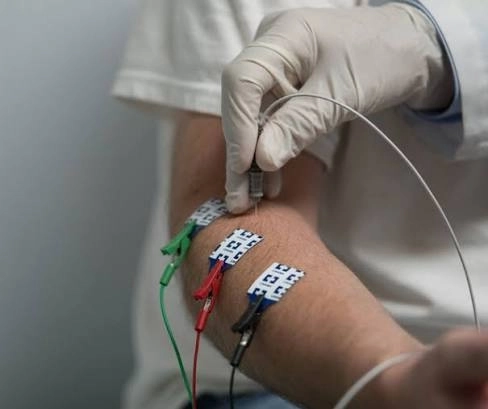
Electromyography and Nerve Conduction Studies (EMG/NCS) represent some of the most accurate and vital diagnostic physiological tests in the fields of neurology and physical medicine and rehabilitation. This examination measures the efficiency and speed of electrical signal transmission along peripheral nerves and evaluates the electrical response of muscles both at rest and during contraction. EMG/NCS helps pinpoint the exact location of a nerve or muscle disorder with extreme precision, whether resulting from peripheral nerve entrapment such as carpal tunnel syndrome, a herniated disc compressing nerve roots, diabetic neuropathy, or primary muscle diseases. Performing and interpreting this test requires specialized medical expertise to reach an accurate diagnosis that guides the therapeutic or rehabilitative plan with the highest degrees of safety.
The EMG/NCS examination consists of two complementary components: Nerve Conduction Studies (NCS), which measure the speed and strength of nerve signals, and Needle Electromyography (EMG), which evaluates the electrical activity of muscle fibers, aiming to accurately distinguish between nerve injuries and muscle disorders and determine their severity.
Dr. Omnia Darwish clarifies that the EMG/NCS examination represents a decisive tool for determining whether symptoms of numbness, tingling, or limb weakness stem from an injury to the nerve itself or from a problem in the muscle or spinal nerve roots, noting that diagnostic precision helps the physician select the most appropriate conservative, rehabilitative, or surgical treatment without delay.
Diagnosing Peripheral Nerve Entrapment and Compression: Such as carpal tunnel syndrome in the hand or ulnar nerve compression at the elbow.
Evaluating Peripheral Neuropathy: Measuring the extent of nerve involvement in patients with diabetes, vitamin deficiencies, or exposure to toxins and medications.
Determining the Impact of Herniated Discs on Nerve Roots: Detecting compression or irritation in cervical or lumbar nerve roots and assessing its severity.
Differentiating Between Muscle Diseases and Neuromuscular Junction Disorders: Diagnosing conditions such as muscular dystrophy or myositis (myopathy) or myasthenia gravis.
Electromyography and nerve conduction devices have witnessed advanced digital developments, offering instant, high-precision analysis of electrical waveforms alongside ultra-fine recording needles that minimize discomfort during the procedure.
Dr. Omnia Darwish points out that relying on modern digital systems equipped with precision neural waveform analysis software and advanced surface sensors increases the sensitivity of the test and helps detect the earliest functional changes in nerve and muscle fibers.
Digital Nerve Conduction Study Systems (Digital NCS): Using surface electrodes to deliver mild, safe electrical impulses and accurately measure sensory and motor nerve response speeds.
Fine-Needle Electromyography (Needle EMG): Utilizing an ultra-thin, sterile, single-use recording needle to capture electrical activity inside the muscle without injecting any substances.
Repetitive Nerve Stimulation Testing: A specialized technique for evaluating signal transmission efficiency between nerve and muscle and diagnosing neuromuscular junction disorders.
Quantitative and Spectral Waveform Analysis Software (Quantitative EMG Analysis): Precisely analyzing the shape, amplitude, and frequency of motor units to document injury severity and monitor improvement with treatment.
The EMG/NCS examination follows a structured medical protocol starting with taking the patient's medical history and performing a clinical exam, proceeding through nerve conduction testing and muscle electromyography, and typically lasting between 30 to 60 minutes depending on the number of limbs tested.
Dr. Omnia Darwish advises patients to arrive with clean skin free of creams, moisturizers, or oils on the day of the test, and to inform the physician beforehand if they take blood-thinning medications or have a pacemaker, emphasizing that proper preparation ensures electrode stability and accurate readings.
Clinical Evaluation and Symptom Review: Listening to the patient's complaints (numbness, pain, muscle weakness) and testing neurological reflexes and muscle strength to identify targeted nerves and muscles.
Skin Preparation and Surface Electrode Placement: Cleansing the skin and warming the limbs if they are cold, as low skin temperature can affect nerve conduction velocity.
Performing Nerve Conduction Studies (NCS): Delivering mild, rapid electrical pulses along the nerve pathway and recording signal transmission speed on the device screen.
Performing Needle Electromyography (EMG) When Needed: Inserting a fine, sterile recording needle into specific muscles to measure their activity at rest and during gentle contraction.
Writing the Detailed Medical Report and Discussing Results: Analyzing all waveforms and readings and preparing a clear diagnostic report to guide the treatment plan.
Adhering to healthy home care and avoiding habits that strain the nerves play a pivotal role in accelerating the recovery of damaged nerves and preserving muscle strength.
Dr. Omnia Darwish stresses that controlling blood sugar levels, maintaining proper body and hand posture during work, and committing to physical therapy sessions and nerve-supporting vitamins represent the fundamental pillars for protecting the neuromuscular system.
Brief Rest After the Test and Using Warm Compresses When Needed: If mild muscle soreness occurs at the needle insertion site, it resolves quickly within hours with rest or warm compresses.
Strict Control of Blood Sugar and Blood Pressure: Protecting the micro-blood vessels supplying peripheral nerves and preventing neuropathy progression.
Correcting Sitting, Keyboard, and Phone Postures: Reducing repetitive strain on the wrists, elbows, neck, and lower back during daily work.
Balanced Nutrition Rich in B-Complex Vitamins (B1, B6, B12): Consuming protein sources and vegetables to support myelin sheath regeneration around nerves and strengthen muscles.
Engaging in Therapeutic Exercises and Moderate Physical Activity: Improving blood perfusion to muscles and nerves and maintaining joint flexibility.
Do Not Ignore Persistent Numbness or Grip Weakness: Early diagnosis protects the nerve from permanent damage and increases the chances of full recovery.
Refrain from Applying Creams or Oils to the Skin on Exam Day: To ensure accurate sensor adhesion and obtain reliable electrical readings.
Inform Your Physician of Any Blood Thinners or Implanted Medical Devices: To take necessary precautions and guarantee the highest levels of safety during the test.
Maintain Ongoing Follow-Ups with Your Specialist:
Dr. Omnia Darwish emphasizes in her concluding guidance that electromyography and nerve conduction studies are safe, accurate tests that serve as the diagnostic compass for peripheral nerve and muscle disorders, confirming that early evaluation, adherence to the therapeutic and rehabilitative plan, and maintaining a healthy lifestyle are the true guarantees for restoring nerve efficiency and muscle strength safely and sustainably.