
Published on: 2026-11-18 | Written by: Al Ameer Center for Speech Therapy Dr. Rania Zaitoun
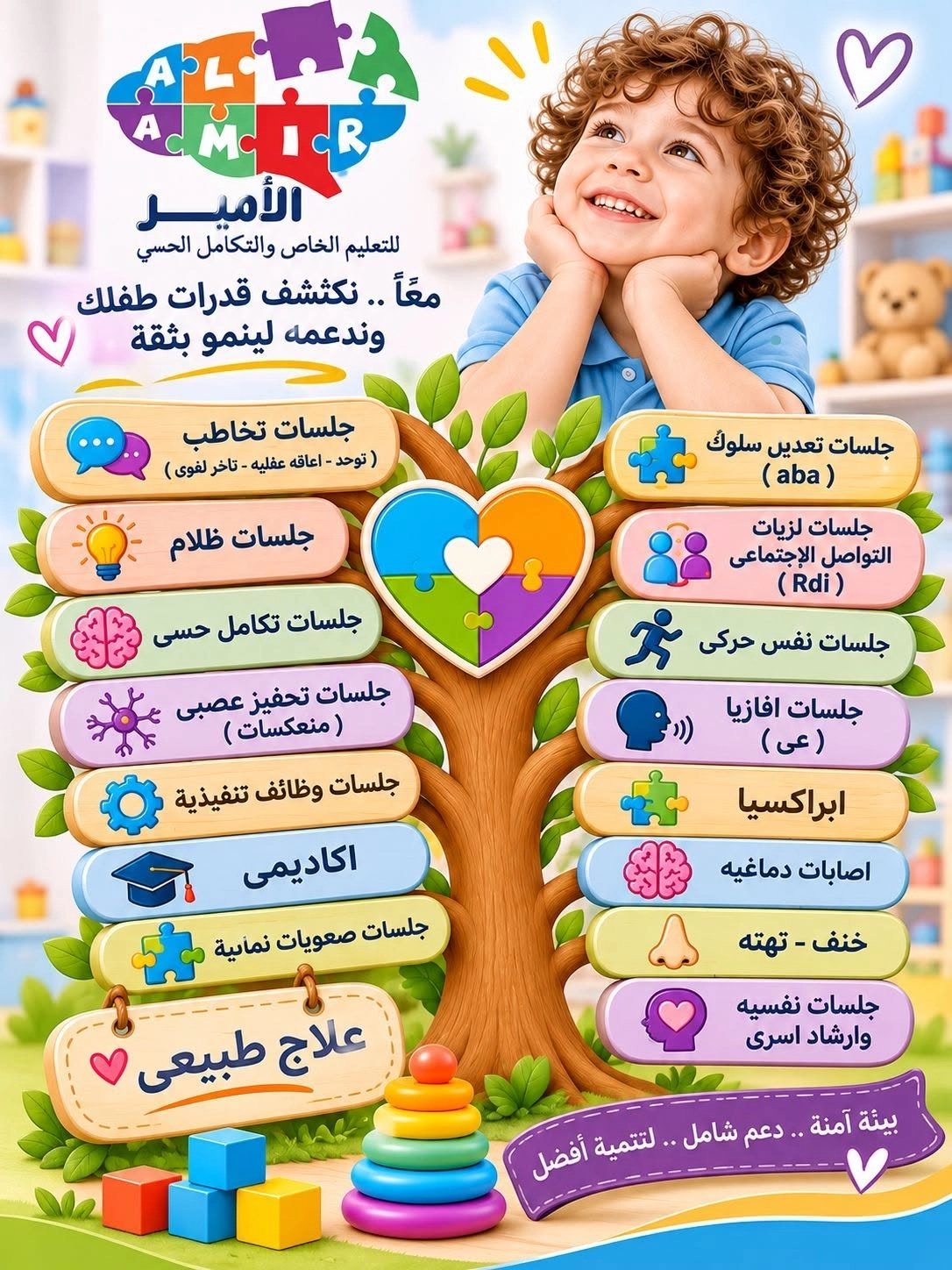
Al Ameer Center for Special Education and Sensory Integration, under the supervision of Dr. Rania Mohamed Zaitoun, is one of the specialized centers in sensory integration and child rehabilitation in Kafr El Sheikh Governorate. The center is dedicated to providing sensory integration sessions designed to help children improve their ability to receive, process, and respond appropriately to sensory information from their surrounding environment. Sensory integration is an essential aspect of child development, playing a key role in developing motor, cognitive, behavioral, and social skills and helping children interact more effectively with their surroundings.
What Is Sensory Integration in Children?
Sensory integration is the process through which the brain receives information from different senses, such as touch, hearing, sight, smell, and taste, in addition to the senses responsible for balance, body movement, and awareness of muscle and joint positions. The brain then organizes and interprets this information to produce appropriate responses to everyday situations. This process helps children understand what is happening around them, control their movements, concentrate during activities, and interact with the people and objects in their environment.
Some children may experience difficulties processing sensory information, which can affect their ability to deal with sounds, lights, and different textures. They may become overly sensitive to certain stimuli, while other children may need additional sensory stimulation to respond appropriately to their surroundings.
What Are the Signs of Sensory Integration Difficulties in Children?
Signs of sensory processing difficulties vary from one child to another. They may include extreme discomfort with loud noises or bright lights, refusal to touch certain materials or fabrics, or difficulty tolerating hair washing, bathing, and nail trimming. Parents may also notice that their child constantly seeks movement, jumping, or spinning, or experiences difficulties with balance, motor coordination, and body control.
Other challenges may include poor concentration, difficulty transitioning from one activity to another, discomfort in crowded places, or avoidance of certain everyday activities. These signs do not necessarily indicate a sensory processing disorder, but they may suggest the need for a specialized assessment to understand the child's needs and determine the appropriate support.
The Importance of Sensory Integration Sessions for Children
Sensory integration sessions provide structured sensory activities and experiences tailored to each child's individual needs, aiming to improve their ability to process sensory input and respond to it more effectively. The nature of these sessions depends on an assessment of the child's abilities and challenges, followed by selecting suitable activities that help gradually develop their skills.
Sensory integration activities vary and may include tactile activities involving different textures, balance and movement exercises, the use of sensory equipment, body coordination exercises, and activities designed to improve responses to auditory, visual, and other sensory stimuli. These activities are selected according to each child's needs, while their responses and progress are monitored throughout the rehabilitation program.
The Role of Sensory Integration in Developing Children's Skills
The impact of sensory integration is not limited to how children respond to surrounding stimuli; it also extends to several aspects of their development. Organizing sensory information helps children develop balance and motor coordination, improve body awareness, and acquire motor skills that support greater independence in everyday activities.
Sensory integration is also related to attention, participation in educational activities and play, and social interaction. When children become better able to manage surrounding stimuli, they may become more capable of participating in daily activities, communicating with others, and handling different situations.
Sensory Integration and Its Relationship to Autism and Developmental Delays
Some children with Autism Spectrum Disorder (ASD) may experience difficulties processing sensory information, such as heightened sensitivity to sounds, touch, or light, or a constant need for movement and certain types of sensory stimulation. Sensory processing challenges may also occur in children with developmental delays or other developmental difficulties.
Appropriate sensory integration sessions, following an assessment of the child's needs, can help improve their ability to manage sensory stimuli and participate in everyday activities. It is recommended that these sessions form part of a comprehensive rehabilitation plan tailored to the child's needs, which may also include speech therapy, skill development, behavior modification, and early intervention, depending on the specialist's assessment.
Sensory Integration Sessions at Al Ameer Center for Special Education and Sensory Integration
Al Ameer Center for Special Education and Sensory Integration in Kafr El Sheikh is committed to providing specialized sensory integration sessions that aim to help children develop their sensory and motor skills and improve their responses to different stimuli. The center takes individual differences into consideration, recognizing that every child has unique needs. Therefore, sessions require setting appropriate goals based on each child's abilities and developmental level.
The center also provides theoretical and practical training in sensory integration, allowing individuals interested in special education and rehabilitation to learn about the fundamental concepts of sensory integration and gain practical experience in this field. In addition, the center offers specialized speech therapy courses and Applied Behavior Analysis (ABA) courses, alongside rehabilitation and skill development services.
Why Choose Al Ameer Center for Special Education and Sensory Integration?
Al Ameer Center for Special Education and Sensory Integration stands out for providing specialized services that address children's diverse needs. These include sensory integration sessions, rehabilitation and skill development programs, early intervention, learning difficulties support, behavior modification, and speech therapy. The center also offers training courses in speech therapy and sensory integration, combining theoretical and practical instruction, as well as Applied Behavior Analysis (ABA) courses. Online consultations are also available inside and outside Egypt.
Al Ameer Center for Special Education and Sensory Integration aims to help every child discover their abilities and develop their skills through educational and rehabilitation services tailored to their individual needs. The center seeks to support children's development and interaction with their surrounding environment, helping them acquire new skills and make progress according to their abilities and potential.
Address: Kafr El Sheikh – Baltim – El Tahrir Street – Eastern Bus Station – Deif Allah Tower – Second Floor.
Contact Numbers: 01001276066 – 01065265842.