Published on: 2026-11-16 | Written by: Dr. Muhammad Al-Khawaja, Consultant and Lecturer
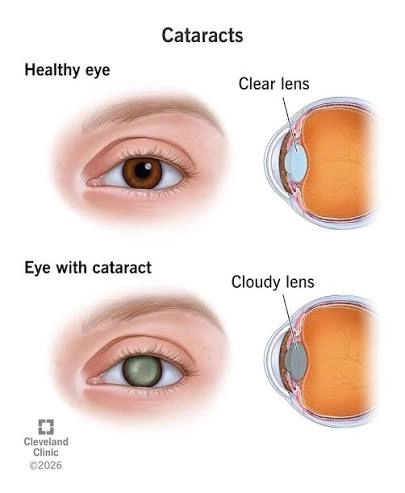
Cataract Surgery and Treatment represent one of the most successful and precise medical interventions in modern ophthalmology and eye surgery. A cataract refers to the clouding of the eye's natural transparent lens due to protein clumping inside it, which obstructs the clear passage of light to the retina. This condition—commonly associated with aging, ultraviolet (UV) radiation exposure, or diabetes—leads to progressive blurred vision, faded colors, and difficulty driving at night. Managing cataracts requires a safe, rapid surgical intervention to replace the clouded lens with an ultra-clear artificial intraocular lens (IOL), restoring visual clarity and quality of life to the patient.
Modern cataract surgeries aim to remove the eye's clouded lens under the highest safety standards and implant an advanced intraocular lens that provides sharp, clear vision across various distances while protecting the patient from complications of neglect, such as elevated intraocular pressure.
Dr. Mohamed El-Khawaga clarifies that cataracts cannot be treated with eye drops or medications, and that surgical intervention to remove the clouded lens and implant a new one is the sole definitive solution, noting that technological advancements have made the procedure simple, completed within a few minutes, and capable of restoring the patient's natural visual acuity.
Restoring Visual Clarity and Sharpness: Completely eliminating the fogginess and cloudiness that interfere with reading and daily activities.
Improving Color Perception and Contrast: Restoring vibrant color vision and reducing discomfort and glare from bright lights at night.
Correcting Coexisting Refractive Errors: Offering the opportunity to correct nearsightedness, farsightedness, or astigmatism by selecting the appropriate lens.
Preventing Complications of Untreated Cataracts: Avoiding hardening (hypermature) of the clouded lens or sudden spikes in eye pressure (secondary glaucoma).
Cataract surgery has undergone a massive technological revolution, transitioning from traditional procedures to ultrasonic Phacoemulsification and Femtosecond laser technologies, alongside a new generation of smart lenses.
Dr. Mohamed El-Khawaga points out that relying on Phacoemulsification and Femtosecond laser technologies—combined with implanting multifocal and toric lenses—allows the surgery to be performed through a microscopic incision without the need for stitches and with the fastest possible recovery period.
Phacoemulsification Technology: Gently breaking up and aspirating the clouded lens using ultrasonic waves through a micro-incision of only a few millimeters.
Femtosecond Laser-Assisted Cataract Surgery (FLACS): Utilizing ultra-precise lasers to create surgical incisions and fragment the lens without a surgical blade.
Multifocal & EDOF Lenses: Implanting advanced intraocular lenses that provide clear near and distance vision, minimizing dependence on eyeglasses.
Optical Biometry Systems: Calculating the exact required lens power with extreme precision prior to surgery to ensure the best possible visual acuity.
Cataract cases follow a structured diagnostic and surgical protocol that begins with a comprehensive fundus examination and lens measurement, concluding with the procedure and meticulous follow-up.
Dr. Mohamed El-Khawaga advises against waiting until a cataract becomes fully "ripe" and hardened as was commonly believed in the past, emphasizing that performing the surgery as soon as clouding begins to affect the patient's quality of life makes the procedure easier, safer, and accelerates ocular healing.
Comprehensive Clinical Examination and Retinal Evaluation: Confirming the health of the optic nerve and retina to ensure the best visual outcome following cataract removal.
Ocular Biometry and Corneal Topography: Measuring corneal curvature and axial eye length to select the ideal type and power of the intraocular lens.
Surgical Preparation and Local Anesthesia: Using numbing eye drops only—without the need for general anesthesia—making the procedure safe for patients of all ages.
Performing the Surgery and Lens Implantation: Removing the clouded lens and securing the permanent, flexible lens in its natural position within 10 to 15 minutes.
Periodic Follow-Up and Vision Stabilization Assessment: Examining the eye the following day and over the initial weeks to confirm micro-incision healing and visual stability.
Adhering to postoperative instructions and adopting healthy eye-protection habits play a pivotal role in accelerating recovery and preserving surgical outcomes for a lifetime.
Dr. Mohamed El-Khawaga stresses that strictly applying prescribed eye drops on schedule and avoiding rubbing the eye or exposing it to water and dust during the first few days represent the primary guarantee for passing the recovery period safely without any infections.
Wearing UV-Protective Sunglasses: Shielding the eyes from harmful ultraviolet rays and glare in outdoor environments.
Avoiding Rubbing or Pressing on the Eye: Preserving the stability of the implanted lens and protecting the micro-incision during the initial weeks after surgery.
Temporarily Avoiding Direct Water Exposure and Eye Makeup: Preventing non-sterile water or bacteria from entering the eye during the first week of recovery.
Following a Diet Rich in Antioxidants: Increasing intake of leafy greens, fruits, and Omega-3-rich fish to support retinal and overall eye health.
Controlling Blood Sugar and Blood Pressure Levels: Maintaining general health stability to protect delicate blood vessels inside the eye.
Do Not Delay Surgery Once Daily Vision Is Affected: Timely intervention reduces the ultrasonic energy needed to break up the lens and protects corneal tissues.
Strictly Adhere to the Prescribed Eye Drop Schedule: Applying antibiotic and anti-inflammatory drops at exact prescribed dosages to prevent any infection.
Temporarily Avoid Strenuous Physical Exertion and Heavy Lifting: Maintaining stable intraocular pressure during the initial recovery phase.
Maintain Ongoing Follow-Ups with Your Specialist:
Dr. Mohamed El-Khawaga emphasizes in his concluding guidance that cataract surgery has become one of the safest and most successful procedures worldwide today, confirming that accurate diagnosis, selecting the lens best suited to each patient's needs, and adhering to postoperative instructions are the true keys to restoring visual clarity and enjoying a bright, clear life.