Published on: 2026-11-14 | Written by: Dr. Fadi Faris Nazmy, Orthopedic, Fracture
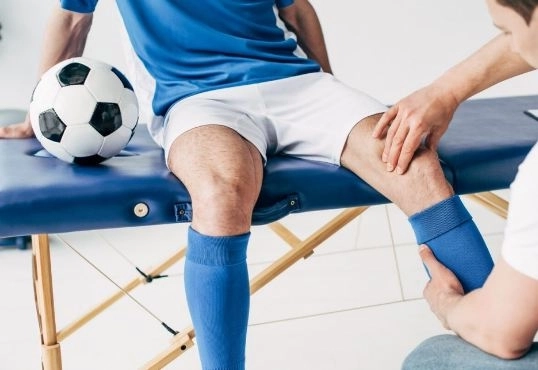
Sports injuries are one of the most common health problems among athletes and those involved in physical activities, whether they are professional players or amateurs who practice sports to maintain their physical fitness. These injuries may range from simple bruises and muscle strains, to torn ligaments and cartilage, fractures, and complex joint injuries that may affect the player’s ability to practice sports activity for long periods.
With the great development in the field of sports medicine, orthopedic surgery, and motor rehabilitation, there have become multiple ways to deal with sports injuries, starting from accurate diagnosis and conservative treatment, through physical therapy and specialized rehabilitation, all the way to surgical intervention when necessary.
Hence the importance of raising awareness of the correct ways to deal with sports injuries, which we highlight in this article with Dr. Fadi Fares, to learn about the most common stadium injuries, the reasons for their occurrence, the latest medical trends in treating them, how to prevent them and a safe return to the stadiums.
First: What is meant by sports injuries?
Sports injuries are a group of injuries that affect muscles, bones, joints, ligaments, and tendons as a result of practicing sporting activities, exposure to excessive physical effort, a sudden movement, or a direct collision during play.
These injuries are not limited to football players only, but include those who practice all sports, such as basketball, handball, tennis, running, weightlifting, swimming, and others.
Sports injuries are generally divided into two main types:
1- Acute injuries:
These are injuries that occur suddenly during sports activity, such as:
Ankle joint sprain.
Ligaments are torn.
Cruciate ligament injuries.
Fractures resulting from falls or collisions.
Joint dislocation.
Sudden muscle tears.
2- Repetitive stress injuries:
It occurs as a result of repeated sporting movements or loading the muscles and joints beyond their endurance capacity. Examples include:
Tendinitis.
Bone stress injuries.
Knee pain resulting from repetitive loading.
Achilles tendonitis.
Some shoulder injuries among those who practice throwing and swimming sports.
Second: The most common sports injuries that require specialized medical intervention
1- Anterior cruciate ligament injury
Anterior cruciate ligament injury is one of the most common knee injuries, especially among football and basketball players and sports that rely on sudden changes of direction.
The tear often occurs when the body rotates with the foot firmly on the ground, or when landing incorrectly after jumping, and it may also occur as a result of a direct collision with the knee.
The most important symptoms:
Feeling a pop inside the knee at the time of injury.
Knee swelling during the first hours.
Obvious pain and difficulty moving.
Feeling of knee instability.
Difficulty changing direction or running.
Treatment methods:
Treatment depends on the degree of injury, the nature of the patient's activity, the extent of knee instability, and the presence of associated injuries to cartilage or other ligaments.
Treatment may include:
Conservative treatment and muscle rehabilitation in selected cases.
Strengthening the muscles surrounding the knee.
Restoring range of motion and balance.
Surgical reconstruction of the cruciate ligament in cases where this is necessary.
It is important to emphasize that the decision for surgery does not depend on the presence of a tear alone, but rather on the clinical examination and the patient's functional and sports needs.
2- Meniscus injuries in the knee
The meniscus is a cartilage tissue found inside the knee joint. It helps distribute loads, absorb shocks, and stabilize the joint.
It may be torn as a result of sudden twisting during exercise, or due to degenerative changes that occur with age.
Common symptoms:
Pain in the side of the knee.
Joint swelling.
Difficulty bending or straightening the knee completely.
Sensation of friction or crackling.
Suspension or locking of the knee occurs in some cases.
Treatment:
Not all meniscus tears require surgery. Some cases may respond to conservative treatment and physical rehabilitation.
Cases that require surgical intervention may include:
Meniscus repair to preserve its tissue whenever possible.
Removing the damaged part only when necessary.
Post-surgical rehabilitation to restore strength, movement and normal function of the knee.
The primary goal of modern treatment is to preserve as much cartilage as possible, to reduce the possibility of joint osteoarthritis in the future.
3- Muscle tear and muscle tension
Muscle injuries are among the most common sports injuries, and often occur as a result of sudden muscle contraction, increased training load, or insufficient physical preparation.
The muscles most susceptible to injury are:
Posterior thigh muscles.
Anterior thigh muscles.
Calf muscles.
Thigh connective muscles.
Symptoms:
Sudden pain during movement.
Feeling a stretch or tear inside the muscle.
Swelling or bruising.
Weak ability to move the affected limb.
Difficulty running or jumping.
Treatment:
Treatment varies depending on the degree of tear, and may include:
Temporarily stop sports activity.
Protect the affected area and reduce the load on it.
Use local cooling when needed to relieve pain.
A gradual rehabilitation program to restore muscle flexibility and strength.
Gradual return to running, speeds, and sports movements.
Premature return to training should be avoided; Because incomplete recovery may increase the chances of recurrence of the injury.
4- Ankle joint injuries and ligament sprains
A very common injury among athletes is an ankle sprain, which often occurs when the foot lands incorrectly or changes direction suddenly.
The injury varies from just a stretch of the ligaments to a partial or complete tear.
Symptoms:
Pain around the ankle joint.
Rapid swelling.
Bruising in the affected area.
Difficulty walking or bearing weight.
Instability in severe cases.
Treatment methods:
Treatment is determined according to the severity of the injury, and may include:
Protection and reduced load at the beginning.