
Published on: 2026-11-14 | Written by: Heidak Dental Center
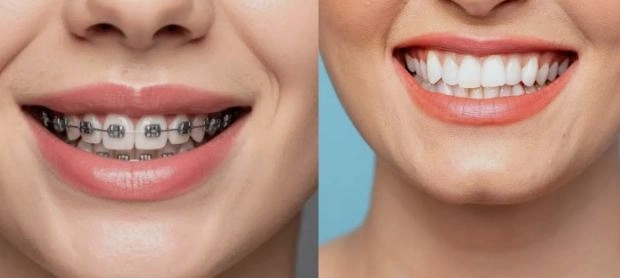
Do you dream of having a beautiful smile with straight, well-aligned teeth? Do you suffer from crowded teeth or gaps between them? Do you have protruding teeth or problems with the alignment of your upper and lower jaws?
Dental alignment problems are not just an aesthetic concern that affects the appearance of your smile. They can also affect chewing, speaking, oral hygiene, and the health of your teeth and gums.
With the significant advancements in dentistry, orthodontic treatment has become one of the most important solutions for correcting the position of teeth and jaws, improving the appearance of the smile, and restoring proper oral function in a healthy and harmonious way.
At Haydaq Dental Center, we carefully evaluate each patient's condition and determine the most suitable orthodontic treatment based on the teeth, jaws, and individual needs of each case, helping you achieve a beautiful and healthy smile that lasts.
First: What Is Orthodontics?
Orthodontics is a specialized field of dentistry concerned with diagnosing and treating problems related to the alignment of teeth and jaws through the use of specialized appliances and techniques that gradually move teeth into their correct positions.
Orthodontic treatment works by applying gentle, controlled forces to the teeth, allowing them to gradually move through the jawbone until they reach their desired positions.
The goal of orthodontic treatment is not only cosmetic. It also aims to:
Improve the alignment and appearance of teeth.
Treat dental crowding and gaps between teeth.
Correct bite and occlusion problems.
Improve chewing efficiency.
Help improve speech in certain cases.
Make oral hygiene easier and reduce areas where food particles accumulate.
Improve the overall appearance of the smile.
Second: What Conditions Require Orthodontic Treatment?
There are several dental problems for which orthodontic treatment may be the appropriate solution. The most common include:
1. Crowded Teeth
Dental crowding occurs when there is insufficient space in the jaw to accommodate all the teeth properly, causing them to overlap, rotate, or appear in irregular positions.
Orthodontic treatment helps realign the teeth and distribute them properly within the jaw.
2. Gaps Between Teeth (Diastema)
Some people have noticeable spaces between their teeth, particularly between the front teeth.
These gaps may be caused by differences in tooth size, genetic factors, missing teeth, or other reasons.
Orthodontic treatment can help close these gaps and achieve better alignment.
3. Protruding Teeth
Protruding teeth are a common dental concern. They occur when the upper or lower front teeth extend forward beyond their normal position.
Orthodontic treatment can help improve tooth positioning and correct protrusion, depending on the nature of the case.
4. Deep Bite
A deep bite occurs when the upper front teeth cover a large portion of the lower front teeth when the mouth is closed.
In some cases, this can cause tooth wear or bite-related problems.
5. Open Bite
An open bite occurs when there is a gap between the upper and lower teeth when the mouth is closed. This may affect chewing and speech.
6. Crossbite
A crossbite occurs when some of the upper teeth bite inside the lower teeth instead of fitting into their normal position.
This condition may affect bite alignment and jaw development in certain cases.
7. Underbite
An underbite occurs when the lower jaw or lower teeth extend forward in relation to the upper jaw.
The severity varies from one person to another. Treatment may involve orthodontics alone or additional procedures, depending on the nature of the case.
Third: Types of Orthodontic Treatment
With advancements in dentistry, several types of orthodontic treatment are now available, each with its own advantages and applications.
Choosing the right type depends on the severity of the dental problem, tooth alignment, bite condition, and the patient's needs.
1. Traditional Metal Braces
Metal braces are among the most widely used orthodontic treatments for correcting tooth alignment and bite problems.
They consist of small metal brackets attached to the teeth and connected by a specialized orthodontic wire that gradually moves the teeth into their proper positions.
Advantages:
Effective for treating a wide range of orthodontic problems.
Suitable for mild, moderate, and complex cases, depending on the treatment plan.
Durable and capable of withstanding everyday use.
Generally more affordable than some other orthodontic options.
Allow precise control over tooth movement.
Disadvantages:
Visible when smiling and speaking.
May cause some friction or irritation to the lips and cheeks initially.
Require careful oral hygiene.
Certain hard and sticky foods should be avoided.
2. Ceramic Braces
Ceramic braces work in the same way as metal braces, but their brackets are made from tooth-colored ceramic material, making them less noticeable.
Advantages:
More aesthetically pleasing than traditional metal braces.
Brackets closely match the natural color of teeth.
Effective for treating many types of dental misalignment.
Suitable for people who prefer a less noticeable orthodontic option.
Disadvantages:
Generally more expensive than metal braces.
Brackets may be more susceptible to breakage under certain conditions.
Require careful maintenance to prevent staining of the elastic components used with them.
3. Clear Aligners
Clear aligners are among the modern technologies used in orthodontics. They consist of a series of transparent trays that are custom-designed for each patient.
These trays apply gentle, controlled pressure to the teeth, gradually moving them according to a specific treatment plan.
Advantages:
Transparent and less noticeable during use.
Removable while eating.
Easier to clean teeth compared to fixed braces.
Do not contain metal wires or brackets.
Comfortable for some patients in terms of appearance and everyday use.
Disadvantages:
Not suitable for every orthodontic case.
Require commitment to wearing them for the daily duration recommended by the dentist, usually around 20 to 22 hours per day.
May be lost or damaged because they are removable.
Failure to wear them consistently may delay treatment or affect the results.
May cause temporary pressure or slight changes in speech when first used.
4. Lingual Braces
This type of orthodontic treatment is characterized by brackets and wires being attached to the inner surfaces of the teeth, facing the tongue, making them less visible to other people.
Advantages:
Almost invisible when smiling.
Works using the same principle as fixed braces.
May be suitable for people who do not want visible braces on the front surfaces of their teeth.
Disadvantages:
Requires special expertise and skill during placement and follow-up.
May cause friction or discomfort to the tongue initially.
Requires additional care when cleaning.
Not suitable for every case.
5. Self-Ligating Braces
Self-ligating braces are a type of fixed orthodontic treatment that uses special brackets with built-in mechanisms to hold the wire instead of relying on traditional elastic ligatures in certain systems.
Advantages:
A different design for securing the orthodontic wire.
May help reduce friction in certain orthodontic systems.
May reduce the need for some types of frequent adjustments, depending on the treatment plan.
Available in both metal and ceramic options.
However, this does not necessarily mean that treatment will be faster than traditional braces in every case, as treatment duration depends on the nature of the problem and the tooth movement plan.
Fourth: What Is the Difference Between Metal, Ceramic, and Clear Braces?
Choosing an orthodontic treatment should not depend on appearance alone. Treatment effectiveness, the severity of the dental problem, and patient commitment must also be considered.
Metal Braces: Suitable for a wide range of cases and known for their durability and effectiveness.
Ceramic Braces: Offer a more aesthetic and less noticeable appearance while maintaining the effectiveness of fixed orthodontic treatment.
Clear Aligners: Suitable for selected cases and offer the advantage of being removable and nearly invisible.
Lingual Braces: Less noticeable because they are attached to the back surfaces of the teeth.
The final choice should always be made after a dental examination and the necessary diagnostic procedures, because the most popular option is not necessarily the most suitable for every patient.
Fifth: Benefits of Orthodontic Treatment
Orthodontic treatment is not simply a procedure to improve the appearance of your smile. It can also provide important health and functional benefits, including:
Improving tooth alignment and smile aesthetics.
Treating crowded teeth and gaps.
Improving the way the upper and lower teeth come together.
Improving chewing efficiency and food breakdown.
Making brushing and flossing easier.
Reducing areas where food particles and bacteria may accumulate.
Helping reduce abnormal tooth wear caused by certain bite problems.
Improving self-confidence and overall appearance.
Helping improve certain speech problems associated with tooth positioning.
Sixth: Is Orthodontic Treatment Suitable for Adults or Only Children?
One common misconception is that orthodontic treatment is only suitable for children and teenagers.
In fact, adults of different ages can undergo orthodontic treatment, provided their teeth, gums, and jawbone are healthy enough to support the treatment.
Orthodontics for Children:
Evaluating the development of teeth and jaws during childhood can be beneficial, as certain jaw-related problems may require early intervention to take advantage of the growth period.
Orthodontics for Teenagers:
This is one of the most common stages for orthodontic treatment, especially after most permanent teeth have erupted.
Orthodontics for Adults:
Adults can also achieve excellent orthodontic results using metal, ceramic, or clear braces, depending on their individual condition.
The most important factor is the health of the teeth and gums rather than age alone when determining whether treatment is appropriate.
Seventh: Stages of Getting Orthodontic Treatment
Orthodontic treatment involves several stages, each playing an important role in achieving successful results.
Stage One: Examination and Diagnosis
The dentist begins by examining the teeth, gums, and jaws, evaluating the bite, and identifying any crowding, gaps, or protrusion.
Stage Two: X-Rays and Diagnostic Records
The dentist may request dental and jaw X-rays, photographs, dental impressions, or digital scans to evaluate tooth positions, roots, and jawbone structure.
Stage Three: Treatment Planning
After evaluating the case, the dentist determines:
The most suitable type of braces.
Which teeth need movement and correction.
Whether tooth extractions are necessary.
Whether additional orthodontic appliances are required.
The estimated treatment duration.
The number of follow-up appointments needed.
Stage Four: Preparing the Teeth
Before braces are placed, it is essential to treat any cavities, gum inflammation, or other existing oral health problems.
The goal is to ensure that the teeth and gums are as healthy as possible before starting tooth movement.
Stage Five: Braces Placement
For fixed braces, the brackets are attached to the teeth and connected using orthodontic wires.
For clear aligners, the patient receives custom-designed trays along with instructions on how to wear and change them.
Stage Six: Regular Follow-Up Appointments
Regular follow-up visits are essential for monitoring tooth movement and adjusting the braces or treatment plan when necessary.
Stage Seven: Braces Removal
Once the desired tooth alignment and bite have been achieved, the fixed braces are removed, and the teeth are cleaned. The dentist then checks the health of the teeth and gums.
Stage Eight: Retainer Placement
This is one of the most important stages of orthodontic treatment because teeth can shift back after braces are removed if proper retention is not maintained.
The dentist determines the appropriate type of retainer and how long it should be worn to maintain the results.
Eighth: How Long Does Orthodontic Treatment Take?
The duration of orthodontic treatment varies from one person to another depending on the nature and complexity of the problem and how the teeth respond to treatment.
Some mild cases may take several months, while more complex cases may require a longer period.
In general, many orthodontic cases take approximately one to two years, although the actual duration may be shorter or longer depending on the individual condition.
The main factors affecting treatment duration include:
The degree of dental crowding.
The presence of gaps between teeth.
The severity of bite problems.
The position of the upper and lower jaws.
The type of braces used.
The teeth's response to treatment.
Attendance at regular follow-up appointments.
Compliance with clear aligner wear or elastic instructions.
It is very important not to attempt to speed up tooth movement by applying excessive force, as moving teeth too quickly may damage the teeth and surrounding tissues.
Ninth: Does Orthodontic Treatment Cause Pain?
It is normal to experience some pressure or mild discomfort after braces are placed or following adjustment appointments.
This happens because the teeth begin moving gradually.
Possible symptoms include:
A feeling of pressure on the teeth.
Temporary sensitivity while chewing.
Friction between the brackets and the lips or cheeks.
Mild discomfort when the orthodontic wire or clear aligners are changed.
These sensations are usually temporary and improve as you get used to the braces.
However, if you experience severe or persistent pain, a wire causing an injury, or a loose bracket, you should contact your dentist.
Tenth: Foods to Eat and Avoid During Orthodontic Treatment
Diet is something that requires special attention during orthodontic treatment because certain foods can break brackets or dislodge wires.
Recommended Foods:
Soft foods.
Cooked vegetables.
Rice and pasta.
Eggs.
Fish.
Soft fruits cut into small pieces.
Tender meats that are easy to chew.
Foods to Avoid with Fixed Braces:
Hard nuts.
Ice.
Hard candies.
Popcorn.
Chewing gum.
Toffee and caramel.
Very sticky foods.
Biting directly into apples or carrots with the front teeth.
For clear aligners, the trays must be removed before eating, and the teeth should be cleaned before putting them back in.
Eleventh: How to Maintain Oral Hygiene During Orthodontic Treatment
Maintaining good oral hygiene is one of the most important factors in successful orthodontic treatment.
Brackets and wires can make it easier for food particles to accumulate around the teeth, increasing the risk of tooth decay and gum inflammation if proper cleaning is not maintained.
Here are the most important tips:
Brush your teeth after meals using a toothbrush suitable for braces.
Use a small interdental brush to clean around the brackets.
Use dental floss according to your dentist's instructions.
Use mouthwash as recommended by your dentist.
Reduce sugary foods and acidic drinks.
Drink plenty of water.
Never neglect brushing your teeth before bedtime.
Attend regular dental cleaning and follow-up appointments.
Twelfth: What Is a Dental Retainer After Orthodontic Treatment?
After braces are removed, the teeth need time to adjust and stabilize in their new positions.
This is where dental retainers come in. A retainer is an appliance used to maintain tooth alignment and prevent the teeth from gradually shifting back to their previous positions.
Types of Dental Retainers
1. Clear Removable Retainer
A transparent tray custom-made according to the teeth's alignment after orthodontic treatment. The patient can put it in and take it out according to the dentist's instructions.
2. Fixed Retainer
A thin wire bonded to the back surfaces of a group of teeth, usually the front teeth, to help maintain their alignment.
3. Acrylic Removable Retainer
A type of removable retainer that contains an acrylic component along with wires or other retention elements. It is custom-designed according to the patient's needs.
The duration of retainer use varies from one person to another, and the dentist may recommend long-term use to maintain the results.
Thirteenth: Can Teeth Become Crooked Again After Orthodontic Treatment?
Yes. Teeth can shift again after braces are removed, especially if the patient does not wear the retainer as instructed by the dentist.
The teeth and surrounding tissues need time to adapt to their new positions, which makes the retention phase essential for maintaining the treatment results.
The main reasons for orthodontic relapse include:
Not wearing the retainer.
Wearing the retainer inconsistently.
Not following the dentist's instructions.
Natural changes in the teeth and jaws with age.
Fourteenth: Does Orthodontic Treatment Change Facial Appearance?
Orthodontic treatment can affect the appearance of the smile and the way the teeth and lips look, especially in cases involving significant protrusion or bite problems.
In some cases, facial harmony may improve as a result of correcting tooth positioning.
However, the extent of these changes depends on the nature of the problem and whether it is related only to the teeth or also to the jawbones.
It is important to understand that orthodontics is not a procedure intended to change facial appearance arbitrarily. Its purpose is to improve dental and jaw function and achieve a more harmonious smile.
Fifteenth: Can I Get Braces If I Have Dental Fillings or Crowns?
Having dental fillings, crowns, or other restorations does not necessarily mean that you cannot undergo orthodontic treatment.
Many patients can successfully receive orthodontic treatment while having fillings or crowns, but the dentist must carefully evaluate the existing dental work before starting.
In some cases, fillings or crowns may require monitoring or adjustment because tooth movement can affect certain existing restorations.
As for dental implants, they do not move in the same way as natural teeth. Therefore, the orthodontic treatment plan must take their positions into consideration.
Sixteenth: Are There Any Risks or Side Effects of Orthodontic Treatment?
Orthodontic treatment is generally safe and effective when properly planned, performed, and monitored. However, like any medical procedure, it may involve certain side effects or risks.
The most common include:
Temporary tooth sensitivity or discomfort.
Irritation of the lips and cheeks.
Food accumulation around brackets.
Increased risk of tooth decay or gum inflammation if oral hygiene is poor.
White spots on tooth enamel due to plaque accumulation and mineral loss.
Possible mild root resorption in some cases.
Partial relapse of tooth alignment after treatment if retainers are neglected.
That is why proper examination, regular follow-up, and following the dentist's instructions are essential for reducing these risks.
Seventeenth: Are Clear Aligners Better Than Metal Braces?
There is no universally superior type, as each option has its own advantages and applications.
Clear aligners offer aesthetic benefits and can be removed while eating and cleaning the teeth. However, they require a high level of daily commitment and are not suitable for every case.
Metal braces, on the other hand, can treat a wide range of dental alignment and bite problems and do not require patients to remember to wear a removable appliance.
The dentist determines the most appropriate option based on the diagnosis and treatment plan.