
Published on: 2026-10-29 | Written by: Dr. Ahmed Saeed, Professor of Neurosurgery and Spine Surgery
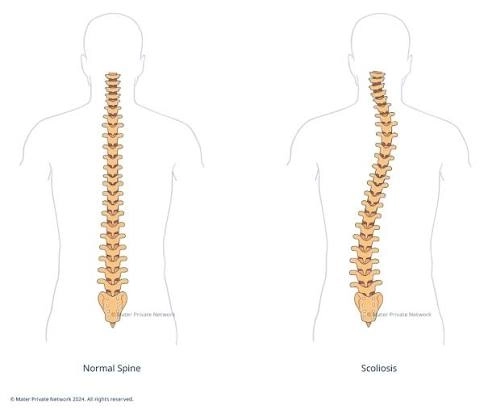
Scoliosis is a bone and skeletal deformity condition that directly impacts an individual's quality of life and physical posture, characterized by the spine curving sideways into an "S" or "C" shape. Causes range from genetic and hereditary factors, congenital anomalies present at birth, to neuromuscular imbalances. The severity of scoliosis is not limited to its aesthetic and visual appearance; it also leads to chronic back pain, spinal nerve compression, and in severe cases, impaired lung and heart function. This requires precise medical evaluation and a customized treatment plan to control the curvature and restore spinal alignment.
Treatment plans for scoliosis aim to halt the progression of lateral curvature, correct stiffness and structural balance in the body, relieve pain resulting from nerve compression, and protect internal organs within the thoracic cavity.
Dr. Ahmed Saeed clarifies that managing scoliosis requires early diagnosis based on measuring the curvature angle (Cobb Angle), noting that early intervention during the growth phase eliminates the need for major surgeries and achieves excellent corrective results.
Restoring Postural Alignment and Balance: Correcting shoulder and pelvic asymmetry and re-establishing the mechanical symmetry of the skeletal system.
Relieving Pressure on Nerves and Blood Vessels: Minimizing chronic back pain, numbness, and tingling in the lower limbs.
Protecting Respiratory and Cardiac Function: Preventing the deformed rib cage from compressing the lungs and heart, ensuring proper breathing efficiency.
Improving Mental Health and Quality of Life: Restoring the patient's self-confidence and freedom to perform daily activities comfortably.
Spinal surgeries and treatments have witnessed astonishing technological leaps through the use of smart braces, minimally invasive microsurgeries, and dynamic stabilization techniques.
Dr. Ahmed Saeed points out that relying on minimally invasive surgical correction techniques and 3D neuronavigation systems has sparked a true revolution in scoliosis surgery, ensuring high precision in vertebra fixation and curvature angle correction with complete safety.
Corrective Medical Braces: Specialized devices designed to support and immobilize the spine during growth to prevent curvature aggravation.
Specialized Physical Therapy and Rehabilitation (Schroth Method): Precise exercises tailored to retrain and strengthen the muscles surrounding the spine.
Spinal Fusion Surgeries: Utilizing high-precision medical screws and rods to straighten and stabilize deviated vertebrae.
Vertebral Body Tethering (VBT): An innovative technique allowing the spine to continue growing flexibly without requiring full spinal fusion.
Scoliosis patient management follows a strict, structured medical protocol starting with digital radiological evaluation and concluding with continuous physical rehabilitation programs.
Dr. Ahmed Saeed advises performing comprehensive full-spine X-rays in a standing position to accurately measure the curvature angle, while periodically monitoring bone growth to determine the optimal timing for conservative or surgical treatment.
Digital Diagnosis and Curvature Measurement: Determining the degree of scoliosis, vertebral flexibility, and assessing nerve and bone growth status.
Selecting a Customized Treatment Path: Choosing conservative treatment (braces and physical therapy) for mild and moderate cases, or the surgical option for severe cases.
Periodic Follow-Up and Progress Assessment: Conducting regular radiological examinations to monitor how the spine responds to treatment.
Physical Rehabilitation Post-Intervention: Initiating core and back muscle strengthening sessions to restore physical fitness and balance.
Long-Term Prevention and Result Maintenance: Monitoring vertebral stability and ensuring the curvature does not return after the growth period ends.
Behavioral adjustments and daily exercise adherence serve as the foundational cornerstone to support medical treatments and ensure the preservation of spinal health.
Dr. Ahmed Saeed stresses that maintaining an ideal weight, avoiding poor sitting posture for prolonged periods, and adhering to abdominal and back strengthening exercises represent indispensable golden rules for successful scoliosis treatment.
Adhering to Strengthening and Stretching Exercises: Practicing suitable sports like swimming and yoga to enhance spinal flexibility and core muscle strength.
Following Correct Sitting and Sleeping Postures: Utilizing comfortable chairs that support the back and choosing a balanced medical mattress that distributes body weight evenly.
Adhering to Bracing Hours: If a medical brace is prescribed, wearing it for the specified daily duration to achieve optimal corrective results.
Avoiding Improper Heavy Lifting: Distributing loads evenly across both shoulders and avoiding single-sided heavy bags.
Balanced Nutrition to Support Bone Health: Consuming foods rich in calcium and Vitamin D to strengthen bones and ensure proper growth.
Early Screening for Children and Adolescents: Observing any asymmetry in shoulder or back levels during growth and seeking immediate medical consultation.
Never Neglecting Physical Therapy: Committing to rehabilitation sessions earnestly to provide necessary muscular support for the vertebrae.
Adhering to Post-Surgical Instructions: Avoiding sharp bending or sudden movements during the bone healing period.
Maintain Ongoing Follow-Ups with Your Specialist:
Dr. Ahmed Saeed emphasizes in his concluding guidance that scoliosis no longer presents a barrier to living a normal, active life. He confirms that astonishing progress in medical and surgical technologies provides radical, safe solutions suitable for all age groups, and that early diagnosis and adherence to the treatment plan are the primary keys to restoring postural alignment and sustainable health.