
Published on: 2026-10-29 | Written by: Dr. Ahmed Saeed, Professor of Neurosurgery and Spine Surgery
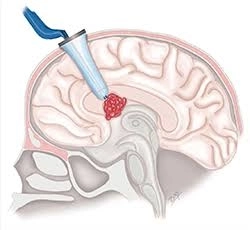
Brain tumor microsurgery is one of the most precise and complex subspecialties in modern neurosurgery; this field deals directly with delicate brain tissue responsible for consciousness, movement, cognition, and vital bodily functions. Brain tumors vary, ranging from benign to malignant, and from primary to metastatic. All types require early diagnosis and a high-precision surgical strategy aimed at complete tumor resection while fully preserving surrounding healthy tissue and critical brain centers.
Surgical interventions for brain tumors aim to remove the tumor mass with the highest possible safety margin, relieve intracranial pressure, and obtain an accurate tissue sample to precisely define the tumor type and guide secondary treatment plans.
Dr. Ahmed Saeed clarifies that modern brain tumor surgery is no longer limited to merely removing the tumor, but extends to a primary objective: preserving the patient's quality of life and vital neurological functions, noting that monumental technological advancements have enabled surgeons to safely access the deepest regions of the brain with unprecedented security.
Maximal Safe Resection: Removing as much tumor tissue as possible without damaging healthy surrounding tissue.
Relieving Intracranial Pressure: Reducing severe headaches, seizures, and mechanical stress exerted on brain tissues.
Establishing Precise Histopathological Diagnosis: Examining biopsy samples laboratory-wide to determine tumor grade and guide radiation or chemotherapy accurately.
Improving Neurological and Motor Functions: Re-enabling the patient to resume normal daily activities once the pressure exerted by the tumor is removed.
Neurosurgery has witnessed astonishing technological leaps thanks to ultra-precise surgical microscopes, neuronavigation systems, and advanced endoscopic procedures.
Dr. Ahmed Saeed points out that relying on digital neuronavigation techniques, micro-endoscopes, and awake craniotomies in critical tumors has sparked a true revolution in procedural precision and significantly raised cure rates.
Advanced Fluorescence-Guided Microsurgery: Utilizing modern fluorescent agents that cause tumor cells to glow under special lighting, facilitating their separation from healthy tissue.
3D Neuronavigation: A digital guidance system acting as a precise "GPS" to guide the surgeon to the tumor location with millimeter accuracy.
Intraoperative Neurophysiological Monitoring (IOM): Real-time monitoring of electrical signals in nerves and the spinal cord throughout the operation to prevent motor or sensory deficits.
Micro-Endoscopic Resection: Accessing tumors located at the skull base or within cerebral ventricles through ultra-small surgical openings.
Brain tumor surgeries follow a strict, structured medical protocol starting with comprehensive radiological evaluation and concluding with a neurological rehabilitation program.
Dr. Ahmed Saeed advises performing functional magnetic resonance imaging (fMRI) and cerebral angiography prior to surgery to map delicate nerve pathways with extreme accuracy, emphasizing that meticulous advance planning is the foundation of surgical success.
Advanced Radiological Diagnosis and Imaging: Conducting 3D MRI scans to define tumor boundaries and its relationship to blood vessels and vital centers.
Anesthetic and Neurological Preparation: Medically and psychologically preparing the patient while securing a safe anesthesia protocol.
Executing Microsurgery: Performing precise craniotomy, utilizing navigation and microscopes to excise the tumor, and meticulously closing tissue layers.
Postoperative Intensive Monitoring: Transferring the patient to the Intensive Care Unit (ICU) to continuously monitor consciousness, brain pressure, and vital signs.
Comprehensive Rehabilitation Program: Initiating physical and speech therapy as soon as the condition stabilizes to ensure swift neurological recovery.
The home recovery phase and ongoing care serve as fundamental pillars for cranial wound healing and the gradual restoration of physical and mental activity.
Dr. Ahmed Saeed stresses that avoiding severe emotional distress, strictly adhering to anti-seizure medications, and getting sufficient sleep and rest represent golden rules for ensuring patient safety during the initial weeks post-surgery.
Strict Adherence to Preventive Medications: Taking prescribed anti-seizure drugs and pain relievers consistently and without delay.
Wound Hygiene and Care: Keeping the surgical site dry and clean while adhering to wound dressing and suture removal schedules.
Avoiding Strenuous Physical and Mental Exertion: Refraining from heavy lifting, driving, or mental overexertion for a duration determined by the surgeon.
Balanced Nutrition for Healing: Focusing on foods rich in vitamins and proteins to accelerate tissue repair.
Immediate Medical Attention in Emergencies: Remaining vigilant for abnormal symptoms such as persistent severe headaches, fever, or sudden seizures.
Early Diagnosis Upon Symptom Emergence: Never ignoring chronic persistent headaches, blurred vision, or sudden motor weakness.
Selecting a Specialized Surgical Team: Undergoing surgery in advanced centers equipped with state-of-the-art intraoperative monitoring and neuronavigation systems.
Adhering to Adjuvant Treatment Plans (When Needed): Following up with radiation or chemotherapy sessions according to the medical team's recommendations.
Maintain Ongoing Follow-Ups with Your Specialist:
Dr. Ahmed Saeed emphasizes in his concluding guidance that brain tumor surgeries have evolved remarkably to become safer and more effective thanks to modern technologies and refined surgical skills. He confirms that early diagnosis, superior medical skill, and adherence to recovery instructions are the true shields for strong and sustainable neurological health throughout life.