

Published on: 2026-10-27 | Written by: Dr. Hatem Ashmawy, Master of Dental Implants and Prosthetics
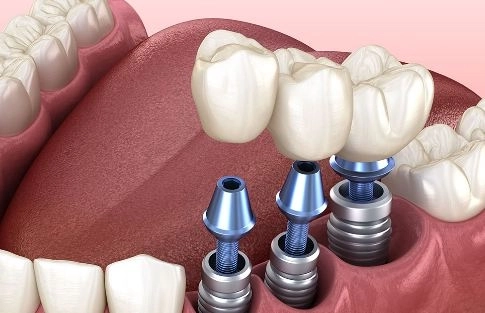
dental implants using the latest techniques, the stages of dental implant treatment, its main benefits, suitable candidates, and how implants can help restore your smile, improve chewing ability, and provide a natural-looking appearance.
What Are Dental Implants?
Dental implants are among the modern solutions for replacing missing teeth. They involve placing an implant into the jawbone to replace the natural tooth root, followed by attaching an artificial crown that resembles the shape and function of a natural tooth. This technique helps restore chewing ability and improve speech, while also enhancing the overall appearance of the smile.
Unlike traditional dental restorations, dental implants do not necessarily rely on neighboring teeth for support. They may also help preserve the jawbone and reduce changes that can occur after tooth loss. Successful treatment depends on evaluating the condition of the mouth and teeth, the density of the jawbone, gum health, and selecting an appropriate treatment plan for each patient.
The Latest Dental Implant Techniques
The field of dental implantology has advanced significantly thanks to modern technologies that help dentists plan procedures accurately and determine the ideal implant position according to the patient's jaw structure and needs. The appropriate technique is selected after a clinical examination, a review of imaging results, and confirmation that the conditions are suitable for implant placement.
1. Dental Implants Using 3D Imaging
Three-dimensional imaging, such as cone-beam computed tomography (CBCT), helps assess the height, width, and volume of the jawbone and identify the location of nerves, sinuses, and other important anatomical structures.
This information provides a more accurate view of the implant's planned position and angle, helping the dentist develop an appropriate treatment plan and reduce unexpected complications during the procedure. The dentist determines whether this type of imaging is necessary based on the individual case, as it is not required for every patient.
2. Guided Dental Implant Surgery
A surgical guide is a template prepared according to the patient's digital treatment plan. It helps guide the surgical instruments to the predetermined implant position and may improve placement accuracy, particularly in cases requiring precise positioning of multiple implants.
However, this technique is not used in the same way for every patient. Its suitability depends on the shape of the jaw, the number of teeth being replaced, the complexity of the case, and the dentist's experience.
3. Digital Planning for Dental Implants
Digital planning helps the dentist evaluate the relationship between the implant and the final crown before treatment begins. This process considers the appearance of the smile, bite function, available space, and the position of neighboring teeth.
This step allows the dentist to develop a clear treatment plan while recognizing that the actual result depends on several factors, including bone healing, gum health, and adherence to post-treatment care instructions.
4. Immediate Dental Implant Placement
In selected cases, an implant can be placed in the extraction site during the same appointment in which the tooth is removed. This procedure is known as immediate implant placement. A temporary crown may also be attached at the same time if the condition of the bone and gums and the stability of the implant allow it.
However, immediate implant placement is not suitable for everyone. Some patients may need to wait until the extraction site has healed or until an infection has been treated and the bone and gums are in better condition. Furthermore, placing a temporary tooth immediately does not necessarily mean that osseointegration is complete or that the implant can withstand full chewing forces right away.
5. Immediate Loading of Dental Implants
Immediate loading refers to attaching a temporary restoration to an implant shortly after placement, provided that specific conditions are met. These conditions relate to implant stability, bone quality, restoration design, and the expected chewing forces.
This approach may be appropriate for some patients, but it requires careful assessment because unsuitable early loading can interfere with healing. The dentist determines when the tooth can be attached and whether it can be used for chewing based on the clinical circumstances.
6. Dental Implants with Bone Grafting
When the jawbone does not have sufficient volume to support an implant properly, the patient may need an additional procedure to compensate for the bone deficiency. Options include certain bone grafting or bone augmentation techniques. Sinus lift procedures may also be considered in selected cases involving the upper jaw.
The appropriate procedure depends on the location of the missing tooth, the amount of available bone, the patient's general health, and the examination results. These procedures may require a healing period before dental implant treatment can continue.
What Are the Benefits of Dental Implants?
Dental implants offer several benefits when they are suitable for the patient's condition and are placed with proper attention to oral health and regular follow-up. These benefits include:
Replacing missing teeth: They help restore tooth function and improve overall appearance.
Improving chewing ability: They can help patients eat a wider variety of foods more comfortably once treatment is complete and the bite has been properly assessed.
A natural appearance: The crown can be designed to match the color and shape of neighboring teeth.
Supporting jawbone health: The implant transfers chewing forces to the bone and may help limit bone loss associated with a missing tooth, although results vary from one case to another.
Reducing reliance on neighboring teeth: A single missing tooth can be replaced with an individual implant without necessarily grinding down adjacent teeth to support a conventional bridge.
Improving stability: Implants can provide stable support for certain types of restorations, including those used to replace many teeth.
Supporting self-confidence: Restoring the appearance of the smile and tooth function may improve comfort during speech and everyday interactions.
Despite these benefits, dental implants are not suitable for every patient, and their success cannot be guaranteed in every case. Outcomes depend on proper planning, the patient's health, bone quality, daily care, and regular follow-up.
Who Is a Suitable Candidate for Dental Implants?
Dental implants may be suitable for people who have lost one or more teeth, as well as for certain patients who have lost all their teeth. Suitability is determined after a comprehensive examination of the gums, remaining teeth, jawbone, and general health.
The dentist evaluates several important factors, including:
Whether the jawbone has sufficient volume and density, or whether it can be improved through additional procedures.
Whether the gums are healthy and any active gum inflammation has been treated before implant placement.
Whether the patient can maintain good oral hygiene and follow instructions and attend follow-up appointments.
Whether chronic medical conditions that may affect tissue healing are under control.
Whether medications or medical conditions could affect surgery or bone healing.
Whether the patient smokes, as smoking may increase the risk of complications and implant failure.
Whether excessive pressure on the implant may result from teeth grinding or untreated bite problems.
Having a chronic medical condition does not automatically rule out dental implants. However, additional evaluation and coordination with the patient's treating physician may be necessary to develop a safe and appropriate treatment plan.
The Stages of Dental Implant Treatment
Dental implant treatment involves several stages. The duration varies from one patient to another depending on the number of implants, the condition of the bone and gums, and whether additional procedures are required.
Stage One: Examination and Diagnosis
Treatment begins with an examination of the teeth and gums, a review of the patient's medical history, and an assessment of the cause of tooth loss. Appropriate imaging is used to evaluate the jawbone and surrounding anatomical structures.
The dentist then develops a treatment plan outlining the number of implants needed, the type of final restoration, and the expected timeline for each stage.
Stage Two: Preparing the Mouth Before Implant Placement
The patient may need treatment for gum inflammation, removal of teeth that cannot be preserved, or treatment of other oral problems before the procedure begins. If there is insufficient bone, the dentist may recommend bone grafting or another supportive procedure, depending on the case.
Preparing the mouth helps create more favorable conditions for implant healing and may reduce the risk of complications.
Stage Three: Implant Placement
The implant is placed according to the treatment plan, usually under local anesthesia. Other methods may be considered depending on the patient's needs and the nature of the procedure. The dentist prepares the site in the jawbone and carefully places the implant.
The duration of the procedure depends on the number of implants and the complexity of the case, so there is no single timeframe that applies to every patient.
Stage Four: Bone Healing
After the implant is placed, it needs time to integrate with the jawbone through a process known as osseointegration. During this period, the dentist provides instructions regarding food, oral hygiene, and daily activities and determines whether a temporary restoration is needed.
Healing time varies according to bone condition, implant location, the need for bone grafting, and other health-related factors.
Stage Five: Placement of the Abutment and Final Crown
Once the implant has been assessed and found to be sufficiently stable, the abutment connecting the implant to the crown is placed. The final crown is then prepared and attached according to the treatment plan.
During this stage, the dentist checks the appearance of the new tooth, its harmony with neighboring teeth, and the way the teeth come together during chewing.
Stage Six: Regular Follow-Up
Care does not end once the final crown has been attached. The patient needs follow-up appointments to examine the gums and tissues surrounding the implant, assess the stability of the restoration, and check for inflammation or excessive pressure on the implanted teeth.
The Role of Dr. Hatem Ashmawy in Planning Dental Implant Treatment
Proper planning is an essential step in treating missing teeth. Dr. Hatem Ashmawy recognizes the importance of evaluating the condition of the teeth and gums before determining the appropriate method of tooth replacement. A thorough examination helps establish whether dental implants are suitable, identify treatment needs, and select a restoration that matches each patient's condition.
The treatment plan includes evaluating the location of the missing tooth, the condition of neighboring teeth, the availability of jawbone, and the appropriate design of the final crown. It also considers how to maintain cleanliness around the implant after treatment.
Treatment plans differ from one patient to another, so the suitability and timing of dental implant placement cannot be determined without a professional examination.
Can Dental Implants Replace Several Missing Teeth?
Yes. Dental implants can be used to replace a single missing tooth or several missing teeth. In some cases, implants can also support restorations that replace most or all of the teeth.
When several neighboring teeth are missing, the dentist assesses the number and positions of the implants required, then selects a bridge or restoration that can be supported by them. For patients who have lost all their teeth, possible options include implant-supported fixed restorations or removable dentures stabilized by implants.
Losing many teeth does not necessarily mean that a separate implant is needed for every missing tooth. The number of implants and the design of the restoration depend on the condition of the jawbone, the distribution of missing teeth, chewing forces, and the patient's functional and aesthetic needs.
Can Dental Implants Be Placed in One Day?
Some modern techniques allow a tooth to be extracted and an implant placed during the same appointment. In selected cases, a temporary tooth may also be attached shortly afterward. However, it is important to distinguish between placing an implant immediately after extraction and attaching a temporary or final tooth that can withstand chewing forces.
This decision requires confirmation that the bone and gums are suitable, that there are no conditions that significantly increase the risk of complications, and that adequate implant stability can be achieved.
Immediate treatment may therefore be appropriate for some patients, while a staged approach may be more suitable for others.
Is Dental Implant Surgery Painful?
Dental implant surgery is usually performed under local anesthesia, so the patient should not experience sharp pain during the procedure when the anesthesia is effective. After the anesthesia wears off, some pain, swelling, or bruising may occur. The severity varies depending on the nature of the surgery, the number of implants, and whether additional procedures are required.
The dentist can provide appropriate instructions to relieve discomfort during recovery. Patients should follow prescribed medication instructions and avoid taking additional medications without consulting their dentist.
If severe or increasing pain, unusual swelling, or a fever develops, the patient should contact the dentist for assessment.
How Long Does Recovery Take After Dental Implant Surgery?
Recovery time varies depending on the individual case. Initial symptoms may improve within a few days, while the implant may need a longer period to integrate with the jawbone before treatment can continue. Osseointegration may take several months, depending on the implant location, bone quality, the need for bone grafting, and other factors.
During this period, patients should follow the dentist's instructions regarding food, oral hygiene, and avoiding excessive pressure on the implant site. They should also attend follow-up appointments to ensure that the tissues are healing properly and that the implant is stable before proceeding to the next stage.
How to Care for Your Teeth After Implant Placement
Daily care and regular follow-up help maintain healthy gums and tissues around the implant and reduce the risk of inflammation that could threaten its long-term stability.
Important care recommendations include:
Brush your teeth twice daily with a suitable toothbrush and fluoride toothpaste.
Clean around the implant and between the teeth using the cleaning tools recommended by your dentist.
Follow the instructions for cleaning the surgical site during the first few days after the procedure.
Avoid smoking whenever possible. Quitting is preferable because smoking can negatively affect healing and tissue health.
Visit your dentist regularly to examine the gums, implant, and attached restoration.
Do not ignore recurring bleeding, swelling, pain, or a feeling that the crown or implant is moving.
Implanted teeth require ongoing care, just like natural teeth. Having an implant does not prevent inflammation in the surrounding tissues, and inadequate cleaning can lead to problems that affect implant stability.
Conclusion
Dental implants using modern techniques are an effective way to replace missing teeth for many patients. They can help restore chewing function and improve the appearance of the smile, while technologies such as 3D imaging, digital planning, and surgical guides may improve treatment planning in suitable cases.
Achieving a good result depends on accurate diagnosis, selecting the appropriate technique, considering the condition of the jawbone and gums and the patient's general health, and following post-operative instructions and regular follow-up.
A professional dental examination remains the essential first step in determining whether dental implants are suitable and developing a treatment plan that meets each patient's needs.