

Published on: 2026-10-22 | Written by: Dr. Mahmoud Saad, Professor of Critical Care Cardiology
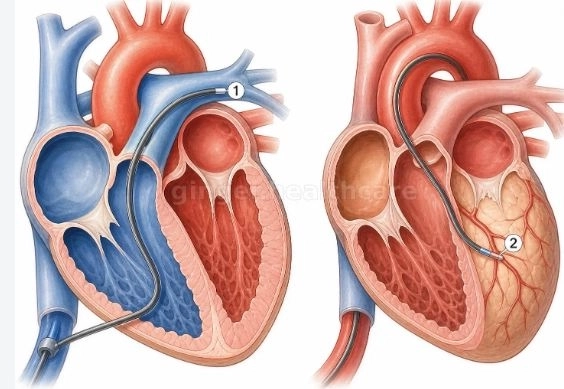
Interventional coronary catheterization is one of the most prominent and vital medical achievements in the field of cardiovascular medicine, having truly revolutionized the diagnosis and treatment of arterial blockages without the need for traditional open-heart surgery.
In this comprehensive article, we highlight the concept of coronary catheterization, its indications, procedures, and the importance of having it performed by specialized experts such as Dr. Mahmoud Saad Nawar, Professor of Critical Care Cardiology and Internal Medicine at Kasr Al-Ainy Faculty of Medicine (Cairo University), and Consultant in Interventional Cardiology and Cardiac Electrophysiology.
First: What is Interventional Coronary Catheterization?
It is a precise, advanced medical procedure aimed at examining the blood vessels supplying the heart muscle (coronary arteries) and treating any narrowing or blockages within them. The technique involves inserting a very thin, flexible tube (a catheter) through a peripheral artery (usually from the wrist or groin) and accurately guiding it under continuous X-ray imaging until it reaches the heart's arteries.
Second: When is Interventional Catheterization Indicated?
Certified consultants and specialists, such as Dr. Mahmoud Saad Nawar, resort to this procedure in various cases, including:
Chronic Angina: When experiencing recurrent chest pain that does not respond adequately to medications.
Acute Heart Attacks and Emergencies: As an immediate, emergency intervention to save the heart muscle and open the fully blocked artery as quickly as possible.
Evaluating Valve and Heart Muscle Efficiency: To determine the appropriate alternative treatments with extreme precision.
Unreassuring Non-Invasive Test Results: Such as stress EKGs or echocardiograms.
Third: Steps of the Interventional Catheterization Procedure
The catheterization is typically performed inside a catheterization laboratory equipped with the highest standards of sterilization and technology, following these steps:
Local Anesthesia: Only the insertion site (wrist or groin) is numbed, and the patient remains conscious throughout the procedure.
Catheter Insertion: The thin tube is gently guided through the artery up to the coronary arteries of the heart.
Injecting a Special Dye: A safe contrast dye is injected, which shows up clearly under X-rays to pinpoint the exact locations of narrowing or blockages.
Widening and Stenting (If Needed): In the event of a blockage, the physician inflates a tiny balloon to widen the artery, then places a precise medical metal stent to keep the artery open and ensure continuous, normal blood flow.
Fourth: Advantages of Interventional Catheterization Over Open-Heart Surgery
No Traditional Surgery: Does not require opening the chest or using a heart-lung machine.
Short Recovery Period: Patients can usually leave the hospital within 24 hours and gradually return to normal life.
High Safety and Proven Efficacy: Reduces risk rates and protects the heart muscle from long-term damage when performed with high competence.
Fifth: Specialized Medical Care
The success of an interventional catheterization procedure requires exceptional skill and extensive academic and professional experience to ensure precise placement and avoid any complications. For precise consultation and advanced follow-up for coronary and heart conditions, you can visit the clinic of Dr. Mahmoud Saad Nawar (Professor of Critical Care Cardiology at Kasr Al-Ainy, and Consultant in Interventional Cardiology and Electrophysiology):