
Published on: 2026-10-15 | Written by: Dr. Mohamed Sobhi, Consultant Ophthalmologist
Laser Eye Surgery: Modern Techniques for Vision Correction and Treating Eye Conditions
laser eye surgery, the different types of vision correction procedures, their main benefits and uses, and how to prepare for surgery and recover afterward to achieve the best possible results.
What Is Laser Eye Surgery?
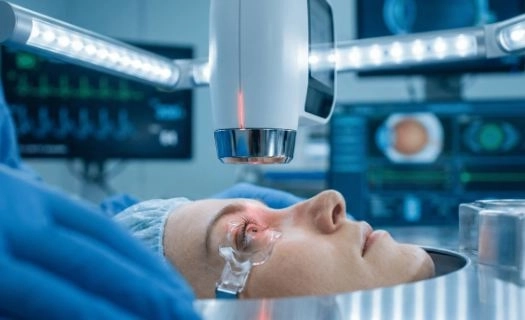
Laser eye surgery is one of the modern techniques used in ophthalmology. It helps correct certain refractive errors and treat several eye conditions, depending on each patient's condition. These procedures use laser beams to make precise changes to eye tissues, with the aim of improving vision and reducing dependence on prescription glasses or contact lenses in suitable cases.
The types of laser eye surgery vary depending on the patient's condition, degree of refractive error, corneal thickness, and overall eye health. Therefore, a comprehensive eye examination is an essential step before determining the most appropriate procedure.
What Conditions Can Be Treated with Laser Eye Surgery?
Laser techniques are used in several eye-related medical procedures, including:
Nearsightedness (Myopia): A condition that makes it difficult to see distant objects clearly.
Farsightedness (Hyperopia): A condition that may affect near vision and, depending on its severity, may also affect distance vision.
Astigmatism: Caused by an irregular curvature of the cornea, resulting in blurred vision or difficulty seeing details clearly.
Certain retinal conditions: Specific types of laser treatment can be used to treat certain retinal problems, depending on an ophthalmologist's assessment.
Some cases of elevated eye pressure: Laser procedures may be used in selected cases to improve fluid drainage inside the eye or lower intraocular pressure.
It is important to distinguish between laser procedures designed to correct refractive errors and therapeutic laser procedures used to treat other eye diseases. Each procedure has different indications, techniques, and expected outcomes.
Types of Laser Eye Surgery for Vision Correction
1. LASIK Surgery
LASIK is one of the most widely known laser vision correction procedures. It is used to treat suitable degrees of nearsightedness, farsightedness, and astigmatism.
The procedure involves creating a thin flap in the cornea, then using a laser to reshape the underlying tissue so that light can focus more accurately on the retina.
One of the main advantages of LASIK is the relatively quick recovery experienced by many patients. Vision may improve within a short period in suitable cases. However, LASIK is not appropriate for everyone, particularly some patients with thin corneas or certain problems affecting the surface of the eye.
2. Femto-LASIK Surgery
Femto-LASIK uses a femtosecond laser to create the thin corneal flap instead of traditional mechanical instruments. An excimer laser is then used to reshape the cornea and correct the refractive error.
Choosing this technique depends on corneal measurements, the characteristics of the cornea, and the patient's eye health rather than on the technology's level of advancement alone.
3. SMILE Surgery
SMILE is a vision correction technique that uses a femtosecond laser to remove a small piece of corneal tissue through a tiny incision. This helps correct suitable degrees of nearsightedness and astigmatism.
This technique may be appropriate for some patients, but determining whether it is suitable requires a comprehensive eye examination and an assessment of the refractive error and corneal characteristics.
4. Photorefractive Keratectomy (PRK)
PRK is used to correct certain refractive errors by reshaping the surface of the cornea with a laser, without creating a corneal flap as in LASIK.
It may be suitable for some patients who are not ideal candidates for procedures that create a corneal flap, depending on examination results. Recovery usually takes longer than with LASIK, and patients may experience temporary discomfort or light sensitivity during the first few days.
What Are the Benefits of Laser Eye Surgery?
Laser eye surgery offers several benefits, depending on the procedure and the patient's condition. These include:
Correcting certain degrees of nearsightedness, farsightedness, and astigmatism.
Reducing the need for prescription glasses or contact lenses for many patients.
Using precise techniques to reshape the cornea during vision correction procedures.
Relatively quick recovery with certain procedures, particularly LASIK.
Improving visual quality and making everyday activities easier without constant reliance on vision correction aids.
However, laser eye surgery does not guarantee complete freedom from glasses in every case. Results vary from person to person depending on eye characteristics and the degree of refractive error.
Who Is a Suitable Candidate for Laser Vision Correction?
A patient's suitability for surgery is not determined by the degree of refractive error alone. Several factors must be evaluated, including:
Stable vision prescription over the preceding period.
Corneal thickness, shape, and surface regularity.
The health of the retina, optic nerve, and other eye structures.
The absence of eye diseases or conditions that could affect surgical safety.
Assessment of dry eye and its effect on the corneal surface.
Age and general health in relation to the proposed procedure.
Laser vision correction may not be suitable for some people, including patients with keratoconus, unstable vision prescriptions, or certain corneal diseases. An ophthalmologist determines the appropriate alternatives for each individual case.
Tests Required Before Laser Eye Surgery
Detailed examinations help determine the most appropriate procedure and reduce the likelihood of complications. Tests that may be required include:
Measuring visual acuity and determining the degree of nearsightedness, farsightedness, or astigmatism.
Examining the cornea and measuring its thickness.
Corneal topography to assess the shape and regularity of the corneal surface.
Examining the retina and fundus when necessary.
Evaluating dry eye and the health of the corneal surface.
Measuring intraocular pressure and examining different eye structures.
Reviewing medical history, current medications, and any previous eye surgeries.
Patients may be asked to stop wearing contact lenses temporarily before certain examinations or before surgery, according to their doctor's instructions.
How Is Laser Vision Correction Performed?
The steps vary depending on the technique used, but the procedure usually begins with an eye examination to confirm that the patient is a suitable candidate. Anesthetic eye drops are then applied to minimize discomfort during the procedure.
The doctor uses a laser to make the required adjustments to the cornea according to the eye measurements. The procedure generally takes a relatively short time, depending on the technique used. Afterward, the patient receives instructions on using eye drops, caring for the eyes, and attending follow-up appointments.
Different laser procedures should not be treated as interchangeable. Each technique has specific uses, benefits, and limitations that should be discussed with an ophthalmologist before making a decision.
Recovery After Laser Eye Surgery
Recovery time varies according to the type of procedure and how the eye responds. Some patients may notice rapid visual improvement after LASIK, while surface laser procedures may require more time for the corneal surface to heal and vision to stabilize.
During recovery, patients should follow their doctor's instructions, including:
Using prescribed eye drops at the specified times.
Avoiding rubbing or applying pressure to the eyes.
Avoiding eye makeup for the period specified by the doctor.
Avoiding swimming and activities that may expose the eyes to contaminated water or injury until medically cleared.
Wearing an eye shield while sleeping if recommended by the doctor.
Attending follow-up appointments to ensure proper healing and stable vision.
Temporary dry eye, light sensitivity, or fluctuations in visual clarity may occur after surgery. Severe pain, sudden deterioration in vision, or increasing redness requires urgent contact with an ophthalmologist.
What Are the Risks of Laser Eye Surgery?
Although laser vision correction is widely performed, it is still a surgical procedure and may involve side effects or potential complications, including:
Dry eye.
Glare or halos around lights, particularly at night.
Fluctuations in vision during recovery.
Some remaining refractive error or the need for glasses in certain situations.
Failure to achieve the intended degree of correction.
Rare complications involving corneal healing or corneal health.
A thorough examination, appropriate procedure selection, and adherence to postoperative instructions can help reduce certain risks. However, no procedure can be guaranteed to be completely free of complications.
The Difference Between Laser Vision Correction and Laser Treatment for
Eye Diseases
It is important to understand that the term laser eye surgery includes different procedures. LASIK, Femto-LASIK, SMILE, and PRK aim to correct refractive errors by reshaping the cornea.
In contrast, laser procedures used to treat certain retinal diseases or elevated eye pressure target specific medical problems inside the eye. Their techniques, expected outcomes, and recovery periods differ from those of vision correction procedures.
The appropriate treatment therefore begins with an accurate diagnosis that identifies the nature of the problem, followed by the selection of the suitable procedure rather than relying on the name of the technology alone.
The Importance of Choosing an Ophthalmologist Specializing in Laser Eye Surgery
The success of laser eye surgery depends on accurately assessing the eye, selecting the appropriate technique, the doctor's experience in managing different cases, and proper postoperative follow-up.
Patients should discuss expected results, potential risks, and available alternatives with an ophthalmologist specializing in eye care and surgery. They should also make sure they understand all instructions before and after the procedure.
Understanding the details of each technique helps patients make informed decisions that meet their needs and suit their eye condition, while prioritizing eye safety and long-term visual quality.
Conclusion
Laser eye surgery offers several options for correcting certain refractive errors and treating specific eye conditions. Choosing the appropriate procedure depends on a comprehensive eye examination, corneal measurements, the degree of refractive error, and the patient's overall health. Consulting an ophthalmologist and following medical instructions before and after surgery remain essential steps toward achieving the best possible outcome.