
Published on: 2026-10-06 | Written by: Qasim Dent Dr. Sami Ramadan Qasim Dentistry
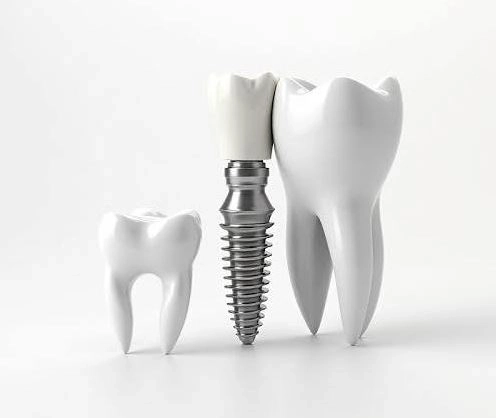
Dental Implants represent the most significant breakthrough and the most successful, sustainable medical solution in the field of dentistry and oral surgery. They have become the primary and ideal choice for replacing missing teeth, surpassing removable dentures or traditional bridges that require the reduction of adjacent healthy teeth. The implantation process relies on anchoring biocompatible titanium posts into the jawbone, where they fuse with the bone tissue to function as natural roots that securely support replacement crowns or bridges with high efficiency.
Dental implants aim to restore the comprehensive mechanical function of the mouth, alongside enhancing aesthetic appearance and protecting the structural jawbone from progressive resorption that typically follows tooth loss.
Dr. Sami Ramadan Qasim clarifies that the benefits of dental implants are not limited to aesthetic appearance and a renewed smile; they play a pivotal role in preserving jawbone density and preventing bone resorption. Furthermore, they prevent the shifting of adjacent teeth and protect against temporomandibular joint dysfunction.
Preserving Jawbone Integrity: Titanium posts stimulate bone cells (osseointegration), preventing bone shrinkage and atrophy.
Protecting Adjacent Healthy Teeth: Eliminating the need to file or shave down neighboring teeth, as required in traditional dental bridges.
Restoring Chewing and Speech Efficiency: Providing exceptional stability identical to natural teeth during mastication and speech.
Protecting the Temporomandibular Joint (TMJ): Distributing biting and chewing loads evenly across both jaws to prevent joint strain.
The field of dental implantology has witnessed immense evolution due to digital technology and 3D software, allowing for extreme precision in surgical planning and execution.
Dr. Sami Ramadan Qasim points out that utilizing Cone Beam Computed Tomography (CBCT) and guided surgery templates has elevated success rates to over 98%, transforming the procedure into a simple surgical intervention with minimal pain and swelling.
Standard Guided Implants: Performed in two phases with an interval that allows full osseointegration between the bone and the implant.
Immediate Implants: Placing the implant post directly into the socket during the same session as tooth extraction to shorten overall treatment time.
Immediate Loading: Fitting a temporary crown onto the implant post on the same day or within a few days in suitable cases.
All-on-4 / All-on-6 Techniques: Reconstructing a full arch of teeth supported by 4 or 6 strategically angled implants in edentulous jaws.
Bone Grafting: Augmentation and rebuilding of bone structures in cases suffering from deficient bone density or volume.
Implant treatment follows a systematic plan starting with a comprehensive evaluation and concluding with the placement of the permanent crown.
Dr. Sami Ramadan Qasim advises the necessity of conducting lab tests and CBCT scans prior to surgery to verify bone suitability and blood glucose levels, emphasizing that thorough preparation is the main pillar ensuring long-term implant stability for years to come.
Examination and Digital Planning: Evaluating bone density and quality via CBCT scans and taking digital impressions.
Surgical Placement Phase: Inserting the titanium implant into the jawbone under local anesthesia.
Osseointegration Phase: Allowing 2 to 4 months for complete bone integration around the implant post.
Abutment Placement: Securing the connecting component that joins the implant post to the outer crown.
Final Crown/Bridge Placement: Taking final measurements and fixing the custom restoration made from zirconia or reinforced ceramic.
The post-surgical period requires dedicated care to ensure proper healing of the gums and surrounding tissues, as well as the longevity of the implant.
Dr. Sami Ramadan Qasim stresses that diligent home oral hygiene and complete cessation of smoking during the osseointegration phase represent the second half of a successful implant procedure, as nicotine reduces blood flow to the gums and delays bone healing.
Adhere to Prescribed Medications and Antibiotics: Take pain relievers and antibiotics strictly on schedule.
Soft Diet in the Initial Days: Consume warm, soft foods and avoid direct chewing on the newly implanted area.
Cease or Limit Smoking: Protect surrounding tissues from peri-implantitis.
Maintain Oral Hygiene: Use antiseptic mouthwashes and soft-bristled implant brushes carefully.
Comprehensive Daily Cleaning: Use water flossers and specialized brushes to prevent bacterial plaque accumulation around the implant.
Regular Clinical Check-ups: Visit the dentist every 6 months for professional cleaning and to assess the stability of the implants and surrounding tissues.
Managing Bruxism (Teeth Grinding): Wear a custom night guard if teeth grinding or clenching is present during sleep.
Maintain Ongoing Follow-Ups with Your Specialist:
Dr. Sami Ramadan Qasim emphasizes in his concluding advice that dental implants are the safest investment in oral and digestive health. Selecting high-quality materials, executing precise surgical planning, and committing to oral hygiene instructions ensure patients enjoy strong teeth and a natural, radiant smile for a lifetime.