
Published on: 2026-10-04 | Written by: Dr. Muhammad Ghanem Al-Falah Physical Therapy
1. What is Sports Rehabilitation and What Are Its Core Objectives?
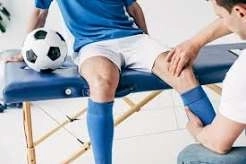
Sports rehabilitation is a specialized field combining physical therapy, biomechanical motion assessment, and exercise physiology to formulate an individualized program tailored to the athlete's specific sport and injury characteristics.
Dr. Mohamed Ghanem Al-Falah clarifies that sports rehabilitation is not merely a set of standard physical exercises, but rather a scientific protocol aimed at retraining the neuromuscular system to restore motor coordination and balance. It also stimulates intra-articular proprioceptors to ensure rapid responses and protect joint structures during sudden movements.
Key Objectives of Specialized Sports Rehabilitation:
Restoring Full Joint Range of Motion (ROM): Addressing stiffness and facilitating joint articulation in all natural directions.
Rebuilding Muscle Strength and Endurance: Reversing rapid muscle atrophy resulting from periods of rest or immobilization.
Developing Proprioception: Enhancing the body's spatial awareness and movement perception to prevent sprains.
Restoring Core Stability: Strengthening pelvic, back, and abdominal muscles to provide movement with enhanced balance and power.
Psychological and Physical Readiness for Competition: Overcoming fear of re-injury (kinesiophobia) and instilling self-confidence in the athlete.
2. Indications for Undergoing Sports Rehabilitation Programs
Numerous conditions and circumstances necessitate undergoing a structured, intensive sports rehabilitation program under specialist supervision.
Dr. Mohamed Ghanem Al-Falah points out that sports rehabilitation is not limited strictly to surgical cases, such as anterior cruciate ligament (ACL) reconstruction or meniscal repair, but is also an imperative requirement for conservative management of muscle tears and chronic tendon strains to safeguard the athlete's professional career.
Primary Conditions Requiring Sports Rehabilitation:
Post-Operative Joint and Ligament Surgeries: Such as ACL reconstruction, meniscal repair, and rotator cuff tendon repair.
Muscle Tears and Strains: Tears of the hamstrings, adductors, or quadriceps muscles.
Chronic Tendinopathies: Achilles tendinitis, tennis elbow, and plantar fasciitis.
Joint Sprains and On-Field Accidents: Acute ankle sprains or recurrent shoulder dislocations.
Rehabilitation After Severe Fractures: Restoring mobility and strength following complete bone healing and fixation.
3. Modern Techniques and Modalities in Sports Rehabilitation
Sports rehabilitation programs have witnessed a major technological leap, accelerating tissue healing and reducing time away from the field.
Dr. Mohamed Ghanem Al-Falah advises combining targeted functional exercises with modern rehabilitation modalities such as shock wave therapy and blood flow restriction (BFR) techniques. He emphasizes that this integration preserves muscle mass and stimulates muscle fiber construction under light loads, thereby protecting newly healed joints.
Key Modalities and Techniques Utilized:
Blood Flow Restriction (BFR) Therapy: Performing exercises with very light resistance under temporary blood flow restriction to build muscle mass efficiently without joint stress.
Extracorporeal Shock Wave Therapy (ESWT): Stimulating healing in chronic tissues and tendons while breaking down calcifications.
Hydrotherapy: Leveraging water buoyancy to reduce body weight, facilitating early movement and running drills.
Kinesiology Taping: Supporting joints, relieving tissue pressure, and enhancing lymphatic drainage.
Electrical Muscle Stimulation (EMS): Re-activating dormant muscle fibers and preventing atrophy during rest periods.
4. Stages of the Sports Rehabilitation Protocol and Competitive Return
The rehabilitation process follows a phased protocol determined by functional criteria rather than merely time elapsed since the injury.
Dr. Mohamed Ghanem Al-Falah stresses that progressing from one stage to the next within a sports rehabilitation program requires objective, standardized testing. He explains that rushing back to competitive play prior to achieving full functional readiness remains the leading cause of severe re-injury.
Primary Stages of Rehabilitation:
Pain Relief and Inflammation Control: Utilizing physical therapy modalities, ice, and compression to protect the injured tissue.
Restoring Range of Motion and Flexibility: Performing progressive stretching and joint mobilization exercises.
Muscle Strengthening and Balance: Utilizing resistance bands, progressive weights, and joint stability drills.
Sport-Specific Functional Rehabilitation: Simulating field movements such as change-of-direction running, sudden deceleration, and jumping.
Testing and Return-to-Play Criteria: Conducting objective strength tests to ensure the injured limb reaches at least 90% capability compared to the uninjured limb.
5. Golden Rules to Ensure Successful Sports Rehabilitation and Prevent Relapses
Systematic Progression in Training Loads: Avoiding abrupt increases in exercise intensity or duration.
Daily Commitment to Warm-Up and Cool-Down Protocols: Preparing muscles and ligaments before strenuous exertion and cooling them down post-workout.
Focus on Proper Nutrition and Adequate Sleep: Providing the body with necessary fluids, proteins, and sleep cycles to support tissue recovery.
Maintain Ongoing Specialized Follow-Ups:
Dr. Mohamed Ghanem Al-Falah emphasizes in his concluding advice that sports rehabilitation is the cornerstone of protecting an athlete's career. Strict adherence to medical instructions and mindful attention to bodily cues guarantee a strong, safe, and sustainable return to competitive play.