
Published on: 2026-09-30 | Written by: Dr. Ahmed Siraj Al-Ghamrawi, Consultant
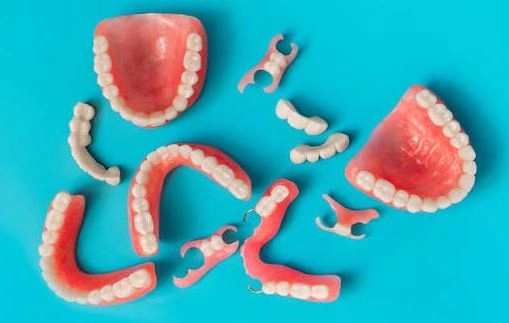
Dental prostheses (including crowns, bridges, and dentures) represent one of the most critical restorative and cosmetic solutions in modern dentistry. They aim to replace or restore severely damaged or missing teeth, thereby restoring proper chewing and speech functions, maintaining jawbone integrity, and preserving a balanced smile.
Teeth suffer severe damage or loss due to advanced decay, periodontal disease, or trauma. This impacts an individual's ability to eat properly and leads to structural changes in facial appearance and alignment of remaining teeth.
Dr. Ahmed Serag El-Ghamrawy clarifies that the benefits of dental prostheses extend beyond mere esthetics; they primarily protect remaining teeth from shifting out of alignment and evenly distribute chewing forces across the jaw to prevent temporomandibular joint (TMJ) strain.
Loss of One or More Teeth: Resulting from extraction or trauma.
Weakened or Broken Teeth: That cannot be adequately restored with standard fillings.
Post-Root Canal Therapy: To protect the tooth from fracturing due to loss of internal vitality and structural tissue.
Severe Tooth Wear: Caused by bruxism (teeth grinding) or acidic erosion.
Dental restorations vary to suit each patient's individual needs and are broadly categorized into fixed and removable prostheses.
Dr. Ahmed Serag El-Ghamrawy points out that technological breakthroughs in Computer-Aided Design and Manufacturing (CAD/CAM) along with advanced ceramic materials—such as Zirconia and e.max—have allowed fixed prostheses to look and function like natural teeth with exceptional durability.
Dental Crowns: Used to cap and protect a single damaged or weakened tooth.
Dental Bridges: Used to replace one or more missing teeth by anchoring onto adjacent healthy teeth.
Zirconia and e.max Restorations: Known for high mechanical strength and natural, translucent esthetics.
Partial Dentures: Used when several teeth are missing but natural teeth remain to serve as anchors.
Complete Dentures: Applied in cases of total tooth loss across an entire arch.
Fabricating dental prostheses follows a precise medical sequence to ensure accurate fit and optimal jaw alignment.
Dr. Ahmed Serag El-Ghamrawy advises that selecting the appropriate medical material for each case depends on the tooth's location (anterior vs. posterior) and the patient's bite dynamics to ensure long-term stability.
Examination and Preparation: Radiographic assessment followed by precise reshaping and trimming of the tooth structure to receive the crown or bridge.
Digital or Physical Impressions: Utilizing intraoral digital scanners or precision impression materials to transfer detailed jaw dimensions to the laboratory.
Provisional (Temporary) Restoration: Placing a temporary crown or bridge to protect the prepared tooth and prevent sensitivity while the final restoration is fabricated.
Try-in and Fitting: Trying on the final prosthesis to evaluate fit, occlusion (bite), and color matching.
Final Cementation: Permanently bonding the prosthesis using high-strength dental cements.
Prosthetic restorations require meticulous hygiene comparable to natural teeth to prevent gum inflammation or recurrent decay beneath the margins.
Dr. Ahmed Serag El-Ghamrawy stresses that the lifespan of a fixed prosthesis depends directly on personal oral hygiene practices. Neglecting oral hygiene can lead to bacterial plaque accumulation around crown margins and surrounding periodontal tissue inflammation.
Brushing Twice Daily: Using a toothbrush and toothpaste to clean the prosthetic surfaces and adjacent natural teeth.
Using Specialized Floss (Super Floss): To clean beneath fixed bridges and prevent food impaction.
Avoiding Extremely Hard Foods: Such as chewing on ice or cracking nut shells to prevent ceramic chipping or fracture.
Cleaning Removable Dentures: Daily using dedicated cleansing solutions, avoiding hot water to prevent material distortion.
Consistent Daily Oral Hygiene: Brushing and flossing using appropriate oral care instruments.
Eliminating Harmful Habits: Such as opening packages with teeth or biting fingernails.
Bi-Annual Dental Check-ups: To monitor the integrity of the prosthesis and surrounding soft tissues.
Ongoing Specialist Follow-up:
Dr. Ahmed Serag El-Ghamrawy emphasizes in his concluding advice that timely replacement of missing teeth with appropriate prostheses protects the jawbone from resorption and maintains smile balance and overall digestive health by ensuring effective mastication.