

Published on: 2026-09-08 | Written by: Dr. Khaled Abdel Sattar Urologist and Andrologist
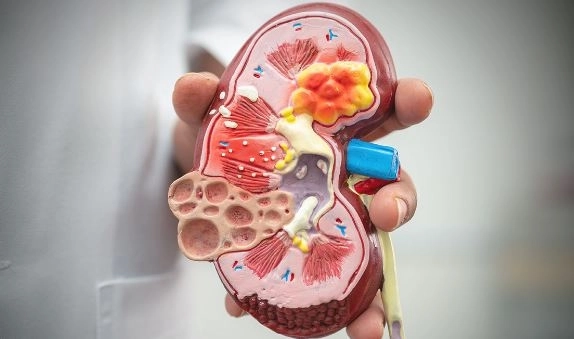
Kidney stones are among the most common and painful urinary tract conditions, forming when salts and minerals deposit in urine to create solid crystals inside the kidney. Dr. Khaled Abdel Sattar Gad explains that neglecting stone treatment can lead to urinary tract obstruction, causing severe complications to kidney function and requiring prompt, effective medical intervention.
Symptoms of Kidney Stones
Symptoms vary in intensity depending on the stone's size and location within the kidney or ureter, with the most prominent symptoms including:
Severe Renal Colic: Sudden, intense pain in the flank or lower back.
Changes in Urine Color: Dark, cloudy, or burning urine, with the potential presence of blood.
Painful and Frequent Urination: Pain during urination along with a persistent urge to empty the bladder.
Nausea and Vomiting: Feeling nauseous, accompanied by intense pain.
Causes of Kidney Stone Formation
Dr. Khaled Abdel Sattar Gad points out several factors that increase the risk of stone formation in the urinary system, including:
Inadequate Water Intake: Dehydration raises salt concentration and encourages crystallization.
Unbalanced Diet: Excessive consumption of foods high in salt, sodium, and proteins.
Genetic Factors: A family history of kidney stone formation.
Chronic Urinary Tract Infections: Higher likelihood of forming specific types of stones due to infections.
Advanced Diagnostic Methods for Kidney Stones
Dr. Khaled Abdel Sattar Gad relies on state-of-the-art diagnostic tools to determine the precise location and size of the stone, including:
Non-Contrast CT Scan: The most accurate scan to identify stone size, position, and density.
Ultrasound Imaging: Evaluating kidney health and ruling out urinary obstruction or swelling.
Urine and Blood Tests: Measuring kidney function and salt and mineral levels in the body.
Stone Analysis: Identifying stone composition to prevent future recurrence.
Modern Treatment Methods for Kidney Stone Removal
Treatment options have evolved to become safer and faster without the need for traditional surgery. Dr. Khaled Abdel Sattar Gad highlights key treatment choices, including:
Medical Therapy: For very small stones to facilitate spontaneous passage through urine.
Flexible Ureteroscopy with Laser: The latest technology to fragment kidney and ureteral stones with high precision without surgical incisions.
Extracorporeal Shock Wave Lithotripsy (ESWL): Using shock waves to break stones into small fragments that pass easily.
Percutaneous Nephrolithotomy (PCNL): For large stones that cannot be effectively managed with laser techniques.
Preventive Tips to Protect Against Kidney Stones
Dr. Khaled Abdel Sattar Gad advises following healthy practices to reduce the risk of stone formation or recurrence:
Adequate Hydration: Drinking at least 3 liters of water daily.
Reducing Salt and Sodium: Limiting salty foods and soft drinks.
Moderating Protein Consumption: Balancing red meat and oxalate-rich food intake.
Prompt Medical Evaluation: Seeking immediate examination at the first signs of renal colic.