
Published on: 2026-09-08 | Written by: Dr. Khaled Abdel Sattar Urologist and Andrologist
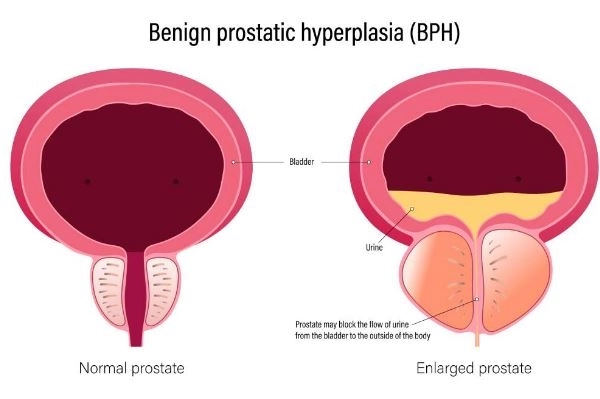
Prostate issues are among the most common conditions affecting men as they age or as a result of bacterial infections. Dr. Khaled Abdel Sattar Gad explains that the prostate gland plays a pivotal role in the male reproductive and urinary systems, and any disorder—such as prostatitis or benign prostatic hyperplasia—directly leads to urination difficulties and impacts daily quality of life.
Many patients confuse prostate inflammation with natural gland enlargement. Dr. Khaled Abdel Sattar Gad highlights the fundamental differences between them:
Prostatitis: Affects men of various ages, usually caused by bacterial infection or congestion, and is accompanied by severe pain and burning during urination.
Benign Prostatic Hyperplasia (BPH): Associated with aging and hormonal changes in men over 40, where the gland's tissue increases in size and compresses the urethra.
Symptoms resulting from prostate conditions vary in severity, with the most notable including:
Difficulty and Slow Urination: Weak urine stream or difficulty starting urination.
Frequent Urination: A persistent need to urinate, especially during night hours.
Sensation of Incomplete Emptying: Continuous feeling that the bladder has not emptied completely.
Pelvic and Back Pain: Pain in the pelvic region, lower back, or between the testicles.
Dr. Khaled Abdel Sattar Gad relies on the latest precise diagnostic tools to evaluate the issue and establish the appropriate treatment plan, including:
Clinical Examination & Symptom Assessment: Evaluating medical history and how symptoms impact the patient.
Prostate-Specific Antigen (PSA) Test: Measuring PSA levels in the blood to ensure gland health.
Ultrasound Imaging: Accurately measuring prostate volume and post-void residual urine volume in the bladder.
Urodynamic Testing: Assessing urine flow rate and bladder efficiency during urination.
Treatment choices are tailored to suit each case individually. Dr. Khaled Abdel Sattar Gad highlights that comprehensive treatment plans include:
Medical Therapy: Targeted antibiotics for bacterial prostatitis and alpha-blockers to facilitate urine flow.
Vaporization Endoscopy: Advanced technique to remove enlarged prostate tissue with minimal surgical intervention.
Laser Prostate Surgery: Using modern laser technology to vaporize enlarged tissues with high precision and complete safety.
Minimally Invasive / Traditional Surgery: Reserved for advanced cases that do not respond to non-surgical methods.
Dr. Khaled Abdel Sattar Gad advises following daily health practices to prevent prostate complications:
Adequate Water Intake: Drinking sufficient water to boost circulation and prevent urinary tract infections.
Avoiding Delayed Urination: Urinating as soon as the urge arises to relieve pressure on the bladder.
Reducing Irritants: Limiting caffeine and spicy foods that aggravate prostate congestion.
Regular Routine Checkups: Scheduling periodic screenings for men over 40 for early detection of any changes.