

Published on: 2026-09-03 | Written by: Dr. Iman Ramadan, Lecturer of Physical Medicine
What Are Nerve Conduction Studies and Electromyography?
Nerve conduction studies and electromyography (EMG) are important diagnostic tests used to evaluate the function of nerves and muscles, assess how effectively electrical signals travel through the nerves, and determine how muscles respond to these signals, helping physicians identify whether symptoms are related to a nerve disorder, muscle disorder, or problem affecting the communication between nerves and muscles.
What Is a Nerve Conduction Study?
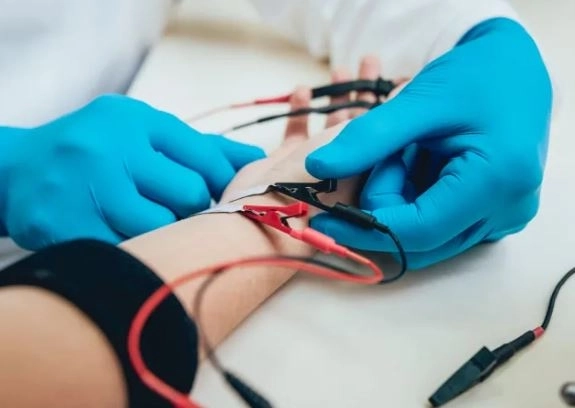
A nerve conduction study (NCS) measures the speed and strength of electrical signals traveling through the nerves, using surface electrodes placed on the skin near the nerve being examined and applying mild electrical stimulation to record the nerve's response, which can help identify certain types of nerve damage, compression, or dysfunction.
What Is Electromyography?
Electromyography (EMG) is a test that measures the electrical activity of muscles both at rest and during contraction, using a thin needle electrode inserted into the muscle to record its electrical signals, which can provide information that helps physicians distinguish between certain muscle disorders and problems affecting the nerves that control the muscles.
The Difference Between Nerve Conduction Studies and EMG
The main difference is that a nerve conduction study primarily evaluates how quickly and effectively electrical signals travel through nerves, while EMG evaluates the electrical activity produced by muscles, and the two tests are commonly performed together because combining their findings can provide more information about whether symptoms are caused by a nerve or muscle disorder.
When Are Nerve Conduction Studies and EMG Recommended?
These tests may be recommended when a patient experiences symptoms such as numbness, tingling, muscle weakness, nerve pain, muscle cramps, spasms, twitching, or difficulty moving a limb, because they can provide useful information about nerve and muscle function and help guide the diagnostic evaluation.
Nerve Conduction Studies for Numbness and Tingling
Numbness and tingling can occur as a result of different nerve-related conditions, and nerve conduction studies can help assess how effectively electrical signals travel through peripheral nerves, while the results must be interpreted together with the patient's symptoms, medical history, and clinical examination.
Nerve Conduction Studies for Sciatica and Herniated Discs
Nerve conduction studies and EMG may be included in the evaluation of some patients with symptoms related to nerve roots or the sciatic nerve, particularly when pain, numbness, tingling, or weakness extends into an arm or leg, while the final diagnosis depends on the complete clinical assessment and other investigations when required.
Nerve Conduction Studies for Carpal Tunnel Syndrome
Carpal tunnel syndrome affects the median nerve in the wrist and may cause numbness, tingling, weakness, or pain in the hand and wrist, and nerve conduction testing can help evaluate the function of the median nerve and support the diagnosis when combined with the patient's symptoms and clinical examination.
EMG for Muscle Weakness
Electromyography can be useful when a patient has unexplained muscle weakness, muscle pain, cramps, or abnormal sensations, because it records muscle electrical activity during rest and contraction and can provide information that helps distinguish certain muscle problems from abnormalities involving the nerves that control those muscles.
Nerve Conduction Studies and EMG for Peripheral Neuropathy
Nerve conduction studies and EMG can contribute to the evaluation of peripheral neuropathy, with nerve conduction testing assessing the speed and strength of electrical signals through nerves and EMG providing information about muscle electrical activity, while the results are interpreted together with the patient's symptoms and other diagnostic findings.
Nerve Conduction Studies and EMG for Muscle Diseases
Electromyography may be used as part of the evaluation of certain muscle diseases and neuromuscular disorders, but the diagnosis should not depend on EMG alone and may also require a medical history, clinical examination, blood tests, imaging studies, or other specialized investigations depending on the suspected condition.
How Is a Nerve Conduction Study Performed?
A nerve conduction study is performed by placing surface electrodes on the skin over selected nerves or muscles and applying mild electrical stimulation to the nerve, after which the electrical response is recorded and analyzed to determine how quickly the signal travels and how strong the response is, and the patient may experience a brief tingling or mild electrical sensation during stimulation.
How Is Electromyography Performed?
Electromyography is performed by inserting a thin needle electrode into selected muscles to record their electrical activity at rest and during contraction, and the patient may be asked to tighten or relax the muscle during the recording so the physician can evaluate how the muscle responds, while mild discomfort may occur during needle insertion.
Is Nerve Conduction Testing and EMG Painful?
Nerve conduction studies and EMG may cause some temporary discomfort, as the electrical stimulation during nerve conduction testing may feel like mild tingling or a brief electrical sensation, while EMG may cause some discomfort during needle insertion and the tested muscles may remain mildly sore or bruised for a few days afterward.
Is Special Preparation Required Before the Test?
Patients should inform the healthcare provider if they have a pacemaker, cardiac defibrillator, or another implanted electrical device, or if they are taking blood-thinning medication, and the skin should generally be clean and free of lotions, creams, perfumes, or moisturizers before testing because these products may interfere with electrode placement or test results.
What Conditions Can These Tests Help Diagnose?
Nerve conduction studies and EMG can help evaluate a wide range of conditions, including peripheral neuropathy, carpal tunnel syndrome, nerve-root disorders, certain muscle diseases, muscle weakness, and some neuromuscular disorders, although the results must always be interpreted within the context of the patient's symptoms and overall medical evaluation.
The Importance of Nerve Conduction Studies for Nerve Compression
Nerve conduction testing can be useful when evaluating certain forms of nerve compression, because it measures the speed and strength of electrical signals traveling through the nerve and may help identify abnormalities in nerve function, while the results should be correlated with the clinical examination and symptoms.
The Importance of EMG in Assessing Muscle Activity
Electromyography provides information about the electrical activity of muscles during rest and contraction, and analyzing the recorded electrical patterns can help physicians determine whether muscle activity is normal or whether there are findings that may suggest a problem involving the muscle or the nerves controlling it.
What Do the Results of Nerve Conduction Studies and EMG Mean?
Interpreting the results requires a qualified healthcare professional because normal or abnormal findings cannot be evaluated independently of the patient's symptoms, medical history, clinical examination, and other test results, and additional investigations may sometimes be required to establish the final diagnosis.
The Importance of These Tests in Accurate Diagnosis
Nerve conduction studies and EMG can provide valuable information when determining the source of pain, numbness, tingling, weakness, or abnormal muscle function, especially when it is unclear whether the symptoms originate from a nerve or muscle disorder, making these tests useful components of a comprehensive neurological and neuromuscular evaluation.
The Role of Dr. Eman Ramadan in Evaluating Nerve and Muscle Conditions
Dr. Eman Ramadan emphasizes the importance of careful assessment for patients experiencing muscle pain, muscle weakness, numbness, tingling, or symptoms related to nerve and muscle disorders, with the appropriate diagnostic tests selected according to the patient's symptoms, medical history, and clinical findings.
The Importance of Medical Follow-Up After Testing
Dr. Eman Ramadan emphasizes that obtaining the results of a nerve conduction study or EMG is not the end of the diagnostic process, because the findings need to be interpreted in relation to the patient's symptoms and clinical examination, and additional blood tests, imaging studies, treatment, or follow-up may be recommended depending on the underlying cause.
When Should You Consider Nerve Conduction Studies and EMG?
Patients should seek medical evaluation when they experience persistent numbness, tingling, muscle weakness, pain extending into the limbs, recurrent muscle cramps, loss of sensation, or difficulty moving, particularly when these symptoms interfere with daily activities or continue to worsen.
Dr. Eman Ramadan and Nerve Conduction Studies and EMG
Dr. Eman Ramadan highlights that accurate diagnosis of nerve and muscle disorders depends on combining the patient's medical history and clinical examination with appropriate diagnostic testing, and nerve conduction studies and EMG can provide important information about nerve and muscle function when they are indicated.
Conclusion
Dr. Eman Ramadan explains that nerve conduction studies and electromyography are valuable diagnostic tests for evaluating many neurological and muscular symptoms, with nerve conduction studies measuring the speed and strength of electrical signals through nerves and EMG measuring the electrical activity of muscles, while accurate diagnosis depends on interpreting the test findings alongside the patient's symptoms, clinical examination, and any additional investigations required, making specialist medical evaluation an important step toward identifying the cause of symptoms and developing an appropriate treatment and follow-up plan.