

Published on: 2026-08-29 | Written by: Dr. Ahmed Shaarawy, Urology and Andrology
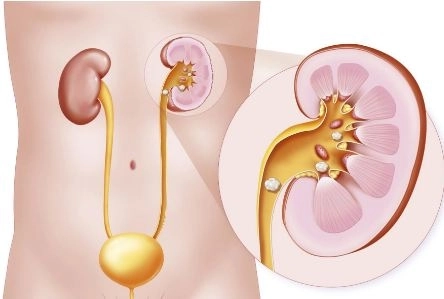
Kidney, ureter, and bladder stones are among the most common urinary tract problems and may cause severe pain, difficulty or pain during urination. Treatment varies depending on the size, location, and number of stones, with endoscopy and laser technology being among the modern techniques used for stone treatment.
Treatment of Kidney Stones Using Endoscopy and Laser
Dr. Ahmed Shaarawy explains that kidney stone endoscopy and laser treatment are modern techniques that can be used to treat many cases of kidney stones. The stone is accessed through the urinary tract using an endoscope and then fragmented with a laser into small pieces that can be removed. The appropriate technique is determined according to the size and location of the stone and the patient's condition.
Dr. Ahmed Shaarawy confirms that ureteral stones may cause severe pain in the side or back and can lead to urinary tract obstruction in some cases. Therefore, ureteroscopy and laser lithotripsy can be used to reach the stone and fragment it directly, followed by removal of the stone fragments. The appropriate procedure depends on the location and size of the stone.
Dr. Ahmed Shaarawy explains that bladder stones can be treated using endoscopy and laser technology in many cases. An endoscope is inserted through the urethra to reach the stone and fragment it with a laser into small pieces, which are then removed. The treatment approach depends on the size and number of stones and the patient's overall health.
Dr. Ahmed Shaarawy emphasizes that endoscopic and laser stone treatment allows doctors to reach and fragment stones without the need for open surgery in suitable cases. Laser technology can also help break stones into very small fragments that can be removed more easily, while recovery time varies depending on the procedure and the patient's condition.
Patients may require endoscopic and laser treatment for urinary stones when the stone is large, does not pass naturally, causes persistent pain, or leads to urinary tract obstruction. Intervention may also be necessary in cases of recurrent infections or when the stone affects kidney function. A urologist determines the most appropriate treatment after evaluating the patient's condition.
The diagnosis of kidney, ureter, and bladder stones is based on a medical examination and appropriate diagnostic tests, which may include urinalysis, blood tests, ultrasound, or CT scans to determine the size and location of the stone and assess its effect on the urinary system. Based on the results, the doctor determines the most appropriate treatment method.
Dr. Ahmed Shaarawy provides specialized treatment for kidney, ureter, and bladder stones using endoscopy and laser technology, beginning with an evaluation of the patient's condition, determining the location and size of the stone, and selecting the appropriate technique to treat it, with the goal of removing the stone and treatin