
Published on: 2026-08-26 | Written by: Glo Clinic for Hair Transplantation
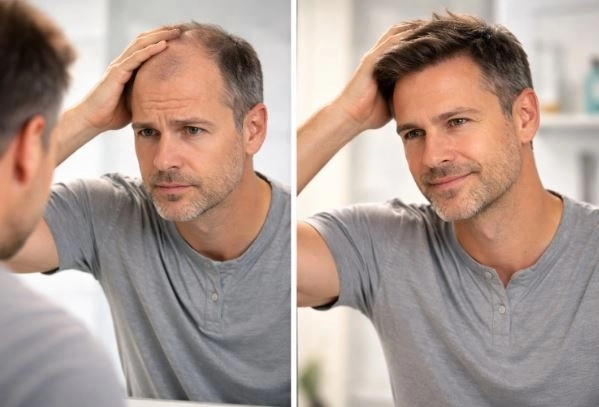
Glo Clinic explains that hair transplantation is a cosmetic procedure designed to restore hair density in areas affected by hair loss or thinning by transferring healthy hair follicles from a donor area to areas requiring coverage, with the appropriate technique depending on the degree of hair loss, donor-area density, hair characteristics, and expected results, making scalp assessment an important first step.
The importance of hair transplantation lies in its ability to address hair loss and baldness-related gaps when the donor area contains suitable follicles, while the procedure aims to create a fuller and more natural appearance by distributing transplanted follicles according to the shape of the head and the desired hairline.
Glo Clinic explains that determining whether a patient is suitable for hair transplantation depends on several factors, including the availability of a donor area with healthy follicles, identifying the cause and progression of hair loss, assessing scalp health, and considering the patient’s expectations and the realistic results that can be achieved.
Modern hair transplantation techniques include different methods for extracting and transplanting hair follicles, with one of the most commonly used being Follicular Unit Extraction (FUE), which involves extracting individual follicular units from the donor area and transplanting them into areas affected by hair loss, while the specific technique is selected according to the patient’s condition.
The FUE technique involves extracting individual hair follicles from the donor area, preparing them, and transplanting them into areas with thinning or baldness, without removing an entire strip of scalp, while the duration of the procedure and number of follicles required depend on the size of the treatment area and the patient’s individual condition.
Hairline design is an essential step in achieving a natural-looking result, taking into consideration the patient’s age, facial structure, hair density, follicle growth direction, and donor area, while avoiding an unsuitable hairline design that could affect the appearance of the result over time.
Glo Clinic explains that male pattern baldness is one of the most common conditions treated with hair transplantation, particularly when there are noticeable gaps in the frontal hairline or crown and the donor area is suitable, while the cause and progression of hair loss should be evaluated before deciding on transplantation.
Hair transplantation for women may be considered for some women experiencing hair thinning or localized areas of hair loss, but the underlying cause of hair loss should first be identified, as some forms of diffuse hair loss may require treatment of the underlying condition rather than transplantation alone.
Preoperative scalp assessment helps evaluate the scalp, donor area, and recipient area, determine whether the patient is a suitable candidate, and identify any dermatological conditions or medical causes of hair loss that may need to be addressed before undergoing transplantation.
Glo Clinic explains that hair transplantation is not suitable for every type of hair loss, because its success depends on the cause of hair loss, donor-area condition, scalp health, and patient expectations, making proper diagnosis essential before determining whether transplantation or another treatment option is more appropriate.
Hair transplantation generally involves several stages, beginning with patient assessment, hairline design, and donor-area planning, followed by follicle extraction and preparation, and then preparation of the recipient area and transplantation of follicles according to the appropriate direction and density, with details varying according to the technique and patient’s condition.
The recovery period may involve temporary redness, swelling, sensitivity, or scabbing on the scalp, with recovery varying from one person to another, while the physician provides specific instructions regarding scalp care, hair washing, physical activity, and any medications or products that may be used after the procedure.
Hair transplantation results require time for the transplanted follicles to go through their natural growth cycle, and some transplanted hairs may initially shed as part of this process before new growth gradually appears, with hair density improving over several months and the final result varying from one patient to another.
Post-transplant hair care helps protect the scalp and newly transplanted follicles during recovery, and instructions may include appropriate hair-washing techniques, avoiding excessive rubbing or pressure on the transplanted area, and attending scheduled medical follow-up appointments.
The long-term stability of hair transplantation results is generally related to the characteristics of the transplanted follicles, which are typically more resistant to the mechanisms involved in male pattern baldness, but non-transplanted hair may continue to thin over time in some patients, making ongoing medical follow-up important for maintaining the best possible appearance.
The treatment of male pattern baldness may include hair transplantation to restore density in areas where hair has been lost, but additional medical treatments may sometimes be considered to help preserve existing hair, with the appropriate treatment plan depending on the patient’s age, degree of hair loss, and scalp condition.
Several factors can influence hair transplantation results, including proper patient selection, donor-area quality, hairline design, follicle distribution, transplantation direction, medical team expertise, and adherence to post-procedure instructions, which is why results can vary considerably between patients.
Choosing a specialized center is important because hair transplantation requires careful assessment and individualized planning, making it advisable to select a center that evaluates scalp health, identifies the underlying cause of hair loss, designs a personalized transplantation plan, and provides clear pre- and post-procedure care instructions.
Glo Clinic confirms that hair transplantation can be an appropriate option for certain types of hair loss and baldness when the necessary medical conditions are met, and achieving a natural-looking result depends on accurate assessment, selecting the appropriate technique, designing a balanced hairline, carefully distributing the follicles, and following post-procedure care and follow-up instructions, making individualized evaluation essential before undergoing hair transplantation.