
Published on: 2026-08-13 | Written by: Dr. Abdul Khaliq Zalbani Orthopedic Surgery
What Does Pediatric Orthopedic Treatment Involve?
Dr. Abdel Khalek El-Zalbany explains that pediatric orthopedic treatment focuses on diagnosing and managing conditions affecting children's bones, joints, and muscles during the different stages of growth, while taking into consideration that children's bones are still developing and that growth plates make the evaluation of injuries and deformities different from adults, which is why treatment is selected according to the child's age, the type of condition, and its impact on growth and movement.
Bone Fractures in Children
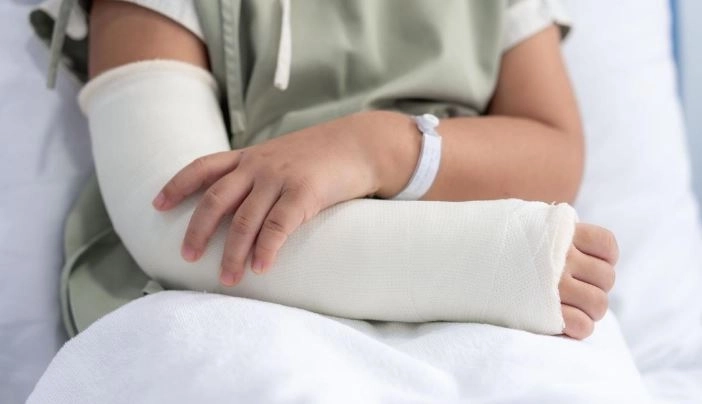
Dr. Abdel Khalek El-Zalbany emphasizes that bone fractures in children require careful evaluation to determine the location of the fracture, the degree of bone displacement, and whether the growth plates have been affected, and some fractures may be treated with immobilization and casting after restoring the bones to the proper position, while more complex fractures may require surgery and appropriate fixation methods based on the child's age and the nature of the fracture.
Treatment of Bone Deformities in Children
Dr. Abdel Khalek El-Zalbany confirms that bone deformities in children may be present from birth, develop during growth, or result from previous injuries or fractures, and they may affect the shape or length of a limb or the child's walking and movement patterns, making treatment dependent on identifying the cause and severity of the deformity and monitoring its effect on bone growth before deciding on the appropriate treatment.
Hip Dislocation and Hip Developmental Problems in Children
Dr. Abdel Khalek El-Zalbany warns that developmental dysplasia of the hip in children requires early detection and appropriate follow-up, as the hip joint may be unstable or may not develop with normal alignment, and some infants may be treated with non-surgical methods such as appropriate positioning or bracing devices, while treatment options vary according to the child's age and the degree of instability.
Treatment of Bowed Legs in Children
Dr. Abdel Khalek El-Zalbany explains that bowed legs in children may be normal during certain stages of development and may gradually improve with age, while abnormal or progressively worsening cases require specialist evaluation to determine the underlying cause, and treatment or regular monitoring may be recommended depending on the child's age, severity of the alignment problem, and its effect on walking and limb alignment.
Treatment of Flat Feet in Children
Dr. Abdel Khalek El-Zalbany emphasizes that flat feet in children do not always indicate a condition requiring surgical treatment, as flexible flat feet may be normal in some children and may not cause symptoms, while cases associated with pain, difficulty moving, or obvious deformity require medical evaluation to determine whether observation, supportive treatment, or specialized intervention is appropriate.
Treatment of Scoliosis in Children
Dr. Abdel Khalek El-Zalbany confirms that scoliosis in children is a sideways curvature of the spine that may become more noticeable during periods of growth and adolescence, and management varies according to the degree of curvature, the child's age, and the amount of growth remaining, with some cases requiring observation while more significant curves may require bracing or surgical intervention.
Sports Injuries in Children
Dr. Abdel Khalek El-Zalbany warns that sports injuries in children and adolescents require accurate diagnosis, particularly when persistent pain, swelling, or difficulty moving is present, because some injuries may affect bones, cartilage, ligaments, or growth plates, making it important to avoid returning the child to sports before the injury has been medically evaluated and the child is considered ready to resume physical activity.
Growth Problems and Growth Plate Injuries
Dr. Abdel Khalek El-Zalbany explains that growth plates are important areas located near the ends of long bones in children, and they may be injured as a result of fractures or trauma, which is why injuries involving these areas require appropriate evaluation and follow-up to ensure normal growth, particularly when a fracture occurs near a growth plate.
Pediatric Orthopedic Surgery
Dr. Abdel Khalek El-Zalbany emphasizes that pediatric orthopedic surgery is not the first treatment option for every condition, but may be considered when clearly indicated, such as in certain complex fractures, deformities that significantly affect limb function, or conditions that do not respond adequately to conservative treatment, with the surgical approach determined according to the child's age, location of the injury, severity of the condition, and bone development.
Physical Therapy and Rehabilitation
Dr. Abdel Khalek El-Zalbany confirms that physical therapy and rehabilitation may be an important part of treating certain pediatric orthopedic conditions after an injury or surgery, as an appropriate rehabilitation program can help gradually restore movement, strength, and flexibility, with exercises and the appropriate time to begin them determined according to the type of injury and the treating physician's recommendations.
The Importance of Early Diagnosis in Pediatric Orthopedics
Dr. Abdel Khalek El-Zalbany warns that early diagnosis of orthopedic and joint problems in children can help identify certain deformities, growth abnormalities, and injuries at an early stage, potentially allowing simpler treatment options in some cases, which is why persistent pain, visible limb deviation, or changes in walking or movement should be medically evaluated.
When Does a Child Need an Orthopedic Doctor?
Dr. Abdel Khalek El-Zalbany explains that consulting a pediatric orthopedic specialist is important when a child experiences persistent bone or joint pain, recurrent swelling, difficulty walking or moving, an obvious limb deformity, a significant injury, or a noticeable difference between the two limbs, because identifying the underlying problem early can help establish an appropriate treatment and follow-up plan.
Conclusion
Dr. Abdel Khalek El-Zalbany emphasizes that pediatric orthopedic treatment depends on accurate diagnosis while taking into consideration the child's age, stage of growth, growth plates, and the nature of the condition, whether it involves a fracture, deformity, joint problem, spinal condition, or sports injury, with conservative or surgical treatment selected according to the individual case and regular follow-up provided to support the best possible bone and joint function throughout growth.