
Published on: 2026-08-13 | Written by: دكتور عادل جرجس رسمى أخصائى جراحة المسالك البولية
Learn about surgical and endoscopic treatment of benign prostatic hyperplasia (BPH), its main symptoms, when intervention may be necessary, and available treatment options such as transurethral prostate surgery, vaporization, and laser treatment, as well as the importance of medical evaluation when choosing the appropriate procedure.
What Is Benign Prostatic Hyperplasia?
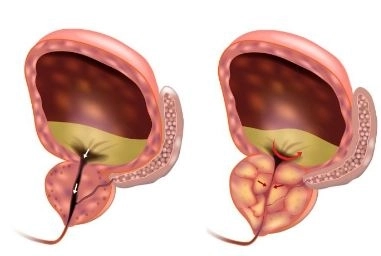
Dr. Adel Girgis explains that benign prostatic hyperplasia (BPH) is a common condition that occurs with aging and may cause the prostate to press against the urethra, leading to symptoms such as weak urine flow, difficulty starting urination, frequent urination, and waking up at night to urinate, with symptoms varying from one patient to another.
Symptoms of Benign Prostatic Hyperplasia
Dr. Adel Girgis confirms that symptoms of prostate enlargement may include weak urine flow, interrupted urination, straining to urinate, a feeling of incomplete bladder emptying, frequent urination, or urinary urgency, making persistent or bothersome symptoms require medical evaluation.
When Does Benign Prostatic Hyperplasia Require Surgery?
Dr. Adel Girgis emphasizes that surgery or endoscopic treatment is not required for every patient with prostate enlargement, but it may become an option when symptoms are severe or significantly affect daily life, when medications do not provide sufficient improvement, or when the enlargement causes significant difficulty urinating, incomplete bladder emptying, recurrent urinary infections, or other urinary complications.
Endoscopic Treatment of Benign Prostatic Hyperplasia
Dr. Adel Girgis warns that endoscopic treatment of benign prostatic hyperplasia involves procedures performed through the urethra to remove or reduce the enlarged prostate tissue that obstructs urine flow, with transurethral resection of the prostate (TURP) being one of the commonly used surgical procedures for BPH.
Transurethral Resection of the Prostate – TURP
Dr. Adel Girgis explains that TURP involves removing part of the enlarged prostate tissue to improve urine flow and relieve obstruction symptoms, with the procedure selected after evaluating prostate size, symptom severity, and the patient’s overall health condition.
Prostate Vaporization Treatment
Dr. Adel Girgis confirms that prostate vaporization is one of the available treatment options for certain cases of benign prostatic hyperplasia, as the technique aims to remove or vaporize the enlarged tissue responsible for urinary obstruction, while its suitability depends on prostate size, the patient’s condition, and the available technology.
Laser Treatment for Benign Prostatic Hyperplasia
Dr. Adel Girgis emphasizes that laser treatment for prostate enlargement is an option used in selected cases and may involve vaporizing or removing enlarged prostate tissue, with laser techniques such as HoLEP (Holmium Laser Enucleation of the Prostate) being among the established procedures for treating urinary symptoms associated with BPH.
How Is the Appropriate Treatment Selected?
Dr. Adel Girgis warns that choosing between surgery, endoscopic treatment, laser therapy, or vaporization does not depend solely on prostate size, but also on symptom severity, prostate shape and size, the patient’s general health, individual preferences, and the surgeon’s experience, making comprehensive medical evaluation important before selecting the procedure.
Tests Before BPH Treatment
Dr. Adel Girgis explains that evaluation before deciding on surgical or endoscopic treatment may include urine-flow testing, measurement of the amount of urine remaining in the bladder, prostate imaging when needed, and additional examinations according to the patient’s symptoms and medical condition, helping determine the most appropriate treatment option.
Does Every Case of BPH Require Surgery?
Dr. Adel Girgis confirms that not every case of prostate enlargement requires surgery, as patients with mild or non-bothersome symptoms may be managed through monitoring, lifestyle adjustments, or medication depending on medical evaluation, while surgery may be considered when symptoms become significant or other treatment options fail to provide adequate improvement.
Possible Risks of BPH Surgery
Dr. Adel Girgis warns that any surgical procedure may involve potential complications such as bleeding, infection, difficulty urinating, urinary leakage, or urethral narrowing, and some prostate procedures may also cause retrograde ejaculation, so patients should discuss the expected benefits and potential risks with their urologist before making a treatment decision.
BPH Treatment with Dr. Adel Girgis
Dr. Adel Girgis explains that he is a Urology, Genitourinary Surgery, Andrology, and Infertility Specialist, holds a Master’s Degree in Urology from Ain Shams University, and is a member of the Egyptian Society of Urology, providing treatment for benign prostatic hyperplasia through surgery, endoscopy, vaporization, or laser techniques according to each patient’s medical evaluation.