

Published on: 2026-07-30 | Written by: Dr. Aouni Radwan, Obstetrics and Gynecology
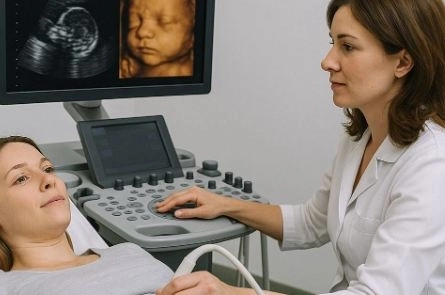
4D Ultrasound Diagnosis | Advanced Imaging for Reproductive Health Assessment and Pregnancy Monitoring
What Is 4D Ultrasound Diagnosis?
Dr. Awny Radwan confirms that 4D ultrasound imaging is one of the most advanced diagnostic technologies used in obstetrics, gynecology, and infertility treatment. It provides real-time moving images that allow physicians to evaluate the uterus, ovaries, and fetus with exceptional accuracy. This technology helps detect many medical conditions at an early stage and enables specialists to develop personalized treatment plans, making it an essential diagnostic tool in modern medicine.
The Importance of 4D Ultrasound in Infertility Treatment
Dr. Awny Radwan explains that 4D ultrasound plays a vital role in accurately evaluating the uterus, ovaries, and fallopian tubes. It assists in diagnosing common causes of infertility, including polycystic ovary syndrome (PCOS), uterine fibroids, congenital uterine abnormalities, and ovarian response during fertility treatment. These detailed assessments help physicians select the most appropriate treatment plan to improve the chances of achieving pregnancy.
When Is a 4D Ultrasound Recommended?
Dr. Awny Radwan emphasizes that a 4D ultrasound examination may be recommended for couples experiencing delayed pregnancy, women suspected of having uterine or ovarian disorders, patients undergoing fertility evaluation before ICSI or IVF, and pregnant women who require detailed fetal assessment. The examination provides comprehensive information that supports accurate medical decision-making and timely treatment.
Uses of 4D Ultrasound During Pregnancy
He highlights that 4D ultrasound offers much more than clear images of the fetus. It allows continuous assessment of fetal growth and movement, monitoring of the fetal heartbeat, early detection of certain congenital abnormalities, evaluation of amniotic fluid volume, and examination of placental position, making pregnancy follow-up more accurate and reassuring for both the physician and the expectant mother.
Applications of 4D Ultrasound in Gynecology
He explains that 4D ultrasound technology is widely used to diagnose various gynecological conditions, including uterine fibroids, ovarian cysts, endometriosis, and congenital uterine abnormalities. It is also highly effective in monitoring ovulation and measuring follicular development during ovarian stimulation programs, helping improve the success rates of fertility treatments.
Advantages of 4D Ultrasound Diagnosis
Dr. Awny Radwan confirms that 4D ultrasound provides real-time three-dimensional moving images, allowing physicians to visualize anatomical structures with remarkable clarity and precision. In addition, it is a safe, non-invasive imaging method that does not involve ionizing radiation and can be repeated whenever medically necessary without posing risks to either the mother or the fetus, making it one of the most widely used diagnostic techniques in obstetrics and gynecology.
Is 4D Ultrasound Safe?
He emphasizes that 4D ultrasound is considered a safe diagnostic procedure when performed by qualified specialists according to established medical guidelines. Because it relies on sound waves rather than radiation, it is routinely used during pregnancy and for gynecological evaluations without exposing patients or fetuses to radiation-related risks.
How Should Patients Prepare for the Examination?
He explains that preparation for a 4D ultrasound depends on the purpose of the examination. Some patients may be advised to drink water before the scan, while others may be scheduled during a specific phase of the menstrual cycle when the goal is fertility assessment or ovulation monitoring. Following the physician's instructions helps ensure the most accurate diagnostic results.
When Are the Results Available?
Dr. Awny Radwan confirms that the results of a 4D ultrasound examination are available immediately during the procedure. Physicians can evaluate the real-time images, explain the findings to the patient, and determine whether additional investigations or treatment are required based on the individual's condition and the reason for the examination.
Tips for Getting the Most from a 4D Ultrasound Examination
He advises choosing a specialized medical center equipped with advanced ultrasound technology, attending all scheduled follow-up appointments, bringing previous medical reports for comparison, and never delaying the examination if unusual symptoms appear. Early diagnosis through 4D ultrasound imaging plays a significant role in identifying medical conditions at an early stage, improving treatment success rates, and supporting the health and well-being of both the mother and the baby.