
Published on: 2026-07-20 | Written by: Dr. Shihab El-Din Amjad Dawidar, Ophthalmology
Myopia, Hyperopia, and Astigmatism | Causes of Vision Problems and Modern Treatment Methods
What Are Myopia, Hyperopia, and Astigmatism?
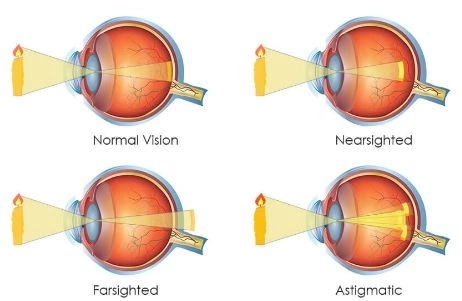
Dr. Shehab El Din Amgad Dowidar emphasizes that myopia, hyperopia, and astigmatism are among the most common refractive errors, occurring due to differences in how light is focused inside the eye because of the shape of the cornea or the length of the eyeball, resulting in blurred vision and the need for vision correction methods such as prescription glasses, contact lenses, or laser and femto-laser vision correction procedures.
What Is Myopia and What Are Its Symptoms?
Dr. Shehab El Din Amgad Dowidar explains that myopia (nearsightedness) occurs when light rays focus in front of the retina instead of directly on it, making near objects appear clear while distant objects become blurry, and it may be accompanied by symptoms such as eye strain, headaches, and difficulty seeing distant details, especially while driving or viewing signs and screens.
What Is Hyperopia and How Does It Affect Vision?
Dr. Shehab El Din Amgad Dowidar confirms that hyperopia (farsightedness) occurs when light rays focus behind the retina, causing difficulty seeing nearby objects clearly in some individuals, and may lead to symptoms such as eye fatigue, increased discomfort during reading, and headaches caused by the eye’s continuous effort to focus images properly.
What Is Astigmatism and What Causes It?
Dr. Shehab El Din Amgad Dowidar points out that astigmatism occurs due to an irregular curvature of the cornea or the eye lens, causing light to scatter and preventing the retina from receiving a clear image, which may result in blurred vision at both near and far distances, along with eye strain and the need for accurate vision correction based on the degree of astigmatism.
How Are Refractive Errors Diagnosed?
Dr. Shehab El Din Amgad Dowidar emphasizes that diagnosing myopia, hyperopia, and astigmatism requires a comprehensive eye examination, including vision measurement, corneal evaluation, corneal thickness assessment, eye surface imaging, and a complete evaluation of eye health to determine the most suitable treatment option for each individual case.
Treatment Methods for Myopia, Hyperopia, and Astigmatism
Modern medical technologies explain that treatment of refractive errors varies depending on the patient's condition and degree of vision impairment, with options including prescription glasses, contact lenses, and laser or femto-laser vision correction procedures that aim to reshape the cornea and improve the eye’s ability to focus light accurately.
Advantages of Laser and Femto-Laser Vision Correction
Medical studies confirm that laser and femto-laser technologies have become advanced solutions for correcting myopia, hyperopia, and astigmatism, offering high precision, quick procedures, shorter recovery periods, and helping many patients reduce their dependence on glasses and contact lenses after proper evaluation of their eye condition.
Importance of Regular Eye Follow-Up
Medical guidelines highlight that regular eye examinations help detect changes in vision prescription or the development of new eye problems, while continuous follow-up with a specialist in refractive surgery helps ensure the selection of the most appropriate treatment and maintain long-term vision quality and eye health.